
You just found the box of appliance manuals while packing, and now you're wondering what actually matters once the sale closes. A stack of paperwork from the last ten years of homeownership doesn't sort itself, and closing day can make every document feel urgent at once.
Selling a house means saying goodbye to the property, not to the proof you need. Home records when selling a house cover everything from your closing disclosure to the receipt for that water heater you replaced in year six. Some of it protects you on your tax return. Some of it protects the buyer. You'll want some of it years after the keys change hands.
This guide sorts exactly what to keep, what to hand over, and how long each record actually needs to last. Keep reading to build a simple system before the paperwork gets scattered across boxes, emails, and memory.
What to Keep After Closing
Closing produces a stack of paper you'll need again, so keep the core set together in one place before you move on to anything else. These are the documents that prove what you sold, what you owed, and what you walked away with.
Closing Disclosure, Settlement Statement, and Form 1099-S
Your closing disclosure lists the final terms of your sale, including the price, loan payoff, and every fee charged at the table. Keep it permanently, since it's the single clearest snapshot of the transaction.
The settlement statement backs up your closing disclosure with a line-by-line breakdown of costs. IRS guidance ties this document to your seven-year retention window for tax purposes, especially if the sale involved capital gains you may need to prove later.
Form 1099-S reports the sale to the IRS when it applies, and you'll need your copy if the agency ever asks how you reported the sale. Keep it with your tax records for at least seven years, matching the retention period recommended for settlement statements, capital improvement receipts, and Form 1098.
The Deed, Title Policy, and Mortgage Payoff Records
The deed proves you legally transferred ownership, and it belongs in your permanent file even after closing. Keep a copy for your own records even though the recorded version lives with the county.
Your title insurance policy protected your ownership while you held the property, and a copy is worth keeping in case a dispute surfaces about the chain of title years later. Mortgage payoff records confirm the loan was satisfied in full, which matters if a lender error ever shows up on a credit report.
Hold onto these three permanently. They cost nothing to store, and everything to reconstruct if a title company or lender ever needs proof the loan and the property were cleanly closed out.
Property Tax, HOA, and Insurance Documents
Property tax records confirm what you paid and when, which matters if a prorated tax bill gets disputed after closing. Keep the final tax statement and the closing prorations for at least a few years past the sale.
If your home belonged to an HOA, keep the resale certificate and any statement of dues paid current at closing. A disputed HOA balance can follow a seller months after the sale if the paperwork isn't handy.
Homeowners insurance records matter less once you sell, but keep the final policy and cancellation confirmation for a year. It's a quick reference if a claim from your ownership period surfaces later.
Once you set aside these core documents, the next question is what to keep about the physical work done to the house itself.
Keep Improvement and Repair Proof That Supports Your Sale
Improvement and repair records prove what was done to the home and when, which supports your tax basis and answers buyer questions before they become disputes. This category is the one most sellers underestimate until closing day.
Permits, Contractor Invoices, and Completion Certificates
Permits show that renovation work was approved and inspected by your local building department. Keep every permit, along with the final inspection sign-off, since an unpermitted addition can complicate a future sale for the next owner.
Contractor invoices back up the permit paperwork with specifics: what was done, which materials were used, and what it cost. A kitchen remodel invoice showing a $22,000 job, for example, becomes part of your cost basis when you calculate capital gains.
Completion certificates matter most for major systems like a new roof or a rewired electrical panel. Keep these with the related permit so a buyer's inspector or your own tax preparer can match the paper trail to the work.
Roof, HVAC, Plumbing, and Electrical Service History
Service history for major systems tells a buyer how well the home was maintained, and it protects you if a system fails right after closing. A roof replaced five years ago with a stored invoice answers the buyer's question before it's asked.
HVAC service logs matter because most systems carry parts warranties that require proof of regular maintenance. If your furnace warranty required annual service and you skipped two years, that gap can void a claim the new owner tries to make. Tracking this kind of service history as part of an annual home maintenance checklist means the proof already exists when a buyer or their inspector asks for it.
Plumbing and electrical repairs deserve the same treatment, especially anything involving code compliance. Keep records such as:
- Water heater installation date and any repair invoices
- Panel upgrades or rewiring documentation with permit numbers
- Repiping or major plumbing repair receipts
- Sump pump or French drain installation records
Appliance Manuals, Warranties, and Major Repair Receipts
Appliance records prove what's staying with the house and whether it's still under warranty. Picture the dishwasher you installed two years ago with four years left on a manufacturer warranty. That's real value to a buyer, but only if you can hand over the model number, purchase date, and warranty terms instead of a vague promise that "it's still under warranty." If a label is ever hard to read, a guide to decoding appliance model numbers can help.
Major repair receipts, like a compressor replacement on the refrigerator or a new capacitor on the AC unit, show the buyer what's already been fixed. This is also where a private, organized record such as a Manse home profile earns its place. When appliance details, purchase dates, and warranty windows are already logged, generating a printable summary for the buyer takes minutes instead of a weekend of digging through old emails.
With the improvement history handled, the next step is figuring out exactly how long each type of record needs to stick around.
How Long Should You Keep Each Record?
Retention periods depend on the document type, and most fall into one of three windows: forever, seven years, or until a coverage period ends. Sorting your files by these three buckets removes the guesswork.
Documents to Keep Permanently
The deed, title insurance policy, and mortgage payoff statement belong in permanent storage, since they document ownership history that never fully expires.
Permits and completion certificates for major work also deserve permanent status. A buyer's attorney or a future title search may ask about permitted work decades later.
Tax and Capital Improvement Records to Retain for Years
Settlement statements, capital improvement receipts, and Form 1099-S should stay in your files for at least seven years after the sale. The IRS ties this window to potential capital gains exclusions of up to $250,000 for single filers and $500,000 for joint filers, and proof of primary residence and improvement costs support that exclusion if the agency asks questions.
Improvement receipts matter even more if your gain approached those exclusion limits. A $40,000 addition added to your cost basis directly reduces the taxable gain, so losing that receipt can cost real money at tax time.
Records You Can Discard After Coverage or Review Periods End
Some documents lose their usefulness once a coverage period or dispute window closes. Homeowners insurance policies from years before the sale, expired appliance warranties, and old HOA newsletters fall into this group.
A simple rule works well here: if the document only mattered while you owned the home and carries no tax or legal weight, you can let it go a year or two after closing. That clears space for the records that genuinely need to last.
Once you know what to keep and for how long, the next decision is what actually travels with the buyer versus what stays in your own file.
What to Give the Buyer and What to Keep for Yourself
Buyers need the records that help them run the home, and you need copies of everything that proves the sale happened on the terms you agreed to. Splitting these two piles early avoids a scramble the week before closing.
Records That Help the New Owner Maintain the Home
Send appliance manuals, warranty documents, and service history for major systems to the buyer. A furnace manual with the model number and last service date saves the new owner a frustrating call to the manufacturer during the first cold week in the house. This resource for finding and storing appliance manuals covers where to look if some of yours have gone missing before you hand them off.
Contractor contact information is also worth passing along, especially for recurring service like HVAC maintenance or pool equipment. It's a small gesture that makes the transition smoother for someone stepping into a home they don't know yet.
Consider handing over a simple packet covering:
- Appliance manuals and warranty certificates
- HVAC, plumbing, and electrical service records
- Paint colors and finish details for touch-ups
- Sprinkler system or septic maintenance notes
Why You Should Keep Copies of Sale and Ownership Documents
Keep a personal copy of every document you hand to the buyer, since you may need to reference the same details for taxes or insurance later. If a buyer disputes a warranty claim months after closing, your copy of the original documentation is your best defense.
This matters most for anything tied to your tax return, like improvement receipts or the settlement statement. Handing over the originals without keeping a scan is a common mistake that only surfaces during an audit or a dispute.
How to Share Records Without Giving Away Your Personal Details
Buyers need appliance and maintenance information, not your financial history. Redact your loan account numbers, Social Security number, and personal contact details before sharing anything from your closing packet.
A private digital record makes this easier, since you can export just the appliance and maintenance data without touching the financial documents mixed in with it. That's a meaningful difference from handing over a physical folder where everything sits together.
Once the buyer has what they need, it's worth building a system so your copies never get scattered again.
Build a Private Digital File Before Paperwork Gets Lost
A digital file protects your home records from getting lost in a move, a flood, or a drawer nobody opens again. Building it before you list the home, not after, saves a scramble during your busiest weeks.
Scan and Name Documents So You Can Find Them Later
Scan every closing document, permit, and receipt as soon as you receive it, and name each file with the date and document type. A file named "2023-06-HVAC-Invoice-Carrier" tells you everything at a glance, unlike a scan named "IMG4821." Consistent naming matters more than the scanning tool you use, and it's a habit that pays for itself the first time you need to find one document fast among hundreds.
Organize Records by System or Appliance Instead of by Paper Type
Sorting by appliance or system, rather than by document type, makes records easier to use when something actually breaks. A folder labeled "Water Heater" holding the manual, the installation invoice, and the warranty card is more useful than three separate folders for manuals, invoices, and warranties.
This is where a tool built for exactly this structure saves real time. Manse organizes records by appliance and home system from the start, so a water heater's manual, warranty, and service history all live in the same profile instead of scattered across file types.
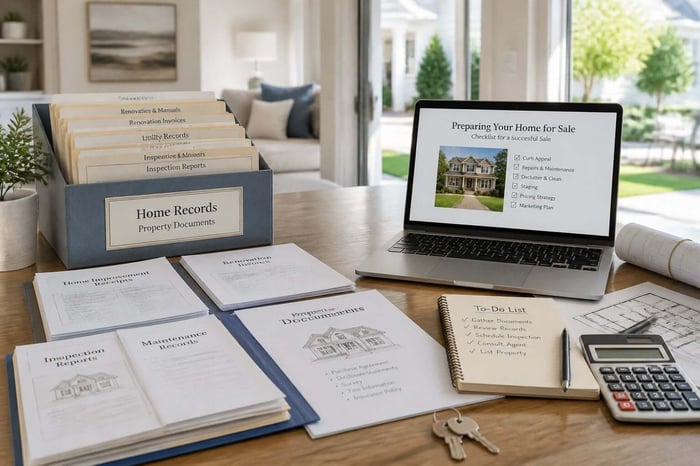
Create a Simple Home Sale Records Checklist
A short checklist keeps you from missing a document during the rush of closing week. Consider a checklist covering:
- Closing disclosure, settlement statement, and Form 1099-S
- Deed, title policy, and mortgage payoff confirmation
- Permits and completion certificates for major work
- Appliance manuals, warranties, and repair receipts
- HOA and property tax documents
With your files scanned, sorted, and checked against a list, you're ready to walk into closing without a folder of loose paper.
Frequently Asked Questions
What documents should you keep after selling a house?
Keep your closing disclosure, settlement statement, deed, title policy, and mortgage payoff confirmation. Add permits, contractor invoices, and appliance warranty records tied to any work done on the home.
How long should I keep real estate records after selling my home?
Keep the deed, title policy, and mortgage payoff records permanently. Keep tax-related documents like the settlement statement, capital improvement receipts, and Form 1099-S for at least seven years.
Do I need to keep old mortgage documents after selling my home?
Keep your mortgage payoff statement permanently as proof the loan was satisfied in full. You can discard routine monthly statements once the loan is paid off and confirmed closed.
Should I give appliance warranties and service records to the buyer?
Yes, hand over appliance manuals, warranty documents, and service history for major systems like HVAC and water heaters. These records help the new owner maintain the home and file warranty claims if something breaks.
Do I need to keep renovation receipts after I sell my house?
Yes, keep renovation receipts for at least seven years since they support your cost basis for capital gains calculations. A kitchen remodel or new roof can significantly reduce your taxable gain if you document it properly.
Is the price my house sold for public record?
In most states, yes, the sale price becomes part of the public record once the deed is recorded with the county. Some states limit what's disclosed, so the exact detail available varies by location.
Leave Closing With a Record You Can Still Rely On
A well-kept set of home records when selling a house protects your tax position and gives the buyer a smoother start in their new home. The work pays off long after closing day.
Sellers who scan and sort documents as they go, rather than the week before listing, avoid the last-minute search through boxes and inboxes. That habit also carries forward if you buy another home, since the same system works for the next property.
If your records are still scattered across drawers and emails, start building your own home profile in Manse before your next move and keep the next transition simpler than this one.