
You are standing in front of an appliance that just started making a noise it has never made before, and the first question is simple: how old is this thing? The serial number is right there on a metal or paper label, but the manufacture date hidden inside it looks like a random string of letters and numbers.
Every major brand encodes the build date differently, so a code that makes sense on a Whirlpool washer means nothing on a Samsung fridge. This guide shows you exactly how to find appliance age from serial number labels on refrigerators, washers, dryers, dishwashers, and HVAC units, brand by brand.
Keep reading to learn where the label hides on each appliance type, how to read the date code for Whirlpool, GE, LG, Samsung, and Bosch, and what to do once you finally have the answer for your own home.
Find the Right Label First
You cannot decode a manufacture date until you find the actual serial number label, and it is rarely where people expect. Manufacturers print it on a sticker or plate, and the location depends entirely on the appliance type.
The label always includes both a model number and a serial number, and it is easy to confuse the two. The model number describes the appliance's design and features. The serial number hides the build date, usually as a short letter prefix or the first few digits of the code.
Labels fade over time, especially near heat sources like an oven or dryer drum. If the print is too worn to read, note whatever partial characters remain before checking the manufacturer's support pages, since GE Appliances explains how to determine your appliance's age using the same two-letter and six-number format across its full lineup.
Once you locate the sticker, the next step depends on the appliance.
Refrigerator and Freezer Serial Number Locations
Refrigerator labels are almost always inside the unit, not on the outside door. Check these spots in order:
- Inside the fresh food compartment, on the upper side wall or ceiling
- Behind the crisper drawers on the interior back wall
- Inside the freezer compartment on a side panel
- On the door frame gasket edge, on some older models
Freezers follow a similar pattern, with the label often placed near the top interior wall or behind a removable panel. If your refrigerator was built in the last ten years, check inside first before pulling the unit away from the wall to look behind it.
Some French door and built-in models hide the label behind a kick plate at the bottom front. A flashlight helps here, since the plate area rarely gets direct light. Once you find it, write the full serial number down exactly as printed, including any dashes, since brand decoders are picky about exact formatting.
Washer, Dryer, and Dishwasher Serial Number Locations
Washers and dryers keep the label in one of two spots: on the inside of the door frame or on the back panel near the power cord. Front-load washers almost always print it on the door frame, visible as soon as you open the door.
Top-load washers often place the label on the underside of the lid or on the control panel edge. Dryers usually match whichever washer style they pair with, so a front-load pair often shares the same door-frame placement.
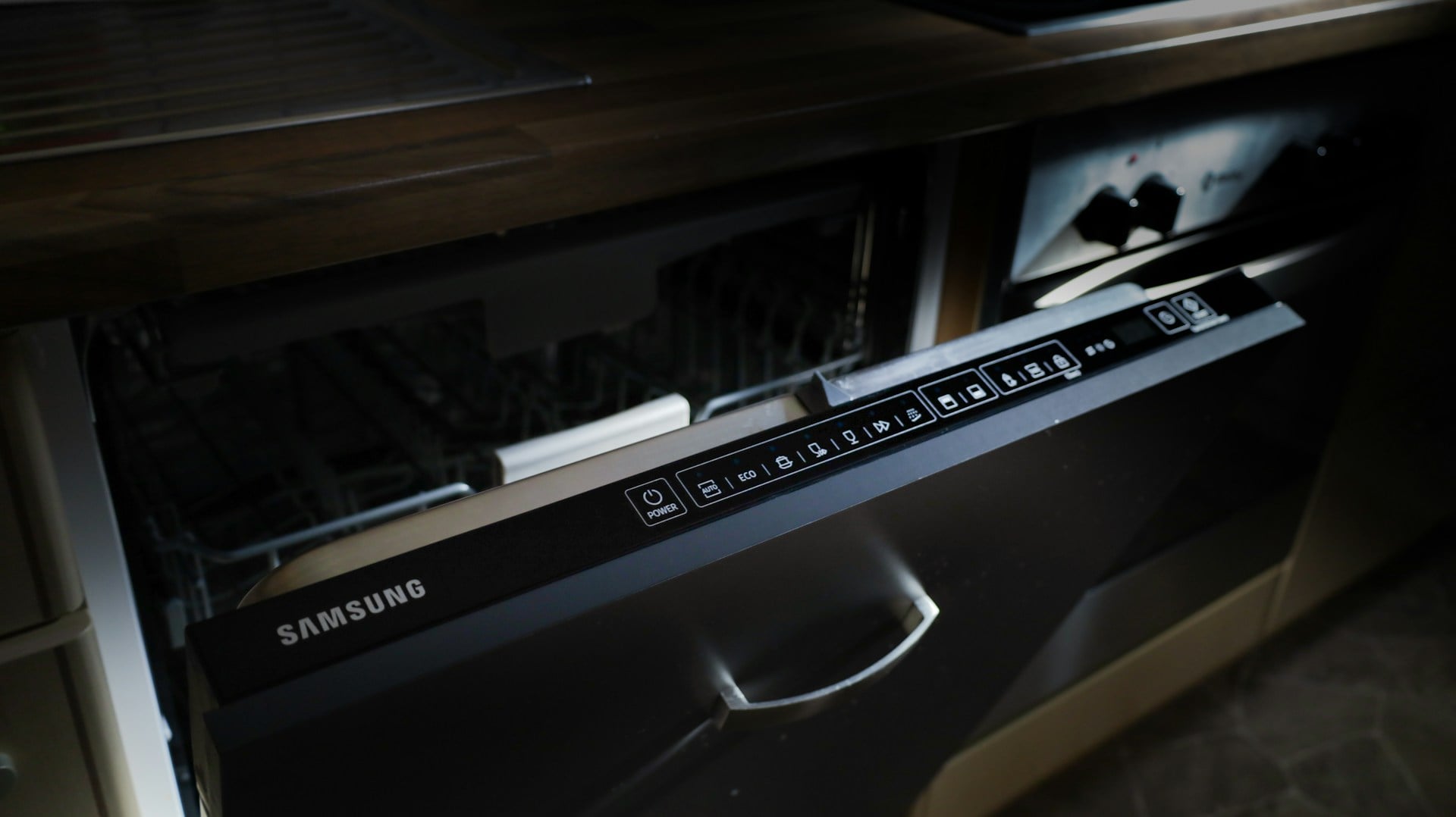
Dishwashers hide their label on the side of the door, only visible when the door is fully open. Picture a mid-cycle dishwasher that starts leaking around the base. Before calling anyone, open the door fully and find the sticker along the left edge, which gives you the serial number you need to check both the age and any remaining coverage.
Where to Find an HVAC Unit Serial Number
HVAC units keep their label on the outside cabinet, usually near the electrical connection panel or on a metal plate riveted to the unit housing. Furnaces keep it inside the front access panel, near the blower compartment.
Outdoor condenser units print the label on the side facing away from the house, so you may need to check behind shrubs or fencing that has grown up around it. Weather exposure fades these labels faster than indoor appliance labels, so a paint pen tracing over old print can help preserve it for next time.
Once you've copied every label accurately, the real decoding work begins, and it looks different for every brand.
Decode the Date on Whirlpool and GE Appliances
Whirlpool and GE use two of the most common date-code formats in American homes, and both are readable without any special tool. Each brand places the code in a slightly different part of the serial number string, and together their formats cover Whirlpool, KitchenAid, Maytag, Amana, and Jenn-Air appliances built on shared manufacturing lines, plus GE, GE Profile, and Cafe appliances.
Reading a Whirlpool Serial Number Date Code
Whirlpool encodes the manufacture date in the first two characters of the serial number, which combine a letter for the year and a number for the production week. For example, a serial number starting with "SR" might place the appliance in a specific week of a specific production year, depending on the letter-year key Whirlpool has used across different decades.
The tricky part is that Whirlpool has changed its letter-to-year key more than once over the past several decades. A serial number beginning with the same letter could point to different years depending on when the appliance line was made, which is why cross-checking against the model number's known production range helps confirm the result.
Picture a Whirlpool dishwasher with a serial number reading "FR3315123." The "FR" prefix identifies the plant and a production period, and the numbers that follow narrow the week and year further once matched against Whirlpool's published key. Once you know the manufacture year, you can compare it against a realistic average appliance lifespan chart to judge whether a repair still makes sense.
Reading a GE Serial Number Date Code
GE serial numbers always begin with two letters, followed by six numbers, and end in a final letter. Those first two letters are the entire key to the manufacture date. The first letter identifies the month, and the second identifies the year, as GE's own support page lays out.
For example, a GE serial number starting with "FZ" would translate to a specific month and year once matched against GE's published letter chart. This makes GE one of the more homeowner-friendly brands to decode without outside help, since the format never changes appliance to appliance.
Whirlpool and GE cover a large share of American kitchens and laundry rooms, but LG, Samsung, and Bosch appliances use formats that are structured differently and just as decodable once you know where to look.
Check LG, Samsung, and Bosch Date Formats
LG, Samsung, and Bosch each build the manufacture date into the serial number, but none use the same method as Whirlpool or GE. Knowing each brand's pattern keeps you from misreading a code that looks similar across brands but means something entirely different.
These three brands also update their formats more often across product generations than Whirlpool or GE, so a serial number style you learned years ago on one appliance might not carry over to a newer model in the same house.
How LG Serial Numbers Show the Manufacture Date
LG places the manufacture date in the first five characters of the serial number, using a mix of letters and numbers. The first character usually indicates the factory, the next character represents the year, and the following characters narrow down the month and production batch.
Most LG refrigerators, washers, dryers, dishwashers, ranges, and microwaves include a manufacturing date code in the serial number using the same structure. A washer serial number starting with a specific year-letter combination will show a clear production window once matched against LG's format.
Since LG assigns date codes at the factory level, two appliances built the same month at different plants can carry noticeably different serial number strings, even though the manufacture date lines up exactly.
How Samsung Serial Numbers Show the Manufacture Date
Samsung encodes the year and month using a specific character positioned early in the serial number, typically the third character in the string. That character maps to a production year using a rotating code Samsung has used consistently across recent refrigerator, washer, and dryer lines.
The characters that follow usually indicate the manufacturing plant and unit batch rather than additional date information, so most of the useful decoding work happens in that single early character. This makes Samsung serials fast to read once you know which position to check, though the code shifts periodically across product generations.
A Samsung refrigerator with a serial number where the third character maps to a recent production year tells you plainly whether the compressor warranty window, which often runs longer than the standard parts warranty, might still be active.
When Bosch Date Codes Need Extra Verification
Bosch serial numbers are less standardized than the other four brands, and the manufacture date is not always readable through a single consistent formula. Some Bosch appliances embed a production week and year directly, while others require cross-referencing the model number's production run.
Because Bosch has changed serial number structures across different appliance categories, a dishwasher and a range from the same year will not necessarily share a similar-looking code. When a Bosch serial number doesn't follow the pattern you expect, check the format against the appliance category, not just the brand, to avoid a wrong read.
If a Bosch code doesn't immediately reveal a clear date, the safest move is to confirm it against the purchase paperwork rather than relying on the serial number alone.
Confirm the Age Before You Make a Repair Decision
Decoding the serial number gives you a manufacture date, but that date is not always the same as the day the appliance started running in your kitchen or laundry room. Confirming the real installation date matters just as much before you decide whether to repair or replace anything.
This distinction matters quickly when a warranty clock or lifespan estimate is on the line. A repair technician quoting a fix will often ask for both dates, not just one, because they tell two different stories about how much life is left in the unit.
Manufacture Date vs. Purchase and Installation Date
The manufacture date tells you when the appliance left the factory, not when it started working in your home. Appliances can sit in a warehouse or showroom for months before a homeowner buys them, which means the manufacture date and the installation date can be off by half a year or more.
Warranty coverage almost always counts from the purchase or installation date, not the manufacture date, the same distinction that makes using an appliance warranty tracker more reliable than the serial number alone.
A dishwasher built in November but installed the following June has its warranty clock starting in June, so relying only on the decoded serial number could make you think coverage ended earlier than it actually did.
If you still have the original receipt or an installation invoice, that document is the more accurate source for warranty timing. The serial number is most useful for confirming general age and expected lifespan, while the receipt confirms the exact coverage window.
What to Do When the Serial Number Does Not Include a Date
Some older appliances, especially those built before the 1990s, use serial number formats that never included a date code. When that happens, decoding the number will not give you a reliable answer no matter how carefully you read it.
In that situation, the model number can sometimes narrow the production years down, since manufacturers typically sell a given model for only a few years before discontinuing it. Cross-referencing the model number against the appliance's known feature set, such as a specific control panel style or energy label, can pin down an approximate era even without a clean serial number date.
For appliances inherited with a home purchase and no paperwork at all, an approximate age based on model era is often the most realistic answer available, and it is still useful enough to guide a repair-or-replace decision.
Record These Details While the Label Is in Front of You
While you are already at the appliance reading the label, capture more than just the age. This is the moment to record everything you will need later without opening the appliance door again.
- Full model number and serial number, copied exactly as printed
- Decoded manufacture date and, if known, the purchase or installation date
- Brand and appliance type, such as "Samsung front-load washer"
- Any visible wear, error codes, or symptoms prompting the check
- A photo of the label itself, in case any character is hard to read later
Once you have this information written down somewhere, the next question is where that record lives so you don't repeat the same search a year from now.
Keep the Date With Your Home Records
The manufacture date you just decoded is only useful if you can find it again later, and a sticky note or a phone photo buried in your camera roll rarely survives long enough to help. Keeping that date attached to the appliance itself, in one place, saves you from decoding the same serial number twice.
Think about a water heater in the basement. You decode the serial number today because a small leak has you wondering if it is near the end of its life. If that manufacture date and the decoded result live only in your memory, you will be back on your knees with a flashlight next year asking the same question again.
Manse gives you a place to log the appliance once, along with the model number, decoded manufacture date, and any warranty details you found along the way. Records stay private and encrypted, tied to your home rather than one device or drawer, so the information holds up over time.
Once you record the date somewhere permanent, the appliance's age stops being a mystery every time something goes wrong. The next useful step is deciding exactly what else about that appliance deserves the same treatment.
Keeping Track Without the Guesswork
Finding an appliance's age from its serial number takes a few minutes once you know where the label sits and how your brand encodes the date. Whirlpool, GE, LG, Samsung, and Bosch each use a different method, but all are readable without special tools once you know the pattern.
The harder part is remembering the answer months or years later, when the same appliance acts up again, or a buyer asks how old the water heater is. Writing the decoded date down somewhere permanent, alongside the model number and any warranty details, turns a one-time decoding exercise into a lasting home record.
If you want that record to travel with you through a repair, a sale, or just years of normal wear, adding your home to Manse takes a few minutes and keeps every appliance date organized and private in one place.
Frequently Asked Questions
Can I find an appliance's age from the model number instead of the serial number?
Not directly. Model numbers describe the appliance's design and features, not its build date. The serial number contains the actual manufacture date code for almost every major brand.
How old is a Whirlpool appliance from its serial number?
Whirlpool encodes the year and production week in the first two characters of the serial number, using a letter-and-number combination. Because Whirlpool has changed its year key more than once over the decades, checking the model number's known production range helps confirm the exact year.
How do I find the age of a GE appliance?
GE serial numbers start with two letters, and those two letters alone reveal the month and year of manufacture. GE Appliances confirms this format applies consistently across its refrigerators, ranges, washers, and dishwashers.
Where is the serial number on a dishwasher?
The label sits on the side of the dishwasher door, visible only when the door is fully open. It is usually near the top or side edge, printed alongside the model number.
Can a serial number tell me if my appliance is still under warranty?
A serial number confirms the manufacture date, but warranty coverage is usually based on the purchase or installation date instead. If you still have the receipt or installation invoice, that document gives a more accurate warranty timeline than the decoded serial number alone.
What should I do if the serial number label is missing or unreadable?
Check the model number for an approximate production era, since manufacturers usually sell a given model for only a few years. If you inherited the appliance with a home purchase, an approximate age based on the model's known production window is often the most realistic answer available.
Tired of decoding the same label twice? See Manse's plans and save every appliance's age for good.