
Water under a dishwasher usually comes from one of six places: the door gasket, suds from the wrong soap, a unit that tilts forward, a loose drain or supply connection, a float stuck so the tub overfills, or a worn pump or sump seal. The first four you can check yourself in under an hour. The last two normally need a technician. When the water appears in the cycle tells you which one you're dealing with.
Don't wait on this one. Water under a dishwasher soaks into the subfloor and the cabinet bases long before the puddle looks serious, and a slow leak is far harder to put right, and to claim for, than one you caught on the first day.
Make It Safe and Record What You See
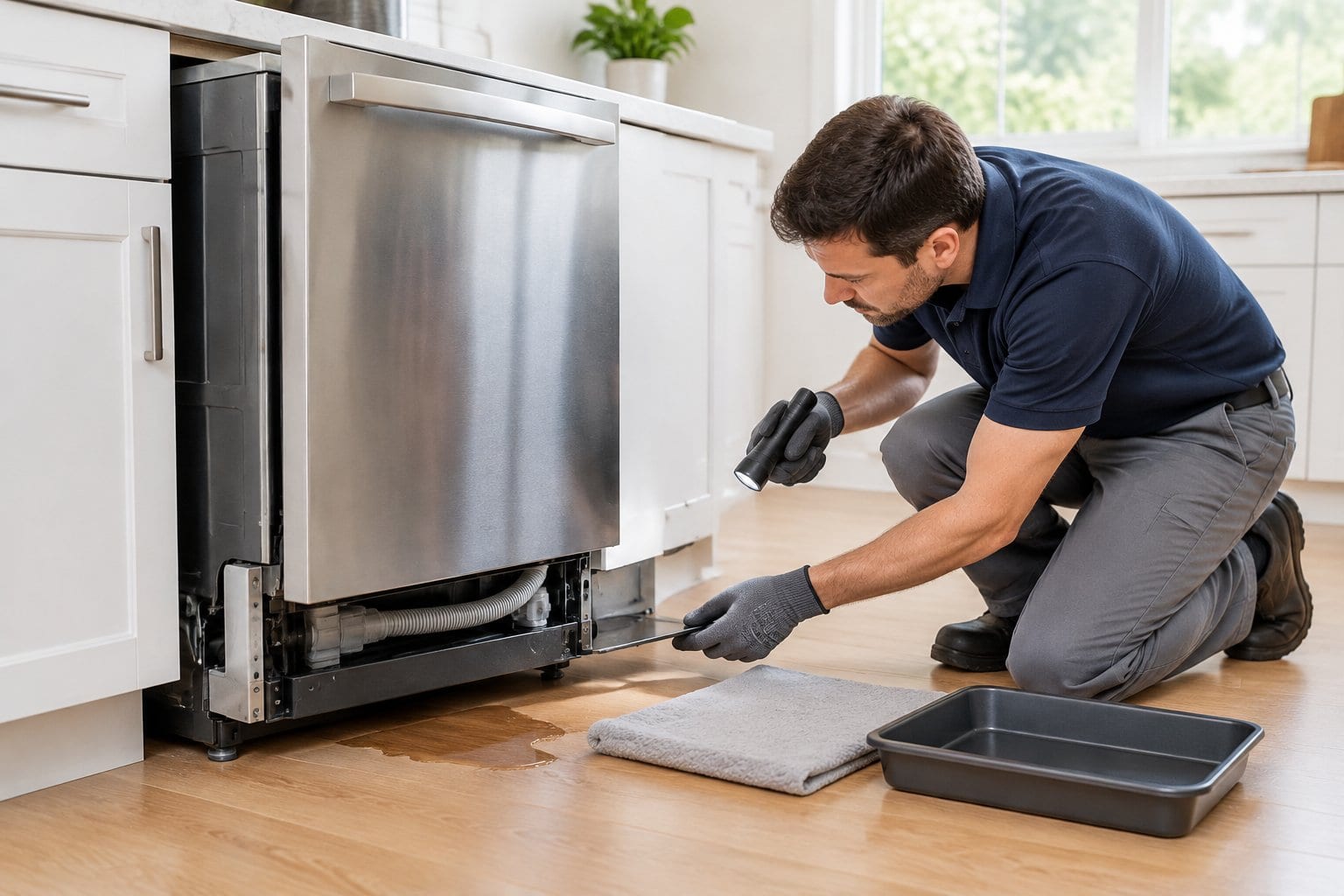
Switch off the dishwasher's breaker or unplug it, then close the supply valve under the sink. That valve is usually a small chrome handle on the hot water line. Leave both off until you know the cause.
Before you mop up, take photos: the puddle, the toe kick, the floor edge and the cabinet bases either side, plus a wide shot of the kitchen. Phone photos carry a date and time, and that matters if this turns into an insurance conversation. Our guide to documenting appliances for home insurance covers what an adjuster will want to see.
Then dry what you can reach with towels or a wet/dry vacuum, and open the sink cabinet and nearby drawers so air gets to damp wood. Press on the flooring next to the dishwasher. A soft, raised or spongy spot means water has already got underneath.
Finally, jot down two things while they're fresh: where the water showed up (front center, a front corner, the back) and when (during fill, during the wash, while draining or with the machine off). Those two notes will save you more time than anything else in this guide.
Front of the Door: Suds, Gasket, Loading and Level
Water that appears at the front, under the door, during the wash almost always comes from one of these four. None of them needs the dishwasher pulled out.
Suds
Hand dish soap, a squirt of laundry detergent or a rinse aid mix-up all make far more foam than a dishwasher can hold, and the foam pushes water past the door seal. If you see suds in the tub, that's your answer. Scoop the foam out, wipe the tub, pour in a few cups of cold water and run a short rinse. Repeat until it runs clear, and use only automatic dishwasher detergent from now on.
Door gasket and lower seal
Run your fingers around the rubber gasket on the tub opening and along the strip seal at the bottom of the door. You're feeling for cracks, flattened sections, food stuck in the channel or a spot where the gasket has pulled out of its track. A gasket that looks fine but has a fold in it will leak at exactly that fold. Clean it with warm soapy water and a soft brush. A cracked or hardened gasket needs replacing with the part for your model.
Check the latch while you're there. If the door doesn't pull tight against the seal when it clicks shut, a loose screw or bent strike is letting water past.
Loading
A baking sheet or cutting board standing near the door can deflect the spray straight at the seal, and a spatula dangling through the rack can push the gasket out of place. Reload with nothing tall near the door, and spin the spray arms by hand to make sure nothing stops them.
Level
A dishwasher that tilts forward lets water pool at the front of the tub and run under the door. Put a level across the front edge of the open tub, then front to back along a rack rail. Floors settle and cabinets shift, so a machine that was level at installation can drift. With the power off, the leveling feet adjust behind the toe kick.
Underneath: What the Timing Tells You
If the water is coming from under the machine rather than the door, remove the toe kick panel (usually two screws), lie on the floor with a flashlight and run a short cycle with towels down, watching each stage. Keep your hands out while it's running.
Wet while it drains
Follow the drain hose to the sink drain, disposal or air gap. A clamp that has loosened slightly will only drip while the pump is pushing water out, so this one is easy to miss if you look at the wrong moment. Tighten a loose clamp, and replace a hose that's cracked or gone stiff. A partly blocked drain line can also force water back out at the connection.
Wet while it fills, or with the machine off
That points to the supply side, since nothing else is moving water. On many models the supply line connects at the front left corner behind the toe kick, which is why a front-left puddle so often turns out to be a loose fitting. Tighten the coupling by hand, then a little more with pliers. A drip from the body of the water inlet valve, or water that keeps trickling into the tub after the machine stops, means the valve has failed.
Wet during the wash, center or back
This usually comes from the pump, the sump or the seal around the motor shaft. Whirlpool's own dishwasher leaking troubleshooting guide lists the motor shaft seal among the causes on its models. Look for white mineral trails or rust stains on the pump housing. A hairline crack in the plastic sump or the tub floor produces the same symptom. Because these parts sit next to the motor wiring, this is technician territory.
Overfilling
Most dishwashers have a small dome-shaped float in a front corner of the tub floor. When the water lifts it, a switch stops the fill. If grease or scale jams it in the down position, the machine keeps filling until water spills past the door. Lift the float with a finger: it should slide up and down freely and drop back on its own. Clean around it and under its cap. If the tub still overfills with a clean float, the switch or the inlet valve is at fault.
When to Hand It Over
Stop using the dishwasher and leave the breaker off if you see sparks, smell burning, find water near the electrical box under the unit or the breaker trips. Book a technician if the leak returns after you've ruled out suds, the gasket, loading, level and the hose clamps. If the floor is soft, the cabinet bases have swollen or you can smell mustiness, water has been there a while, and a water damage specialist should check for trapped moisture as well as the appliance tech fixing the source.
Ask the technician to name the failed part. A gasket, hose or clamp is a modest repair. An inlet valve sits in the middle. A leaking pump seal often means a whole new pump assembly, and a cracked tub usually ends the machine's life. Find the model and serial number on the tag along the door edge before you call, so you can check whether the part is still under warranty. Our walkthrough of an insurance claim for appliance damage covers why the dishwasher repair and the floor damage are usually handled separately.
After any repair, run a cycle with a towel along the front edge and check behind the toe kick at fill, wash and drain. Keep the invoice and the part name with the rest of your home repair and contractor records, since a buyer's inspector may ask about that water stain years from now.
Frequently Asked Questions
Can I keep using the dishwasher while I wait for a repair?
Only if you've found and fixed the cause, such as suds or a loose clamp. For anything else, leave the supply valve closed. Running it again just adds water to a subfloor that may already be wet.
Should I put a leak sensor under the dishwasher?
It's a sensible, inexpensive step, especially if the kitchen sits over a finished basement. A battery water sensor on the floor beside the dishwasher, or under the sink, sounds an alarm at the first sign of water, long before a slow drip shows through the flooring.
Does homeowners insurance cover damage from a dishwasher leak?
Policies often cover sudden, accidental water damage to floors and cabinets, but rarely the dishwasher itself. Damage from a slow leak that went on for weeks is commonly excluded as wear or neglect. Coverage depends on your policy, so report it promptly and keep your photos and repair records.
Why is the floor wet but I can't see a leak?
The water may be coming from under the sink rather than the dishwasher. Check the sink trap, the disposal and the supply valve itself, and dry everything so you can watch for the first new drop.
Catch It Early Next Time
The fix often comes down to details like where the supply line connects on your model, which float design it uses and whether the inlet valve is still covered. Manse identifies your exact dishwasher from its rating label and answers those questions from its manual and warranty record. When an adjuster or a buyer later asks about the leak, it can answer from your own folio, with the install date, the repair invoice and the photos you took today, all private to you.