A furnace is short cycling when it fires up, runs for only a minute or two, shuts off and then starts again soon after, over and over, while the house struggles to reach the temperature you set. The usual causes are overheating from a clogged filter or blocked vents, a thermostat that's reading the wrong temperature, a dirty flame sensor, a blocked vent pipe, or a furnace that's simply too big for the house. How long each run lasts, and what stops it, tells you which.
It's worth fixing promptly. Every start is the hardest moment in a furnace's life: the igniter heats, the inducer and blower motors spin up from rest, and the heat exchanger expands and contracts. Dozens of extra starts a day wear those parts out faster, waste fuel, and leave rooms swinging between warm and chilly.
A note on safety before you start. A gas smell or a sounding carbon monoxide alarm means everyone leaves the house first, and the call to the gas company or 911 is made once you are outside. For anything beyond the thermostat, the filter and the outside vent pipes, switch the furnace off at its service switch first. Turning the thermostat down doesn't cut power to the cabinet.
Time One Full Cycle First
Ten minutes with a watch saves a lot of guessing. Stand where you can hear the furnace, or watch the burners through the small viewing window if yours has one, and note three times: when the burners light, when they go out, and when the blower stops. Then note whether the thermostat was satisfied (the room reached the set temperature) or the furnace quit on its own.
While you're there, look at the status light on the control board through the window in the lower panel. If it's flashing a pattern, write it down before you touch anything, because switching off can clear it.
What the timing tells you
- Burners go out within seconds, then the furnace retries. The flame sensor most likely can't confirm the flame. The board shuts the gas off as a precaution and tries again, and after several failures it locks out.
- Burners run a few minutes, shut off, and the blower keeps going. That's the high-limit switch cutting the gas because the furnace is overheating. Once it cools, it lights again.
- A normal-looking cycle, but the thermostat ends it early. The furnace is working. Either the thermostat is getting a false reading, or the furnace puts out so much heat that the thermostat's room warms up long before the rest of the house.
Context matters. On a mild fall day, short runs are normal, because the house loses heat slowly and needs only a little. Two-stage and modulating furnaces run long, gentle cycles on low fire most of the time. The clearest warning sign is a change: a furnace that used to run steadily and now starts and stops several times as often in similar weather.
Fixes You Can Make Yourself
Restore airflow
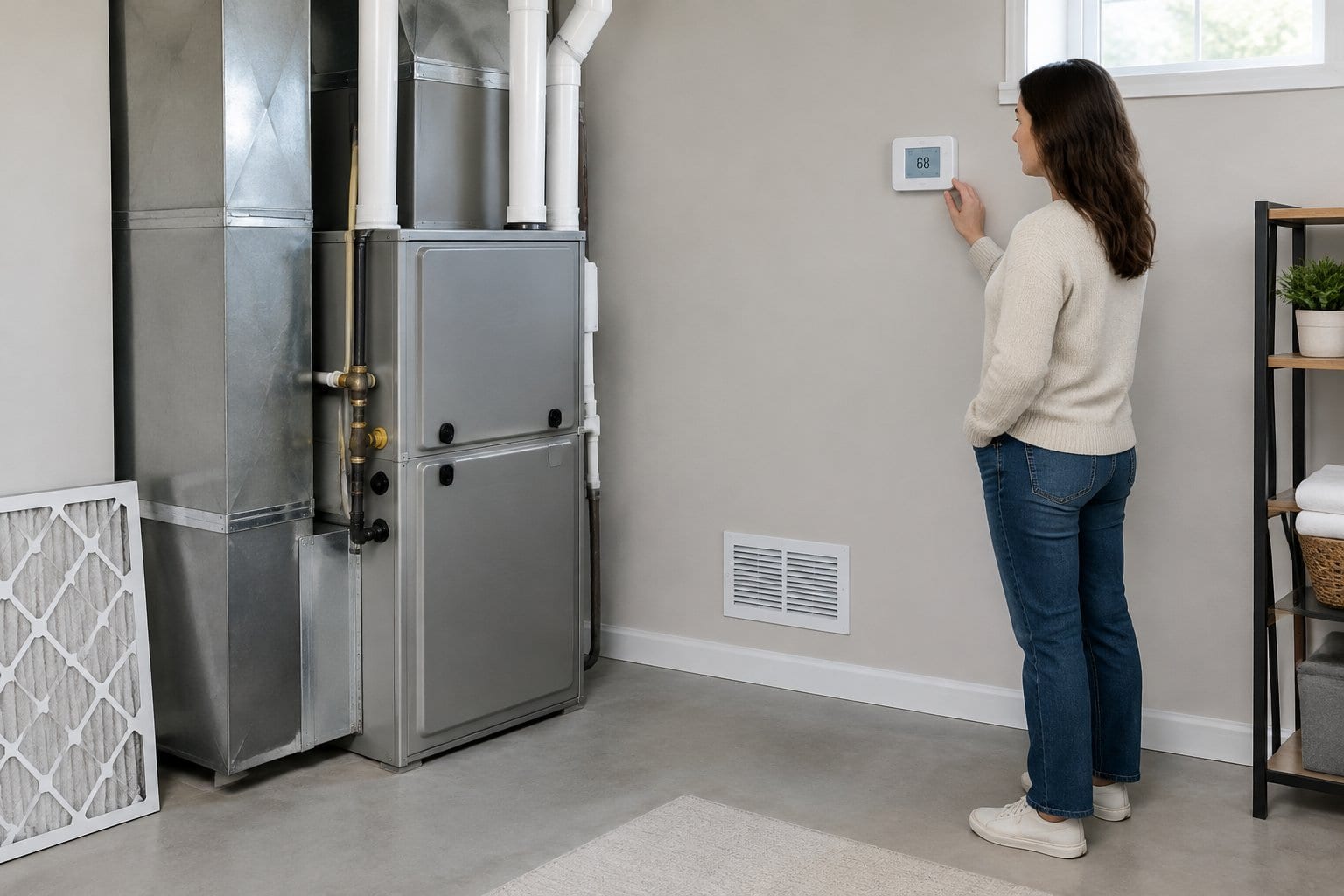
A clogged filter is the most common cause of overheating and the cheapest to rule out. Slide it out with the furnace off and hold it up to a light. If you can barely see light through the media, fit a new one of the same dimensions with its arrow toward the furnace. An unusually dense, high-rated filter can restrict a furnace as badly as a dirty one, so if cycling started after a filter upgrade, go back to the rating in the manual.
Then open every supply register fully and clear anything blocking the return grilles. Registers closed in spare rooms over the summer are easy to forget, and a furnace sized for a whole house's airflow can't push its heat out through half the vents. Both checks belong on your regular home maintenance checklist so the problem doesn't creep back next winter.
Check the thermostat's position and settings
A thermostat on a wall that gets afternoon sun, above a lamp or TV, next to the kitchen or near a supply register warms up ahead of everything around it and ends the cycle early. You'll often notice that the thermostat's room is comfortable while the bedrooms are cold. Moving a thermostat means rerouting wiring, so it's a small job for a technician, but it's worth knowing that location is the cause before you pay for anything else.
Settings matter too. Many digital thermostats have a cycle rate or temperature swing (sometimes called differential) setting. If it's set very tight, the thermostat calls for heat, gets a tiny rise, stops, and calls again. The installer menu in the thermostat manual explains how to change it. Also replace the batteries, since a weak battery can make some models drop the call for heat at random.
Clear the outside vent pipes
High-efficiency furnaces vent through two plastic pipes, one bringing in combustion air and one carrying exhaust, usually on a side wall or the roof. Snow drifts, frost, leaves or a bird's nest can partly block them. The furnace may start, sense poor draft through its pressure switch, and shut down, then try again a few minutes later. Clear what you can reach by hand from the ground. Leave crushed, iced-up or roof-height pipes to a technician, and don't cut or reshape them.
Faults That Need a Technician
If a clean filter, open vents, a sensibly placed thermostat and clear pipes don't stop the cycling, the remaining causes involve gas, combustion or safety controls. Trane's troubleshooting guide for furnace short cycling works through many of the same suspects.
A flame sensor that keeps failing to read the flame usually just needs cleaning, and a technician can also measure its signal to see whether it needs replacing. Overheating that continues with a fresh filter points to a weak blower motor or capacitor, a dirty blower wheel, a clogged coil above the furnace or ducts that are too small. A limit switch that has tripped many times can begin opening at lower temperatures, which makes the problem self-reinforcing. Never bypass one to keep the heat on.
On high-efficiency furnaces, a clogged condensate trap, a cracked pressure switch hose or a failing inducer motor all produce the same start-and-stop pattern as a blocked vent. On older furnaces that vent through a metal flue or chimney, debris or a damaged liner is a combustion safety issue, not a nuisance. Years of overheating can also crack a heat exchanger, which is why a technician will inspect it closely on a furnace with a long history of short cycling.
When the Furnace Is Simply Too Big
An oversized furnace short cycles with every part working perfectly. It blasts the area around the thermostat with heat, satisfies the thermostat in a few minutes and shuts off, while rooms farther away never get a proper share. You'll see frequent, normal-looking cycles, no fault codes and uneven temperatures from room to room.
Oversizing is common. Replacement furnaces are often matched to the size of the old unit, or chosen from square footage alone, even though new windows, insulation and air sealing may have cut the home's heat loss sharply since the original was installed. The proper method is a room-by-room heat loss calculation, known in the trade as ACCA Manual J. Ask any contractor quoting a replacement whether they'll run one.
There's no part to fix in this case, so the real decision comes at replacement time. A correctly sized two-stage or modulating furnace runs longer, quieter cycles at lower output. If yours is getting on in years, our appliance lifespan chart helps you weigh another repair against replacing it.
A furnace replacement is a large, lumpy expense, and it rarely arrives at a convenient moment. Our guide to budgeting for home repairs covers how to set money aside for the big systems before they force the decision.
The Model Number Settles a Lot of This
Whether your furnace is single-stage or two-stage, what output it's rated for, how old it is and which filter rating it tolerates are all on the rating plate and in the manual. Manse reads the plate from a photo, confirms the exact model and when it was made, and answers from that unit's own manual, so a question like "what does four flashes mean on my furnace?" or "is this a two-stage model?" gets the answer for your furnace rather than a generic chart.
Frequently Asked Questions
Why does my furnace turn on and off every 20 minutes?
That can be perfectly normal. In cold weather a furnace that runs for several minutes, satisfies the thermostat and rests for a while before starting again is doing its job. It becomes short cycling when each run is very brief and the house still isn't reaching the set temperature. Time the burner-on portion, not the gap between starts.
Does short cycling raise my gas bill?
Usually, yes. A furnace burns least efficiently during the first minutes of each cycle, before the heat exchanger and ducts warm up, so many short runs waste more fuel than fewer long ones. Overheating cycles also send heat up the vent instead of into the house.
Can a new smart thermostat cause short cycling?
It can. If it was set up for the wrong system type, or its cycle rate isn't suited to your furnace, it may start and stop the furnace too often. Some smart thermostats installed without a common wire also lose power intermittently, which drops the call for heat. Check the system type in the setup menu before anything else.
Is it safe to keep using a furnace that short cycles?
For a day or two while you wait for a technician, generally yes, provided your carbon monoxide alarms are working and the cause isn't a blocked vent or a burning smell. Don't let it run that way all season. The extra starts wear out parts, and persistent overheating stresses the heat exchanger.
Getting a Straight Answer Faster
Short cycling is a diagnosis by elimination, and every step is quicker when you already know the furnace's model, staging and service history. Manse works from your home's own records, from the rating plate to the last technician's invoice, so "is this normal for my furnace?" gets an answer about yours. See how Manse works.