
To clean an ice maker, switch it off, throw out the ice, wash the bin and every removable part in warm soapy water, then descale the water path with the cleaner your manual approves and rinse until no taste is left. Discard the first batches of ice afterward. A refrigerator ice maker usually needs this about twice a year, while countertop and undercounter machines need it more often because water sits in them or runs through them constantly.
What changes from one machine to the next is where the scale and slime collect, and how much of the water system you can actually reach. The sections below take each type in turn.
Signs It's Time
You rarely need a calendar to tell you. Ice that smells like the freezer or tastes flat, cubes that come out cloudy or misshapen, a white crust on the tray or water pan, and pink or gray slime in the bin are all signs that scale or biofilm has started. A countertop machine that harvests smaller cubes than it used to is often scaled on the evaporator prongs.
Hard water speeds all of this up. If your kettle and shower glass build up white residue quickly, expect to clean an ice machine more often than its manual's baseline.
Before You Start
Check which cleaner your machine allows
This is the one step people skip and later regret. Manufacturers differ on what their machines can take. Many countertop makers accept a diluted vinegar solution. Plumbed undercounter units often specify a nickel-safe ice machine cleaner and nothing else, because the evaporator plating can be damaged by harsher acids. The wrong product can pit metal parts, leave a taste that takes days to rinse out, or cause problems with a warranty claim later.
Your use and care guide tells you the approved cleaner, the amount and whether the machine has a clean cycle. If the paper copy is long gone, our guide to keeping appliance manuals where you can find them covers tracking down a replacement.
Gather soft tools
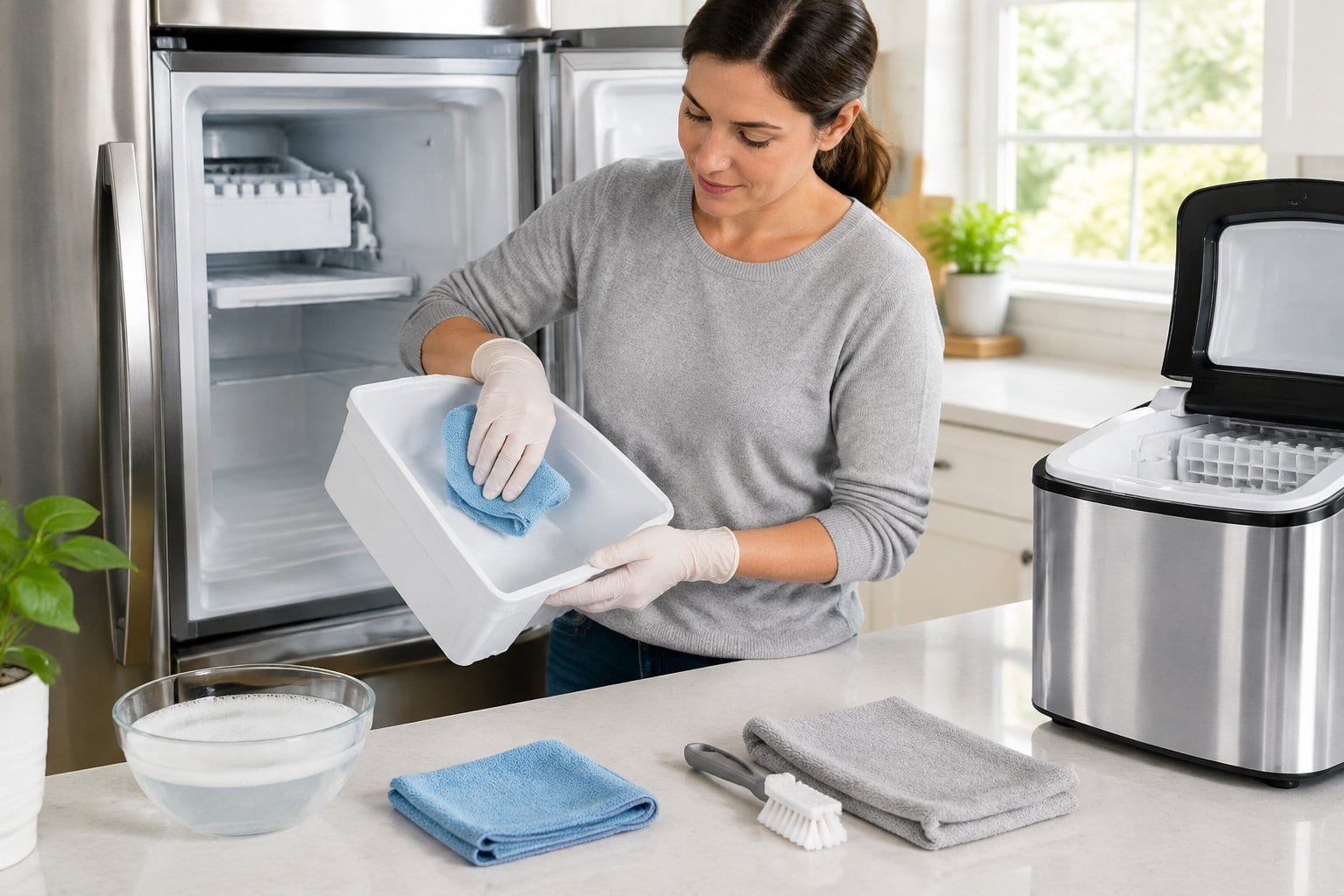
You need mild dish soap, the approved cleaner, a few microfiber cloths, a soft bottle brush and an old toothbrush for corners. Leave scouring pads and abrasive powders out of it, since scratches in plastic give bacteria somewhere to hold on.
Power off and empty it
Unplug a countertop unit. In a refrigerator, switch the ice maker off at its control or raise the shutoff arm, and unplug the fridge if your hands will be near the ice maker head. For an undercounter machine, switch it off and wait a few minutes so any ice mid-harvest drops into the bin. Then empty the bin into the sink or a cooler, and drain the reservoir through its plug or cap if your model has one.
Countertop Ice Makers
Countertop machines are the easiest to clean thoroughly because almost everything is within reach, and the hardest to keep clean because water stands in the reservoir between uses.
- Remove the basket, scoop and any drip tray, and wash them in warm soapy water. Rinse and set them on a towel to dry.
- Mix the approved cleaner (or a diluted vinegar solution, if your manual allows it) and wipe the inside of the machine, paying attention to corners, the water level sensor and the base of the evaporator prongs.
- If you see heavy white scale, fill the reservoir with the solution and let it sit for a while before going further.
- Run the self-clean cycle if your machine has one. If it doesn't, run two or three ice cycles with the solution and throw away every batch.
- Drain, refill with fresh water and run plain cycles until there's no smell or taste of cleaner.
- Dry the interior and leave the lid open for an hour before making ice again.
Between deep cleans, emptying the reservoir when you won't use the machine for a few days does more than anything else to prevent slime.
Refrigerator Ice Makers
In a fridge, you clean what you can reach and leave the ice maker head itself alone. The water path inside the mold is flushed by fresh water every cycle, so the bin, the chute and the area around the ice maker are where problems collect.
Clear some space in the freezer, switch the ice maker off and pull out the bin. Most release with a latch or a firm lift. A bin frozen into a door compartment usually lets go after a minute of warm water around its edges. Wash it in warm soapy water, paying attention to the auger and any crevices around it.
Wipe the walls around the ice maker and the dispenser chute with a cloth dampened in the solution your manual names. A long, thin brush reaches into the chute. Don't remove the ice maker's cover or pry at the mold.
Dry the bin completely before you slide it back, because a wet bin freezes to its rails. Switch the ice maker on and throw away the first two harvests.
The fridge's water filter does a lot of the work of keeping ice clean, so it makes sense to change it on the same day if it's due. Odd-tasting ice right after a filter change is usually just carbon fines and air working through the line, and it clears after a few more batches.
Undercounter Ice Machines
A built-in undercounter machine runs on a direct water line and makes ice around the clock, so scale builds faster on its water pan and evaporator than in any other type. These machines have a dedicated cleaning program, and following the manual exactly matters more here than anywhere else.
The general sequence is to switch the unit off, empty the bin, drain the water pan through its cap and refit the cap firmly (a loose cap lets water escape, and you get thin ice or none at all). Then add the approved cleaner and water in the amounts your manual gives, and start the clean cycle. Whirlpool's instructions for cleaning its undercounter ice makers are a good example of how specific these can be, down to how much cleaner goes in and which light shows the cycle is finished.
When the cycle ends, check what comes out of the drain. If it still smells of cleaner, run the cycle again. Then wash the bin, scoop and door gasket by hand with mild soap, and sanitize them with a weak bleach solution only if your manual allows it, followed by a thorough rinse. Keep plastic parts out of the dishwasher unless the manual says otherwise, since dishwasher heat can warp them.
Many undercounter units have a status light that changes color when cleaning is due. Treat it as a deadline rather than a suggestion, because a heavily scaled evaporator makes thin ice and works the compressor harder.
Building It Into Your Routine
A twice-yearly clean for a fridge ice maker fits neatly into a seasonal list alongside cleaning the condenser coils and changing the water filter. Our home maintenance checklist sets out where tasks like these fit through the year.
Countertop and undercounter machines need a tighter rhythm, often every few months and sooner with hard water. Writing down the date of each clean, along with the cleaner you used, saves you guessing next time. A simple maintenance log is enough to show when the last one happened.
If mold returns within weeks of a careful clean, the growth is likely inside the water line, the inlet valve or the evaporator, where you can't reach it. That, along with leaks under the unit or a machine that stays slow after descaling, is a job for a technician.
Frequently Asked Questions
Can I run vinegar through any ice maker?
No. Many countertop models accept it, but plenty of undercounter machines specify their own nickel-safe cleaner and warn against anything else. Check the manual before you pour.
Does the self-clean cycle clean the bin too?
No. The cycle flushes the water system only. The bin, scoop and drip tray still need washing by hand each time.
Is pink slime in the ice bin dangerous?
Pink or orange slime is usually an airborne bacteria that thrives in damp places, the same film that shows up in shower corners. It's a sign the bin needs a thorough wash and a full dry, and it tends to come back if the bin stays damp between uses.
Should I use distilled water in a countertop ice maker?
Only if the manual allows it. Distilled water slows scale, but some machines rely on minerals in the water for their level sensors to work properly.
Getting the Cleaner Right First Time
The approved cleaner, the dose and the clean-cycle button sequence are all specific to your machine's model. Point Manse at the rating label on your ice maker or refrigerator and it brings up that model's care instructions and warranty terms, which settles the vinegar question for your machine before any bottle gets opened.