
Your garbage disposal is completely dead. You flip the switch, nothing happens, and now there is standing water in the sink. Most of the time, a garbage disposal not turning on has a simple fix you can handle yourself in under ten minutes. The problem usually comes down to a power issue, a tripped reset button, or a jam inside the unit.
Knowing which one you are dealing with makes the difference between a five-minute fix and an unnecessary service call. The checks in this guide are ordered from simplest to most complex, so you can work through them without wasting time.
Keep reading this Manse guide to learn how to diagnose a disposal that will not start, when to use the reset button and the hex key, and exactly when to stop and call a licensed plumber instead.
Start With the Safest First Checks
Before touching anything under the sink, turn the disposal switch off and leave it off. The three checks below cost you nothing and take less than five minutes.
Confirm the Unit Is Plugged In
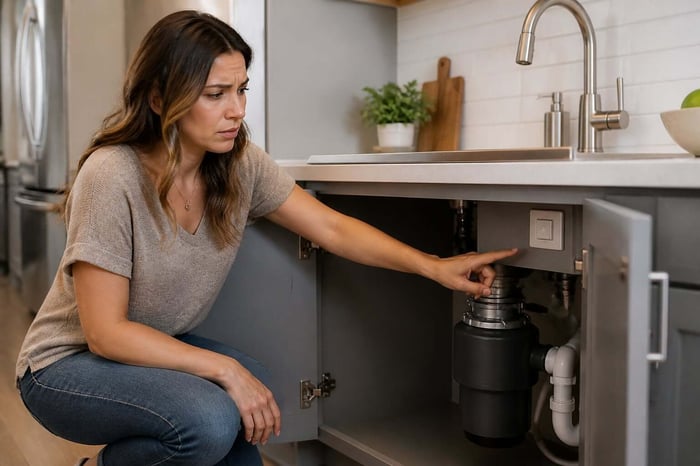
Open the cabinet under your sink and look for the disposal's power cord. It plugs into a standard outlet mounted to the inside cabinet wall. The cord can get knocked loose by cleaning supplies, a bottle of dish soap, or anything stored under there.
Push the plug firmly into the outlet until it seats fully. If the outlet has a loose fit, try plugging in a small lamp or phone charger to confirm the outlet itself is live. A dead outlet is its own problem, separate from the disposal.
Test the Wall Switch
A failed wall switch is more common in older kitchens than most people expect. The switch controls a switched outlet under the sink, so if the switch itself stops working, the disposal gets no power even when the cord is fully plugged in.
To test it, plug a different appliance directly into the under-sink outlet while the wall switch is on. If that appliance does not run either, the switch is the likely problem. A licensed electrician can replace a disposal wall switch in about thirty minutes.
Look for a Tripped GFCI Outlet
Many kitchen disposals plug into a GFCI-protected outlet, the kind with two small buttons in the center labeled "Reset" and "Test". A GFCI trips when it detects a power surge or a ground fault, and when it trips, everything plugged into it goes dead.
Look on the wall near the sink, inside the under-sink cabinet, and sometimes behind adjacent cabinet panels. Press the Reset button firmly. You should feel and sometimes hear a small click. If the disposal turns on after that, you found your answer.
Check | What to Look For | Time Needed |
Power cord | Plug seated firmly in outlet | 1 minute |
Wall switch | Switch sending power to outlet | 2 minutes |
GFCI outlet | Reset button popped out | 1 minute |
If none of these three checks restore power, the next step is resetting the disposal itself at the unit.
Reset Power to the Disposal
Every garbage disposal has a built-in overload protector. When the motor overheats or gets overloaded, it shuts itself off automatically. Resetting it is usually fast and simple.
Press the Reset Button on the Bottom
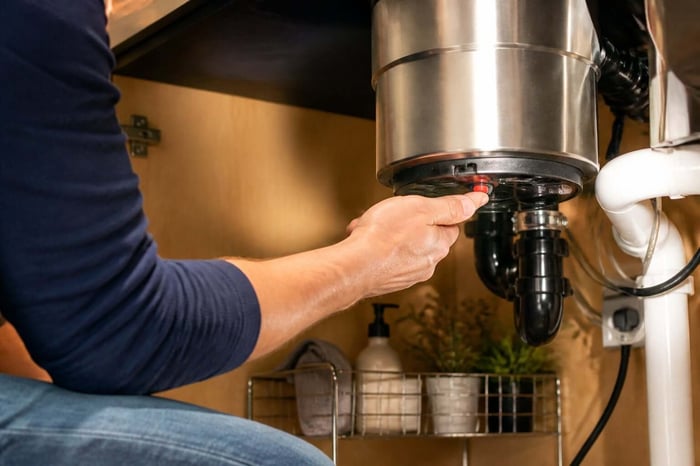
Reach under the sink and feel the bottom of the disposal unit. There is a small button there, typically red, that pops out slightly when the overload trips. If it does not feel flush with the housing, it has tripped.
Press the button firmly until you feel it click back into place. Then turn on a steady stream of cold water, wait about thirty seconds for the motor to cool, and flip the wall switch. Many disposals come back to life at exactly this step.
Check the Circuit Breaker
If the reset button did not fix it, go to your electrical panel. Disposals draw a significant amount of power and can trip a circuit breaker, especially if the motor strained hard before shutting off.
Look for a breaker that is off or in the middle between on and off. Switch it fully off first, then back to on. Return to the disposal, press the reset button again if needed, and test the unit.
What It Means if It Trips Again Right Away
If the breaker or reset button trips again within seconds of restoring power, something is still wrong with the motor or what is inside the unit. Repeated tripping is a sign the motor is drawing more current than it should.
The grinding chamber may still have a hard object stuck in it
The motor windings may be failing or shorted
The unit may have been running while jammed for too long and overheated the motor beyond recovery
Do not keep pressing reset if the unit keeps tripping. You could damage the motor further. The next section covers what to do if a jam is the cause.
Clear a Jam Inside the Unit
A jam is one of the most common reasons a disposal trips and goes silent. Hard objects like fruit pits, small bones, or a dropped utensil can lock the grinding plate and stall the motor.
Signs the Flywheel Is Stuck
The most recognizable sign is a brief hum, then silence when you first flip the switch, followed by a trip of the reset button. The motor is trying to run, but the grinding plate will not move.
You may also notice the disposal worked fine just before something hard went in. If you remember putting something unusual down the drain right before it stopped, a jam is almost certainly what you are dealing with.
Use the Hex Key or Manual Turn Slot
Turn off the disposal at the wall switch before doing anything else. Most disposals include a small hex key (also called an Allen wrench) that came in the original packaging, usually a quarter-inch size.
Insert the hex key into the slot at the very center of the unit's bottom.
Turn it back and forth slowly. You will feel resistance at first.
Work it in both directions until the plate moves freely.
Press the reset button, run cold water, and test the disposal.
If you do not have the original hex key, a standard quarter-inch Allen wrench from a hardware store works on most brands. Some models also have a manual turn slot on the inside of the drain opening, which you can move with a wooden broom handle, not your hand.
Remove Blockages Without Reaching In
Never put your hand into the disposal opening, even when the unit is off and unplugged. Use long-handled tongs or needle-nose pliers to pull out any visible debris from above the drain opening.
Use a flashlight to look into the drain before and after you clear the jam. Small objects, such as a bottle cap or a broken piece of ceramic, can hide near the impeller and cause the unit to jam again within minutes of restarting.
Once the plate turns freely and the drain is clear, run cold water for thirty seconds before turning the disposal back on. If the unit still does not run after a successful unjam and reset, the motor itself may be the problem.
Know When the Motor or Wiring May Be the Problem
Some disposal problems go beyond a reset button or a stuck plate. These symptoms tell you the motor or wiring is the actual issue.
Humming With No Grinding Action
A hum that runs continuously without any grinding means the motor is receiving power but the shaft is not turning. This usually points to a seized motor, a broken impeller plate, or a jam that the hex key did not fully clear.
If you have already used the hex key and the plate turns freely but the hum without grinding persists, the motor is likely failing internally. Continued use in this state can burn out the windings.
No Sound at All After Reset Attempts
Complete silence after you have confirmed power, pressed the reset button, and checked the breaker means the motor is not receiving a signal or cannot respond to one. This can point to a failed start capacitor, damaged internal wiring, or a motor that has burned out entirely.
At this stage, the repair cost typically approaches or exceeds the cost of a new unit. A disposal that is more than 8 to 12 years old and shows no signs of life is often more economical to replace than to repair.
Burning Smell, Leaks, or Visible Damage
Symptom | What It Likely Means | Your Next Step |
Burning smell from drain | Motor winding failure | Turn off power, do not use |
Water leaking from bottom | Worn internal seal or cracked housing | Stop use, call a plumber |
Visible rust or corrosion | Long-term moisture damage | Replacement likely needed |
Electrical buzzing sound | Wiring fault | Call a licensed electrician |
A burning smell is a clear stop signal. Turn the disposal off at the wall switch and at the breaker, and do not turn it back on. These are not problems to troubleshoot further with DIY steps.
The next step is knowing which of these situations genuinely needs a professional and what to have ready before that call.
When to Stop Troubleshooting and Call a Pro
Some disposal problems are safe and simple to handle yourself. Others are not. Knowing the line saves you time and keeps you safe.
Problems That Need a Licensed Plumber
Repeated circuit breaker trips after resetting
Burning smell coming from the unit or drain
Water leaking from the bottom of the disposal housing
No response after confirmed power, reset button, and hex key steps
Visible corrosion, cracked housing, or damaged wiring under the sink
A plumber can also handle the full disposal replacement if the unit is beyond repair. In most US markets, a disposal replacement, including labor, runs between $200 and $400, depending on the model you choose and your local labor rates.
What to Have Ready Before the Service Visit
When you call a plumber, they will ask about the disposal's brand, model, and age. Most homeowners do not know these details off the top of their head, which adds time to the call and sometimes to the diagnosis.
Look for a label on the side or bottom of the unit. Common brands include InSinkErator, Moen, Waste King, and Badger. The model number is usually printed on a sticker near the mounting ring or on the bottom near the reset button.
Write down what happened before the unit stopped working, which checks you already tried, and whether the unit is still under warranty. A new disposal typically carries a one- to seven-year warranty depending on the model tier. Having that information ready before the technician arrives can make the visit faster and help you avoid paying for a repair that should be covered.
Make the Next Sink Problem Easier to Handle
A disposal that stops working is frustrating enough the first time. Going through it again without a record of what happened, what model you have, or when it was installed makes it worse.
Record the Model Number and Warranty
Find the model number sticker on your disposal now, while you are already under the sink. Write it down or take a photo. The model number tells a repair technician exactly what parts are compatible and whether the unit qualifies for warranty service.
Most mid-range disposals carry a two- to five-year limited warranty. Premium models from brands like InSinkErator can carry a seven-year in-home service warranty. If your unit is still within that window, a covered repair or replacement is worth pursuing before you pay out of pocket.
Track Repairs and Simple Maintenance
Each time you clear a jam, press the reset button, or have a technician service the unit, write it down. A simple record of dates and what was done gives you a clear picture of whether your disposal is nearing the end of its useful life or just had an isolated problem.
Disposals typically last eight to fifteen years with normal use. Knowing your unit's age and repair history helps you make a confident decision about repair versus replacement, rather than guessing.
Frequently Asked Questions
Why Does My Garbage Disposal Hum but the Blades Will Not Spin?
A hum with no spinning means the motor has power, but the grinding plate is locked. Use a quarter-inch hex key in the slot on the bottom of the unit to manually rotate the plate and free the jam, then press the reset button before restarting.
What Should I Check First When the Disposal Has Power but Will Not Run?
Start with the reset button on the bottom of the unit, then check the GFCI outlet under the sink or near the counter. If both are fine, go to the circuit breaker panel and look for a tripped breaker on the kitchen circuit.
Why Did My Disposal Stop Working Right After I Pressed the Reset Button?
If the reset button trips again almost immediately, the motor is drawing too much current, which usually means a jam is still blocking the plate or the motor is failing. Use the hex key to confirm the plate moves freely before pressing reset again.
Where Is the Reset Button and How Do I Know It Actually Tripped?
The reset button is located at the bottom of the disposal unit, typically in the center. When it trips, the button pops out slightly and sits about a quarter inch below flush. Press it firmly until you feel a click and it sits flat again.
Why Is the Sink Backing Up When the Disposal Will Not Start?
A disposal that will not run leaves the drain line without its usual clearing action, so food and water back up into the basin. The backup is due to the disposal being inactive, not to a separate drain clog, and will resolve once the disposal is restored to working condition.
When Is It Time to Repair the Unit Versus Replace the Whole Disposal?
If the unit is more than ten years old, has already had one repair, and is now showing motor failure or repeated tripping, replacement is usually the smarter financial choice. Repair costs for a failing motor often run close to the price of a new mid-range unit.
Keep Disposal Records in One Private Place
This is exactly the kind of appliance record that is easy to lose. The manual goes in a drawer and disappears. The warranty email gets buried. The date of the last repair fades from memory. Manse gives you one private place to store the model number, warranty details, and any service notes for your disposal, as well as for every other appliance in your home.
Add your home to Manse for free and keep all appliances, warranties, and maintenance records in one private place. It takes a few minutes to set up; everything you store stays private and encrypted, and the next time your disposal acts up, you will have the information you need ready to go.