A furnace blowing cold air usually comes down to one of three things. The thermostat fan is set to On, so the blower runs between heating cycles. A restriction such as a clogged filter has made the furnace overheat, and a safety switch has shut the burners off while the blower keeps going. Or the burners aren't lighting at all. The pattern tells you which: cold air from the start, warm air that turns cold after a few minutes, or air that's never warm.
The cold air is a useful clue in itself. It means the blower motor and the ducts are working, so whatever has failed is in the part that makes heat or in a control that has turned the heat off on purpose.
If you smell gas or a carbon monoxide alarm goes off, stop reading and get everyone outside, then call the gas utility or 911. Beyond the thermostat and the filter, everything here is about watching and listening rather than opening the furnace up.
Cold From the Moment It Starts
The fan setting
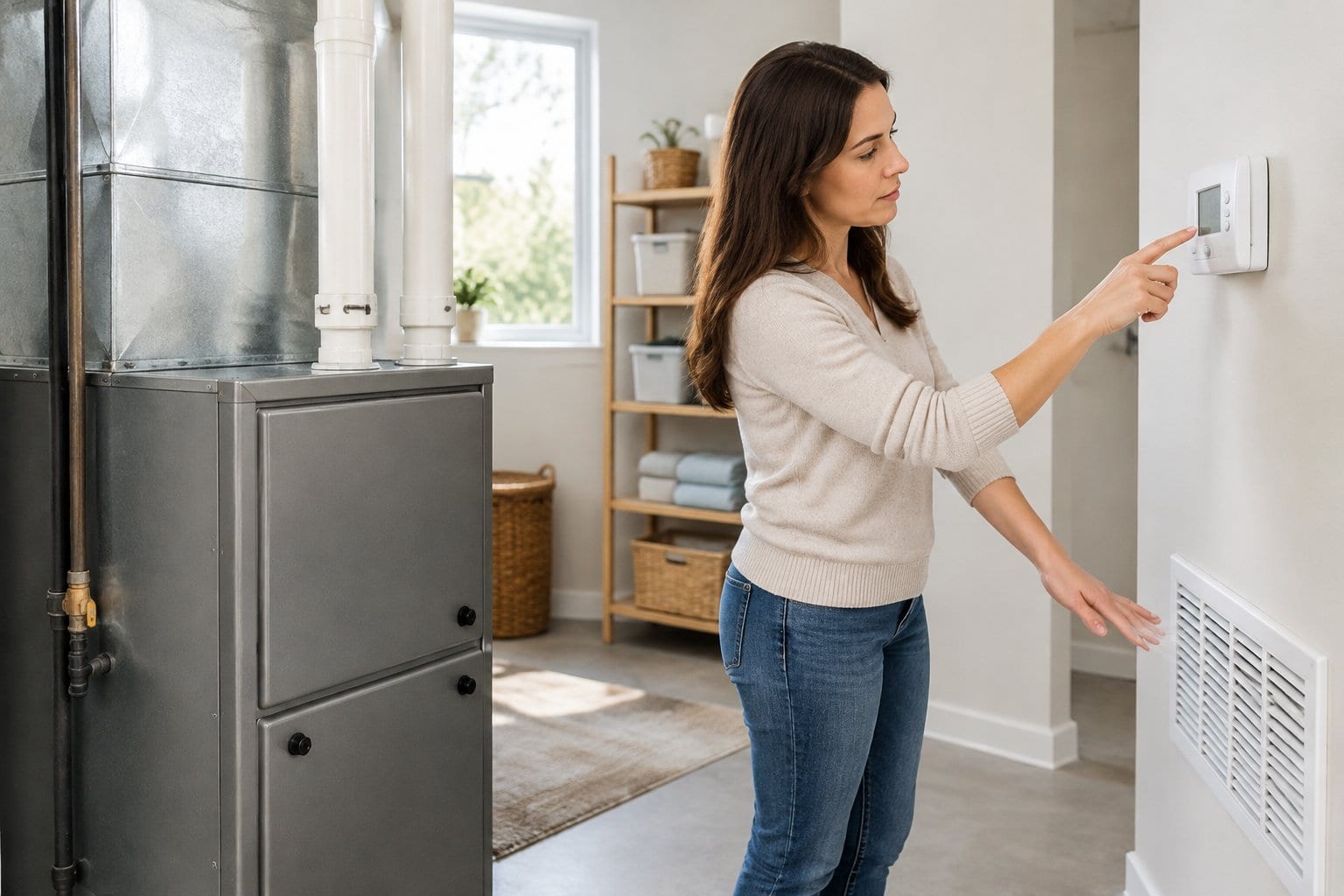
Look at the fan setting on the thermostat. On means the blower runs all the time, whether the burners are lit or not, so between cycles you get room-temperature air that feels cold against your hand, especially from registers on an outside wall. Auto runs the blower only while the furnace is heating. Switch to Auto, confirm the mode says Heat, and set the temperature a few degrees above the room.
People often set the fan to On over the summer for air circulation and forget it's still there when the heat comes on in October. It's the single most common reason for this complaint.
A normal delay at each end of the cycle
A gas furnace doesn't start the blower the moment the burners light. It waits for the heat exchanger to warm up so it isn't pushing cold air at you, and Carrier notes that some furnaces hold the blower for about 30 to 60 seconds after the burners ignite. At the other end, the blower keeps running for a while after the burners shut off to pull the last heat out of the furnace. On many control boards that fan-off delay is adjustable with small switches, and the settings are listed in the installation manual.
So a few seconds of cool air at the start and lukewarm air at the end are both normal. Judge the furnace on the middle of a cycle. If the air is still cold several minutes after you hear the burners light, something is wrong.
Warm at First, Then Cold
This pattern points to overheating. Every gas furnace has a high-limit switch near the heat exchanger. When air can't move through the furnace fast enough, heat builds up, the limit switch shuts off the gas, and the blower keeps running to cool things down. That's the cold air. Once the temperature drops, the burners relight, and the cycle repeats every few minutes.
Restricted airflow
Pull the filter first. If you can't see light through it, replace it with the same size and with the arrow pointing toward the furnace. Then walk the house. Closed supply registers, a sofa pushed against a return grille or a rug over a floor vent all starve the furnace of air. Shutting registers in unused rooms seems thrifty, but the furnace was sized to move a set amount of air, and closing too many raises pressure in the ducts and pushes heat back into the cabinet.
A very dense filter can cause the same overheating as a dirty one. If the problem started right after you moved up to a much higher-rated filter, try the rating the manual specifies.
When airflow isn't the cause
If a fresh filter and open vents don't stop it, the restriction is somewhere you can't reach: a weak blower motor, a dirty blower wheel, a clogged evaporator coil sitting on top of the furnace, or undersized ductwork. A limit switch that has tripped hundreds of times can also start opening too early. A technician will measure the temperature rise across the furnace and compare it with the range printed on the rating plate. Repeated overheating stresses the heat exchanger, so don't leave this one running all winter.
Never Warm at All
When the air stays cold through a full cycle, the furnace isn't making heat. Stand near it and listen. If you hear the small inducer fan start, a click or two, and then nothing, ignition is failing. If the burners light for a few seconds and go out, the flame sensor probably isn't confirming the flame. Pinning down which part has failed takes a meter and an open burner compartment, so both are technician repairs.
There are two checks you can make yourself. Look at the gas shutoff valve beside the furnace: the handle should run in line with the pipe. Then try another gas appliance, such as the range. If nothing gas-fired works, call the utility.
Oil and propane systems
On propane, check the tank gauge before anything else. On an oil furnace, check the tank, and know that most oil burners have a red reset button on the burner's control box. Press it once, at most. If the burner doesn't fire, stop. Each press can pump more oil into the combustion chamber, and an oil-soaked chamber can light with a dangerous puff of flame when the burner finally catches. An oil furnace that has run dry usually needs a technician to bleed the fuel line before it will restart.
High-efficiency furnaces and condensate
A furnace with two white plastic vent pipes makes water as it runs. If the condensate trap or drain line clogs, a float switch stops the burners while the blower may carry on running. Look for water in the base of the cabinet or a condensate pump that's full to the brim.
Cold Air in Some Rooms Only
If most of the house is warm but one or two rooms get cool air, the furnace is probably fine and the duct feeding those rooms is the problem. Ducts that run through an attic, garage or crawl space can come apart at a joint, and the warm air ends up heating the attic instead. By the time the remaining air reaches the far bedroom, it has cooled. Look at any exposed ductwork you can safely reach for joints that have separated or crushed flex duct. Sealing and reconnecting ducts is worth having done properly, and it's one of the items on a good HVAC maintenance schedule.
If your home has a heat pump with a gas furnace as backup, the air from the heat pump runs cooler than furnace air and can feel lukewarm even when everything is working. That's a different system with its own checks.
Knowing Which Furnace You Have Changes the Answer
The blower delay, the filter size, whether the fan-off timing is adjustable and what each status light means all vary between brands and model series. The fastest route is the manual for your specific unit. With one photo of the furnace's label, Manse pins down the exact model, brings up its installation manual with the fan delay settings and flash code chart, and tells you whether the part a technician mentions is still under warranty.
Booking the Repair
Call a technician when the air stays cold after the thermostat, filter and vents check out, when the furnace keeps cycling between warm and cold with a clean filter, or when the breaker trips more than once. Never bypass a limit switch or a float switch to keep the heat on. Both exist to stop the furnace damaging itself or the house.
Before the visit, note when the cold air starts, whether the burners light, and any blink code from the control board window. A dated record of past repairs and filter changes saves the technician from repeating tests, and our guide to tracking HVAC service visits shows a simple format.
It also helps to have the basics about the house written down before anyone arrives: the furnace model, its install date, who serviced it last and what they replaced. That's what a home profile is for.
Frequently Asked Questions
Why does the air feel cold even though the furnace is running?
Furnace air usually feels warm but not hot, and air coming out of a register in a drafty room can feel cool against damp skin. Hold a kitchen thermometer in the airflow from a register close to the furnace for a minute or two. If it reads well above room temperature, the furnace is heating, and the problem may be heat loss in the ducts or the room itself.
Can a dirty flame sensor cause cold air?
Yes. When the sensor can't confirm a flame, the control board shuts off the gas within seconds, but the blower may still run its cycle or cool-down. You'll see the burners light briefly and go out, often several times before the furnace locks out.
Why does my furnace blow cold air at night but heat during the day?
Check the thermostat schedule first. A night setback lowers the target temperature, and if the fan is set to On, the blower keeps moving unheated air during the setback. If the schedule is fine, colder nights make an overheating or ignition problem show up sooner, so the fault may only be appearing under heavier load.
Should I keep running the furnace while I wait for a repair?
Not if it's cycling between warm and cold. Each overheat stresses the heat exchanger. Switch it to Off at the thermostat, and if it's below freezing outside, take steps to protect the pipes until the technician arrives. If the problem was just the fan setting or a filter, it's fine to carry on.
A Warm House Starts With the Right Records
When the furnace acts up, the useful answers are the specific ones: which model, how old, what the manual says about its blower delay, and whether the repair is covered. Manse builds that picture from the furnace itself and your home's paperwork, so you can ask the question and get an answer about the unit you own. Find out more about Manse.