
A recall headline names a refrigerator with a fire risk or a range with a faulty part, and you can't say whether yours is one of them. You don't know the model number offhand, and the paperwork is somewhere.
Checking takes three steps: find each appliance's model and serial number, search official recall sources, and store those details so the next check takes minutes. Here's how to do each one.
How Do You Identify the Appliances in Your Home?
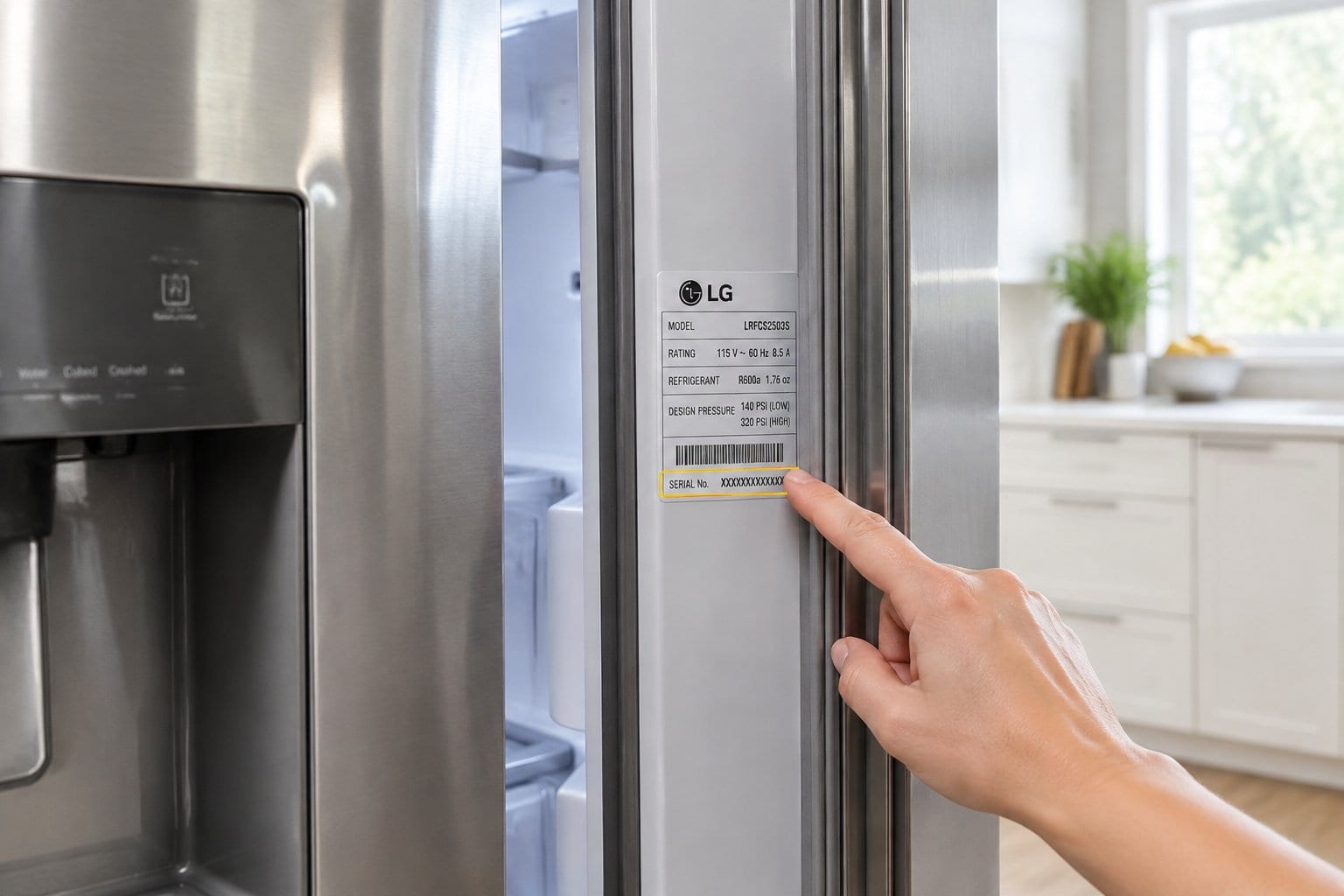
You need the model number and serial number for each major appliance. Recall notices list affected model numbers and often a range of serial numbers, so a brand name and appliance type aren't specific enough.
Where to Find Model and Serial Numbers
The label is usually inside the appliance. Door rims, tub frames, and compartment walls are the most common spots.
- Front-load washers: inside the door, on the rim of the opening
- Top-load washers: under the lid, on the tub rim
- Dryers: inside the door, on the rim of the opening
- Built-in dishwashers: left side of the tub frame
- Refrigerators: inside the fresh food compartment, on the left wall for most styles and the right wall for side-by-sides
- Ranges: on the frame of the oven or the storage drawer
These locations come from Whirlpool's guide to model and serial number locations, and other brands use similar spots. If a label is missing or worn, here's how to find a model number you can't locate.
Which Appliances to Check First
Start with appliances that run unattended or involve heat, water, or gas: ranges, dryers, dishwashers, refrigerators, and water heaters. Then check washers, HVAC equipment, and countertop appliances.
Where Should You Check for Appliance Recalls?
Check the Consumer Product Safety Commission's recall listings, the manufacturer's recall page, and SaferProducts.gov. Each covers something slightly different.
Search Official Notices on CPSC.gov
The CPSC posts recalls of consumer products, including household appliances. On the CPSC recalls page, you can search by keyword and filter by date, hazard, and product category, and the page says its data updates weekly as new recalls are announced.
A typical notice lists exact model numbers and serial number ranges. The CPSC notice for LG's February 2025 electric range recall, for example, includes a table of affected models with "from" and "to" serial numbers, so owners can compare their own unit.
Search by model number first. If nothing comes up, try the brand name and appliance type together.
Check the Manufacturer's Recall Page
Manufacturers keep their own recall pages, which can include extra instructions. GE Appliances maintains a product recall information page organized by category, such as cooking products, dishwashers, and laundry. If you know the brand, its site can confirm a recall and explain how to request the remedy.
Use SaferProducts.gov to Review Safety Reports
The SaferProducts.gov public database holds recalls and unsafe product reports. You can search by product, brand, or model and filter by report type, injury information, and date.
A report on its own doesn't mean a product has been recalled, and the site notes that CPSC doesn't guarantee the accuracy of information submitted by people outside the agency. Reports are still worth reading if you suspect a problem with your appliance.
What Should You Do If an Appliance Is Recalled?
Follow the notice's instructions exactly. Each notice spells out the hazard, what to do now, and how to get the remedy.
Follow the Notice's Stop-Use Instructions
If the notice tells you to stop using the appliance, stop right away. Some notices ask for a different step. The LG range notice, for example, asked owners to contact LG for a free warning label reminding them to use the range's Lock Out/Control Lock function when it isn't in use. Read the hazard and remedy sections before deciding what to do.
Request the Available Repair, Replacement, or Refund
Refunds are the most common remedy across all consumer product recalls. As of October 2026, the CPSC recalls page counted refunds in about 54.5% of recalls over the past five years, followed by repair at 26.5% and replacement at 16.8%, with recalls that offer more than one remedy counted under each.
The notice tells you which remedy applies and how to request it, usually by phone, website, or email.
- Find the consumer contact information in the recall notice.
- Provide your model and serial number when asked.
- Complete any steps the notice requires, such as a claim form or a photo of the product.
- Save the confirmation or claim number you receive.
Keep the Notice and Records of Your Claim
Save a copy of the recall notice along with any claim number, confirmation email, or tracking details for your remedy. If the repair or refund takes weeks, use this record when you follow up.
What Information Should You Keep for Each Appliance?
Keep the model number, serial number, purchase date, retailer, and warranty details together for every major appliance. A recall check, a warranty claim, and a repair call all start with these details.
Save Identification, Purchase, and Registration Details
| Record Type | Why It Matters
|
|---|---|
| Model and serial number | Lets you match your appliance against a recall notice |
| Purchase date and retailer | Supports warranty coverage and proof of ownership |
| Registration confirmation | Shows the manufacturer has your contact details on file |
| Manual or spec sheet | Explains proper use and care for the appliance |
If the purchase paperwork is scattered, here's why appliance receipts are worth saving. For manuals, these steps to organize appliance manuals digitally keep them searchable.
Keep Recall Notices, Claim Numbers, and Remedy Records
If an appliance is recalled, save the notice, your claim number, and confirmation of the repair, replacement, or refund you received. That record shows the issue was addressed if a future buyer, inspector, or insurer asks. It also fits alongside the photos and details you'd use to document appliances for home insurance.
Make Future Recall Checks Easier
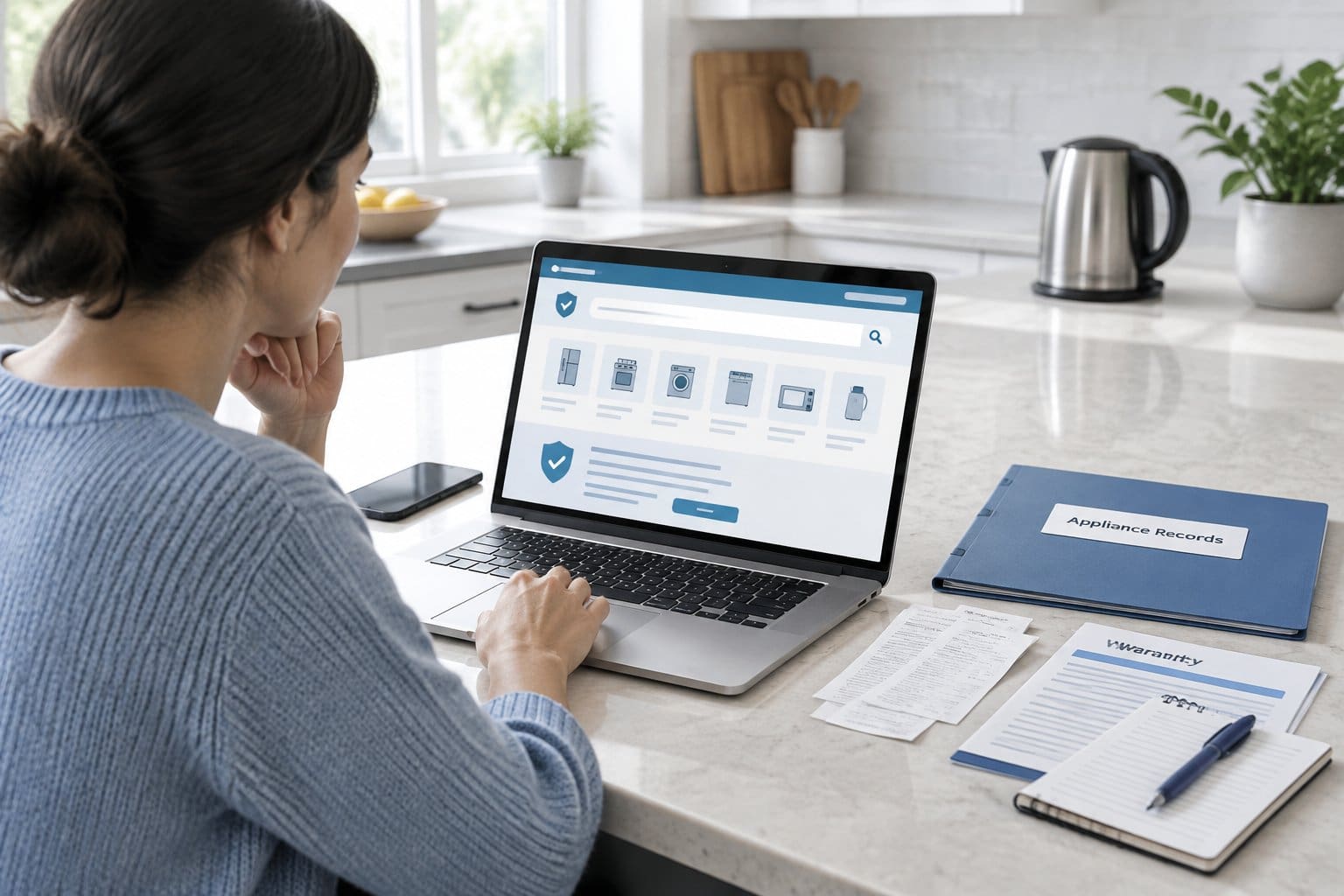
A recall check takes seconds when you've already written down the model and serial number where you can find them. Keep each appliance's numbers, manual, and warranty information together in one searchable place, so the next recall headline sends you to one record instead of a kitchen drawer.
How Can You Hear About Recalls Sooner?
Registering your appliance with the manufacturer is the main way a recall notice can reach you directly. Without it, you may only find out through news coverage or by checking CPSC.gov yourself.
Register Appliances with Their Manufacturers
Registering lets the manufacturer contact you if your specific model is recalled. Whirlpool says registered owners receive timely notifications for recalls or updates related to their specific model. GE Appliances also offers online registration for major appliances, including refrigerators and dishwashers.
Check Official Recall Sources Periodically
Registration doesn't guarantee every notice reaches you, since contact details change and some recalls cover appliances sold years earlier. A periodic check of CPSC.gov fills that gap, especially after you buy a home with appliances already installed.
Add it to your first-30-days new home checklist. The CPSC recalls page also links to email sign-ups and an RSS feed for new recalls.
Keep Model Numbers Ready for the Next Recall Check
Recall checks are fastest when the model numbers are already written down somewhere searchable. Scrolling old emails during a recall scare turns a two-minute task into an afternoon.
When you move into a new home, or right after a new appliance is delivered, record the model number, serial number, and purchase details while the appliance is in front of you. That habit turns "I have no idea what model we have" into a quick answer.
Frequently Asked Questions
Can I check an appliance recall without a receipt?
Yes. Recall checks rely on the model and serial number, which are printed on the appliance itself, usually on a label inside the door, on the tub frame, or on a compartment wall.
Is a safety report on SaferProducts.gov the same as a recall?
No. A safety report describes a potential hazard someone submitted, and CPSC doesn't guarantee the accuracy of reports from outside the agency. A product is recalled only when CPSC issues an official recall notice, which you can confirm on CPSC.gov.
How do I know whether my serial number is included in a recall?
Many recall notices list specific serial number ranges. The LG range recall, for example, listed "from" and "to" serial numbers for each affected model. Compare your appliance's model and serial number against the notice on CPSC.gov or the manufacturer's recall page.
What if I bought a recalled appliance secondhand?
Read the notice and contact the company it lists. Recall notices tell consumers who have the affected product what to do, and the company will ask for the model and serial number to confirm your unit is included.
Does registering an appliance mean I will get every recall notice?
No. Registering improves your odds of hearing about a recall directly, but contact details change, and you may own appliances you never registered. Checking CPSC.gov periodically covers the gap.
Store Every Model Number Where You Can Find It
When the next recall headline hits, you should be able to answer in one search. Manse keeps every appliance's model and serial number, manual, and warranty in one private record. Add your appliances for free.