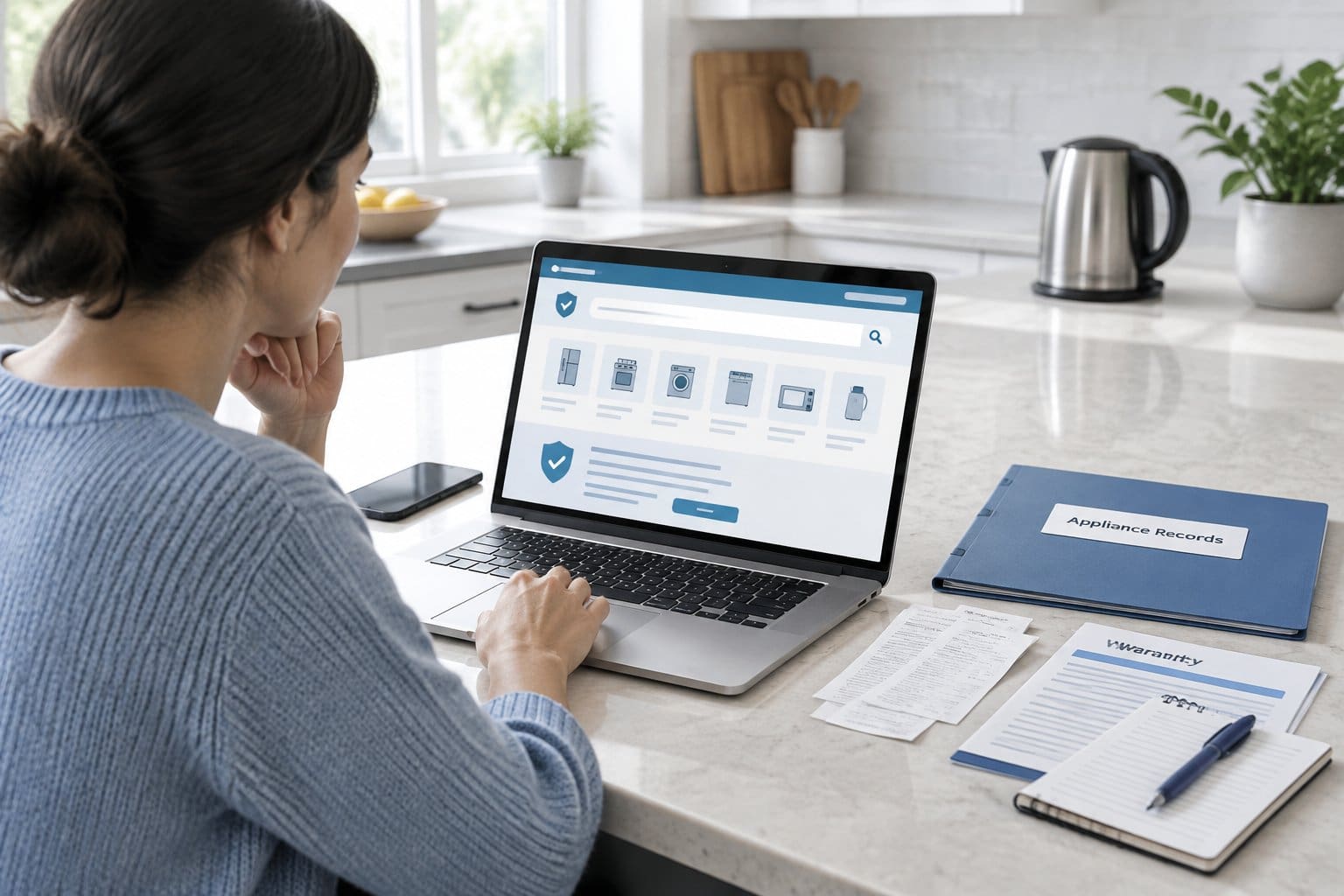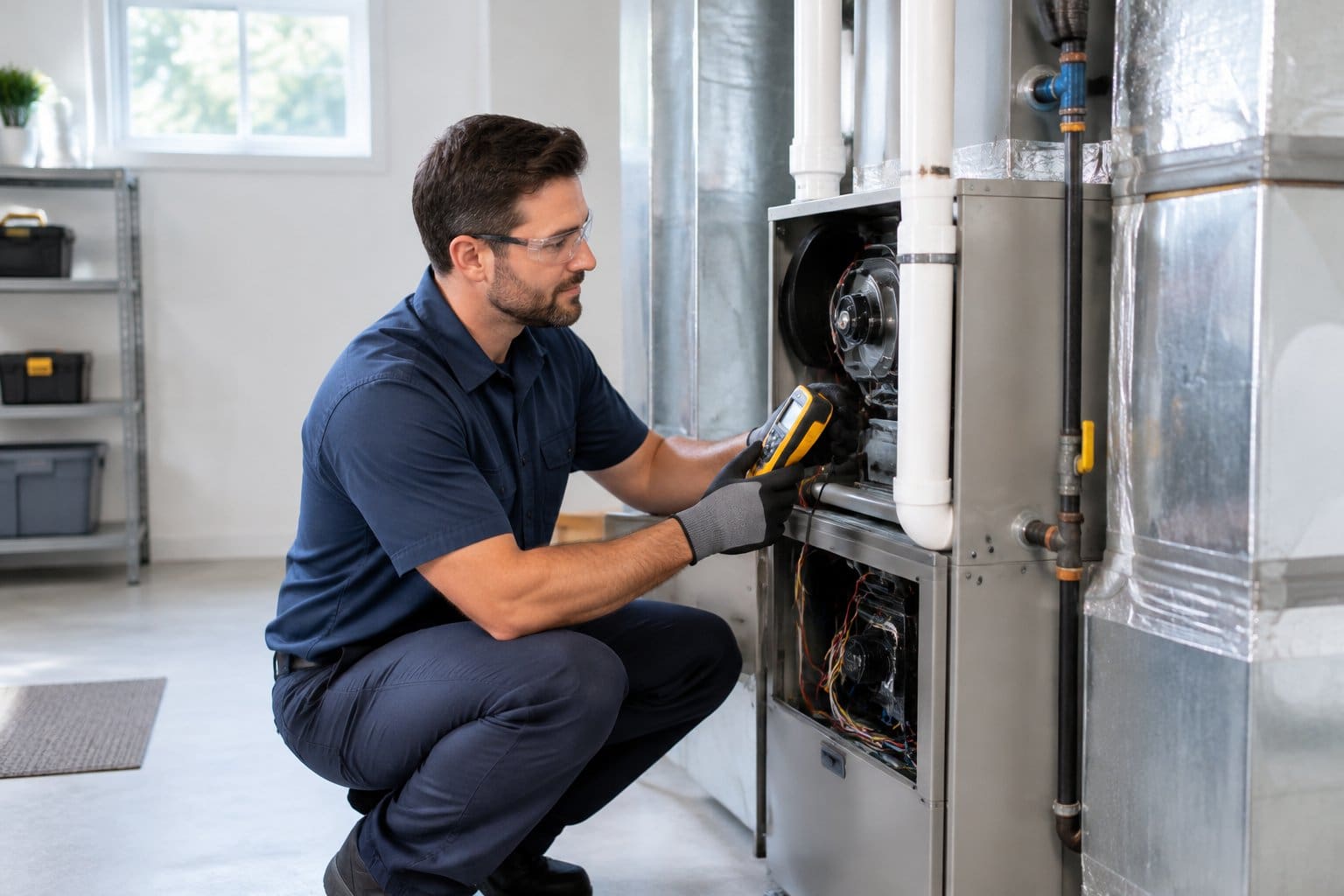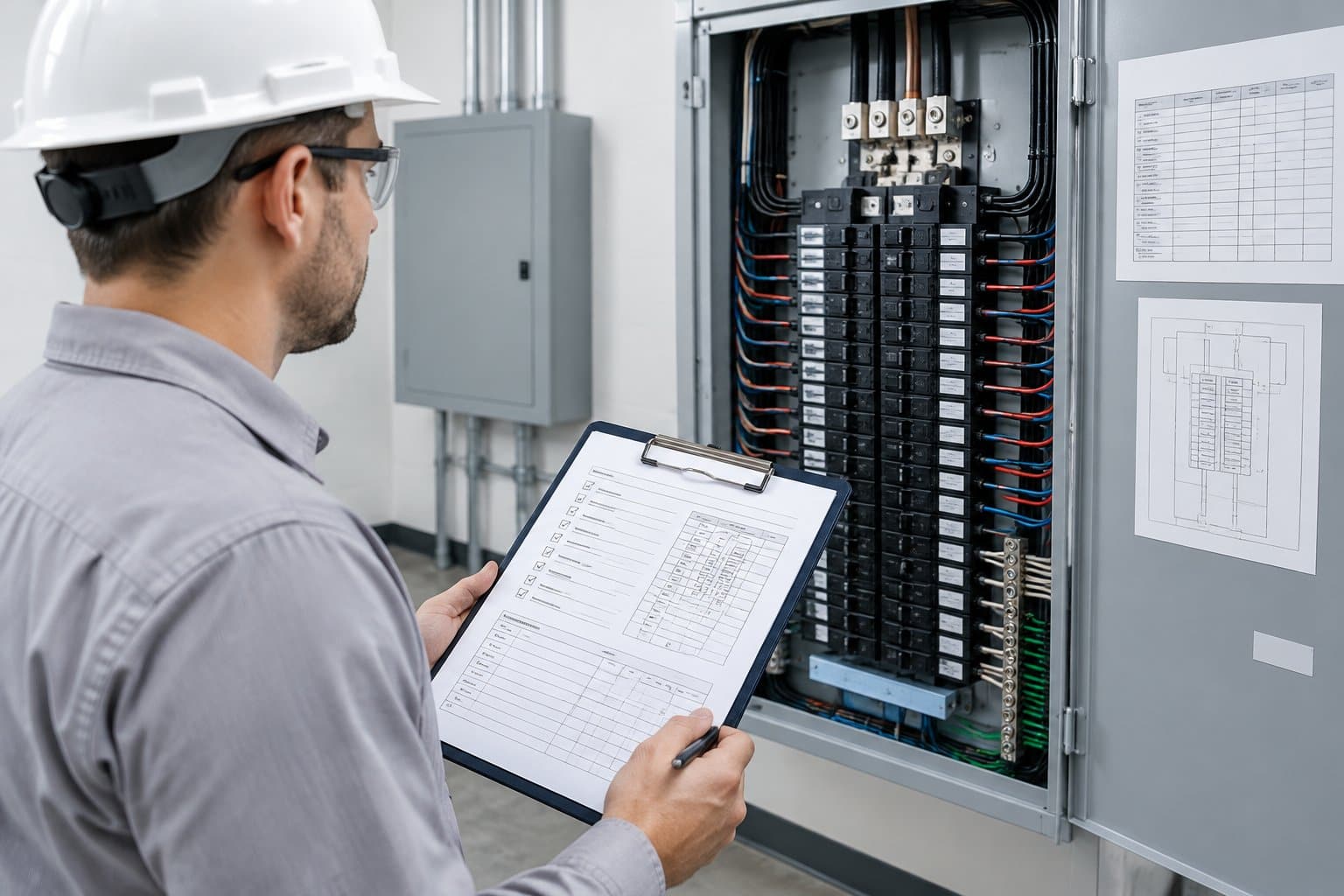
You're at the breaker panel with a flashlight, flipping switches one by one to find the kitchen circuit, because the labels are faded, half are blank, and one just says "misc."
An electrical panel record helps you fix that before the next outage or repair: an accurate breaker map, the panel's specs and age, and a history of the electrical work done on your home.
What Should Your Panel Record Include?
A complete electrical panel record covers four things: the panel's basic specs, where the main disconnect and any subpanels are, which breakers serve which rooms, and a history of electrical work.
Together, these answer the questions you'll actually face: which breaker to flip, whether the panel can handle a new appliance, and what an electrician needs to know before starting.
Record the Brand, Amperage, and Approximate Age
Write down the panel's brand, model or catalog number, and amp rating (homes often have 100-, 150-, or 200-amp service). This tells you and any electrician how much load the panel is rated for.
Where to look depends on the manufacturer. Most panels carry a label on the inside of the door or on an inside wall of the enclosure that lists the brand, catalog number, and amp rating, and many also show a date code.
Photograph the label through the open panel door without removing the cover, and note the brand, amp rating, and approximate manufacture date. If you can't see a label without taking the cover off, leave that to an electrician.
Locate the Main Disconnect and Any Subpanels
The main disconnect cuts power to the whole panel, and you'll want to know where it is before an emergency. In many homes, it's the large breaker at the top of the panel, though some homes have it outside near the meter.
If you have a subpanel (common in additions, garages, or finished basements), note where it is and which breaker in the main panel feeds it. Take a photo of each location with a short note on what it controls.
Identify GFCI and AFCI Breakers
Knowing which breakers are GFCI, AFCI, or dual-function tells you which circuits already have that protection. The Electrical Safety Foundation International (ESFI) explains that a ground-fault circuit interrupter shuts off power quickly when it detects a ground fault or leakage current, and an arc-fault circuit interrupter breaker trips when it detects dangerous arcing in the wiring. A dual-function breaker combines both. Requirements for where each is needed vary by jurisdiction.
Mark these breakers on your panel map so you can see at a glance which circuits they cover.
How Do You Make an Accurate Breaker Map?
A breaker map matches every breaker number to the rooms, outlets, and appliances it controls. When a breaker trips or you need to cut power to one area, you find the right switch in seconds.
Check Which Rooms and Outlets Each Breaker Serves
Test each breaker rather than trusting old labels, since previous owners or past work may have changed what each one controls.
- Turn off one breaker at a time.
- Walk through the house and check which lights, outlets, and appliances lost power.
- Test several outlets per room, since outlets in one room can be on different circuits.
- Write down exactly what that breaker controls, including any appliance on its own circuit (like a range, dryer, or water heater).
- Turn the breaker back on and repeat for the next one.
This takes longer than trusting the existing labels, but it's the only way to know the map is right. It also matches basic CPSC advice: know which outlets and products are connected to each circuit, and avoid overloading a circuit with too many high-current heating appliances.
Label the Panel and Keep a Copy of the Map
Once the map is accurate, update the labels inside the panel door with specific wording ("Kitchen counter outlets" instead of "kitchen"). Keep a second copy somewhere you can reach from anywhere, such as a photo on your phone, so you can check it while standing at the panel with the lights out.
Which Electrical Work Records Should You Save?
Save every permit, inspection report, and invoice for electrical work on your home. These show what was done and who did it, which matters when you file an insurance claim, sell the house, or bring in a new electrician.
Keep Permits and Inspection Records
Permits and inspection sign-offs show that panel upgrades, rewiring, or new circuits were reviewed under your local code at the time. They're filed with your city or county building department, and some post records online, though availability varies.
If you can't find older records, USAGov's directory of local government contacts by state is a starting point for reaching the right office. Keep a copy of anything you receive.
Log Electrician Visits, Repairs, and Upgrades
Each time an electrician works on your panel or wiring, record the date, company, what was done, and any parts replaced. Collecting the contract, permit, and sign-off for each job follows the same steps as tracking any contractor work on your home.
If you added a garage subpanel three years ago, that record tells the next electrician what to expect before opening the panel. It also shows whether a recurring problem, like a breaker that keeps tripping, has come up before. When it's time to sell, these records belong with the rest of your home records.
When Should You Call a Licensed Electrician?
Call a licensed electrician when you notice warning signs, can't identify your panel, or have questions about an older or recalled panel. Don't open the panel or test inside it yourself.
ESFI also recommends a home electrical inspection for homes 40 or more years old, homes 10 or more years old that have had a major renovation, addition, or major new appliance, and previously owned homes you've just bought. Its warning signs include breakers that trip often, dim or flickering lights, buzzing or sizzling sounds, hot or discolored outlet or switch covers, a smell of hot insulation, and any shock, even a mild tingle.
Ask About Older Panels and Insurance Concerns
Home inspectors and insurers may ask about the brand and age of an older panel. One brand that comes up is Federal Pacific Electric (FPE) Stab-Lok. The CPSC investigated these breakers and closed its investigation in 1983, saying the available data did not establish that they pose a serious risk of injury, while also stating it had not determined whether they are safe.
The agency said it could reopen the matter if new information warranted it, and advised all breakers to find the cause of any trip and consult an electrician when in doubt.
Newer equipment can be recalled too. In June 2022, Schneider Electric recalled about 1.4 million Square D QO Plug-on-Neutral load centers sold from February 2020 through January 2022 because they can overheat, with a free inspection and any needed repair or replacement.
If you have an older panel or one covered by a recall, a licensed electrician can explain your options, and your insurer can tell you whether it has any requirements.
Get Help With Damage, Unclear Labels, or Panel Identification
If you can't identify your panel's brand, notice scorch marks or a burning smell near the panel, or moved into a home with no electrical records, have a licensed electrician assess the panel and document what they find.
Inspectors routinely open the main panel during a sale (as this rundown of what home inspectors look for explains), so the report can also serve as a starting record.
Keep Your Breaker Map and Work History Together
A photo on your phone, a permit in a drawer, and an invoice in your email make simple questions slow to answer: which breaker, how old, who worked on it last. Keep the breaker map, panel specs, and work history in one place, and update it after every electrician visit. The record carries over cleanly when you sell or bring in a new contractor.
Frequently Asked Questions
What if the labels on my breaker panel are wrong?
Test each breaker rather than trusting old labels, since past repairs or previous owners may have changed what each one controls. Turn off one breaker at a time, check which outlets and lights lose power, and write down the correct room or appliance before relabeling the panel.
How can I find my electrical panel's brand and amperage?
Open the panel door and look for a label listing the brand, catalog number, and amp rating. It is usually on the inside of the door or on an inside wall of the enclosure. If you can't see it without removing the cover, ask an electrician.
Can an electrical panel serial number tell me its age?
Often, through a date code on the panel's labels, though the format varies by manufacturer. If you can't read it, ask an electrician or home inspector to help estimate the panel's age.
Can I find past electrical permits for my home online for free?
Some cities and counties post permit records online, but availability and cost vary by location. Start with your local building department, which issues and files electrical work permits.
Which older electrical panels might concern an insurer?
One brand that comes up is Federal Pacific Electric (FPE) Stab-Lok. The CPSC closed its investigation of these breakers in 1983, saying the available data did not establish a serious risk of injury, without determining whether they are safe. If you have an older panel, ask a licensed electrician to evaluate it and ask your insurer whether it has any requirements.
Put Your Breaker Map Where You Can Find It
The next time a breaker trips or an electrician asks what's been done, the answer should take seconds. Manse keeps your breaker map, panel details, and electrical work history in one private home record. Save your panel records for free.