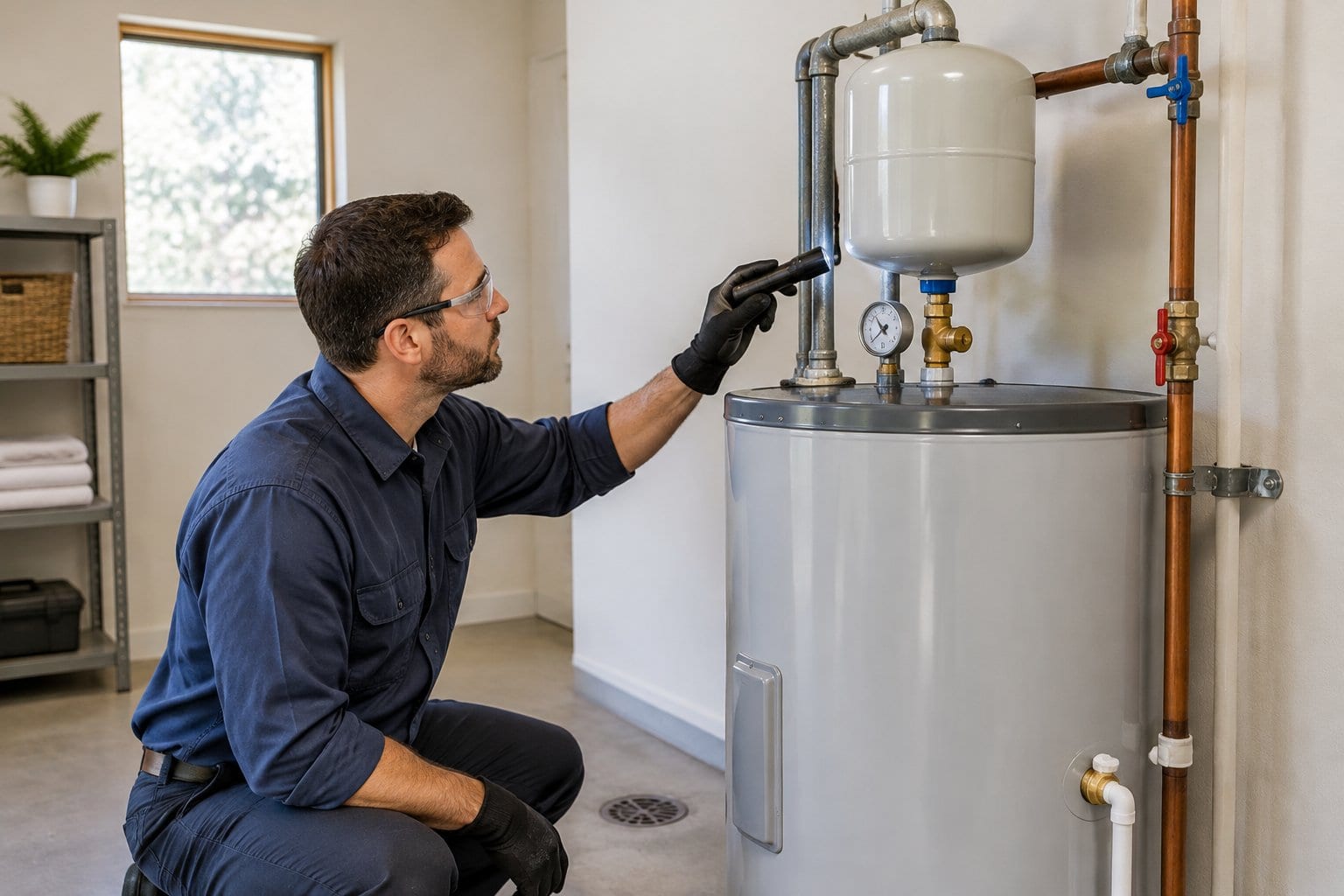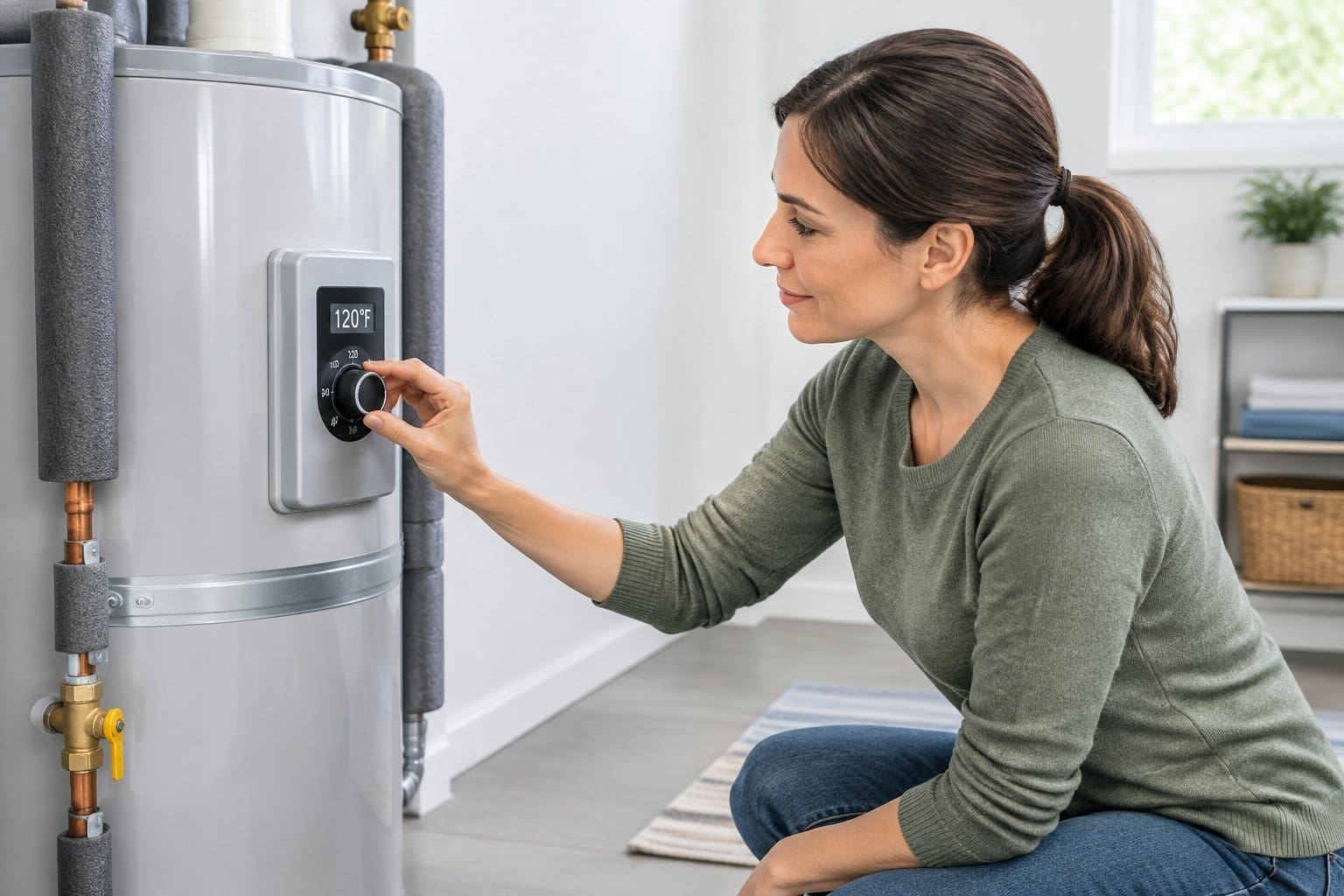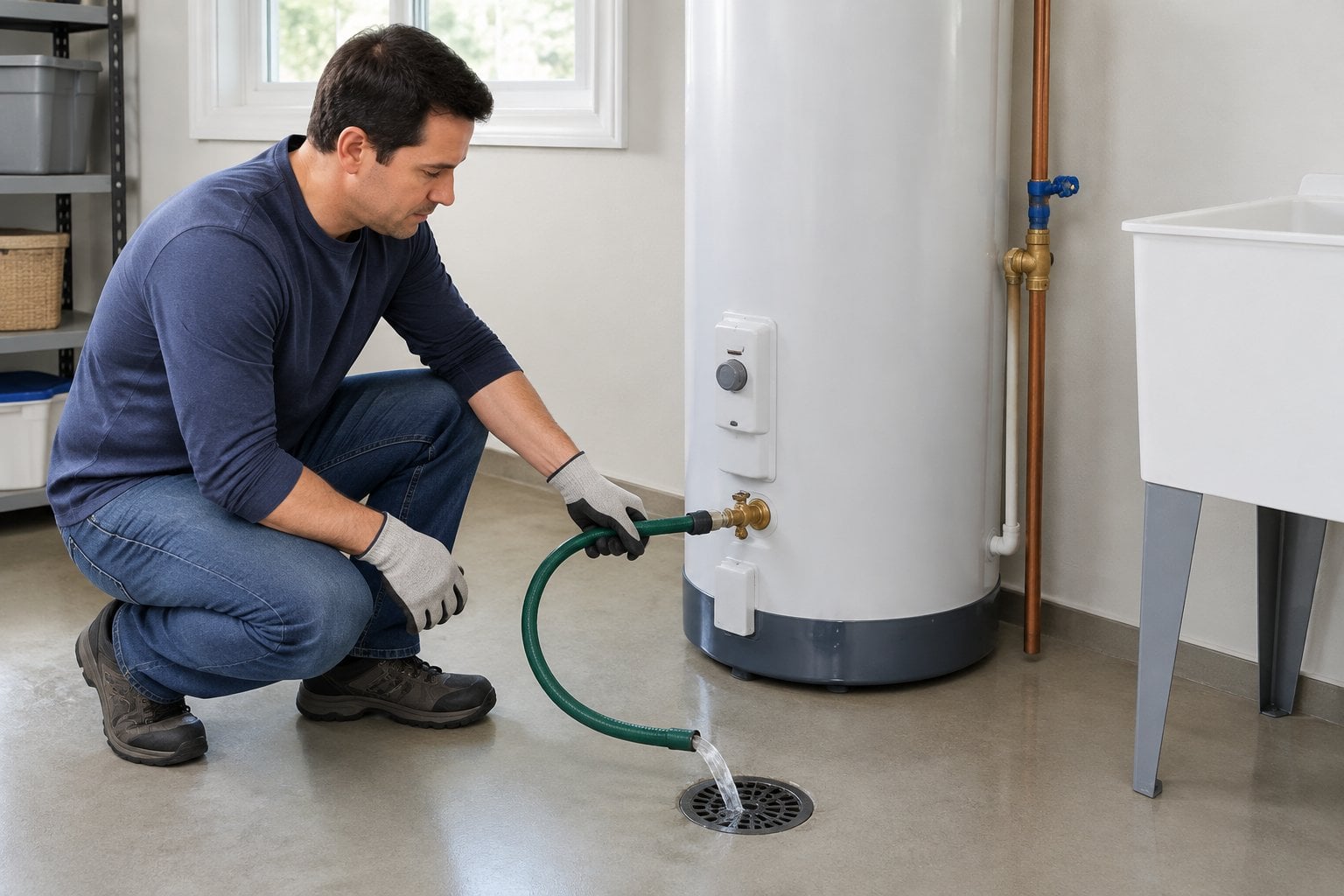

To flush a tank water heater, shut off the gas or power, let the water cool, close the cold supply and drain the tank through a garden hose until the water comes out clear. Then refill it completely, with a hot tap open to push the air out, before you turn the heat back on. Plan on an afternoon, most of it spent waiting for the tank to cool, drain and fill.
The point of the exercise is sediment. Calcium and magnesium drop out of hot water and settle on the tank floor as a gritty layer. On a gas heater that layer sits between the burner and the water, which is where the rumbling and popping comes from. On an electric heater it can bury the lower element. Flushing keeps the layer thin before it hardens.
Before You Open the Drain Valve
Make sure it's a tank model
These steps are for storage tank heaters only. A tankless unit is descaled by circulating a cleaning solution through it with a small pump, which is a different job altogether. The rating plate on the side of the tank gives the brand, model and fuel type, and the owner's manual for that model has the drain valve location and any steps particular to it.
Cut the heat and let it cool
On an electric heater, switch off its breaker at the panel. This matters more than any other step, because an element that comes on in an empty or half-empty tank burns out almost instantly. On a gas heater, turn the control knob to Off or Pilot; you don't need to shut off gas to the whole house.
Then leave it. A.O. Smith recommends turning the heater off for a few hours before draining so the water has time to cool, and wearing thick gloves and eye protection while you work. Running a hot tap for a while also pulls the hottest water out of the tank.
Plan where the water goes
You'll need a garden hose long enough to reach a floor drain or the outdoors, a flat screwdriver or wrench for the drain valve, a bucket and some towels. The hose outlet should sit lower than the drain valve so gravity does the work. Keep it off lawns and finished floors, and check the hose connection after a minute or two, since a slow drip there can soak a carpet before anyone notices.
Draining and Flushing the Tank
- Close the cold water supply. The valve is on the pipe entering the top of the tank. Turn a round handle clockwise until it stops, or set a lever handle across the pipe.
- Attach the hose to the drain valve near the bottom of the tank, hand-tight plus a small turn with a wrench, and lay it flat without kinks.
- Open a hot water faucet on an upper floor if you have one. Letting air into the system lets the tank drain smoothly instead of glugging and stalling.
- Open the drain valve. A.O. Smith notes most tanks take 20 to 40 minutes to empty, and heavy sediment slows it down. If the flow drops to a trickle early, grit is probably blocking the valve opening.
- Stir up the sediment. With the tank mostly empty and the drain still open, open the cold supply for a minute or two. The incoming water churns the tank floor and carries the loose grit out. Close the supply, let it drain again, and repeat until the water runs clear. Catch a cupful in a bucket now and then to check for sand-like particles.
- Close the drain valve firmly and remove the hose.
- Refill with the hot tap open. Open the cold supply fully. The tap will cough air at first; keep it running until you get a smooth, steady stream, which tells you the tank is full. Run the other hot taps briefly to clear air from those lines too.
- Check for drips at the drain valve and the fittings on top. Wipe them dry, wait a few minutes and look again. A slight extra turn usually stops a weeping drain valve, but don't force a plastic one.
- Restore the heat. Switch the breaker back on, or return the gas control to On and relight the pilot if your model needs it, following the instructions printed on the tank.
If the heater doesn't come back to temperature afterward, the most likely cause on an electric model is an element that was switched on before the tank refilled. Our guide on testing a water heater element shows how to confirm it with a multimeter.
How Often to Flush
Rheem's advice is to flush once a year for most households and every six months where the water is hard, with more frequent flushing if you see visible sediment or use a lot of hot water. Your own model's manual comes first if it says something different. If you don't know how hard your water is, your utility's annual water quality report will tell you.
A water softener removes much of the hardness, so a tank on softened water builds sediment more slowly. It's still worth draining a few gallons once a year to see what comes out. Softened water does wear the tank's anode rod faster, so have that looked at during the same visit.
The best signals come from the heater itself. Rumbling or popping while it heats, cloudy or rusty hot water, and hot water running out sooner than it used to all point to a sediment layer that's getting thick. If you're unsure whether a noise is sediment or something else, our rundown of common water heater symptoms and their causes covers the other possibilities.
When a Flush Can Do More Harm Than Good
On an older tank that has never been flushed, the sediment may have hardened into a crust. Stirring it up can jam the drain valve open or shut, and in a tank with thin spots it can start a leak that wasn't there before. Rheem lists units around 8 to 12 years old or older among the cases where you should call a professional rather than flush it yourself.
Leave the job to a plumber too if:
- The drain valve won't open, won't close or keeps dripping after you shut it. Old plastic valves crack easily.
- There's rust around the fittings, water under the tank or rusty hot water from a tank you suspect is failing. Flushing won't save it.
- The relief valve on the side or top has been discharging water. That points to excess temperature or pressure and needs a professional look straight away.
- Rumbling continues after a thorough flush.
If you smell gas at any point, stop, leave the house and call the gas utility from outside.
Frequently Asked Questions
Should I open the relief valve while draining?
Some manufacturers include it in their draining steps and others don't, so follow your manual. If the valve is old, be aware that relief valves sometimes fail to reseat properly after being opened and start to drip. Have a replacement on hand or leave that step to a plumber.
Can I just drain a few gallons instead of the whole tank?
A partial drain from the valve pulls out loose sediment near the outlet and is a useful quick check between full flushes. It won't clear the layer spread across the tank floor, so it doesn't replace a full flush on hard water.
Why is the water still cloudy after flushing?
Cloudiness that clears from the bottom up in a glass is usually just air from refilling. Grit that settles out means sediment is still coming loose; run a second flush cycle with the cold supply. Persistent rusty water after flushing points to corrosion rather than sediment.
Do I need to flush a brand new water heater?
Not straight away, but starting the habit in the first year or two means the sediment never gets a chance to harden. Note the date of the first flush alongside the install date so you can see the pattern over time. The annual home maintenance checklist puts it alongside the other once-a-year jobs.
Flush on the Schedule Your Heater Needs
The right interval depends on your water and on what your specific heater's manual says, and those details aren't printed on the tank. Photograph the rating plate and Manse works out the exact model, pulls the drain and refill steps from its manual and tells you whether it's still under warranty. Add a note of each flush to your home's folio and the next decision rests on what actually came out of the tank last time. Find out more about Manse.