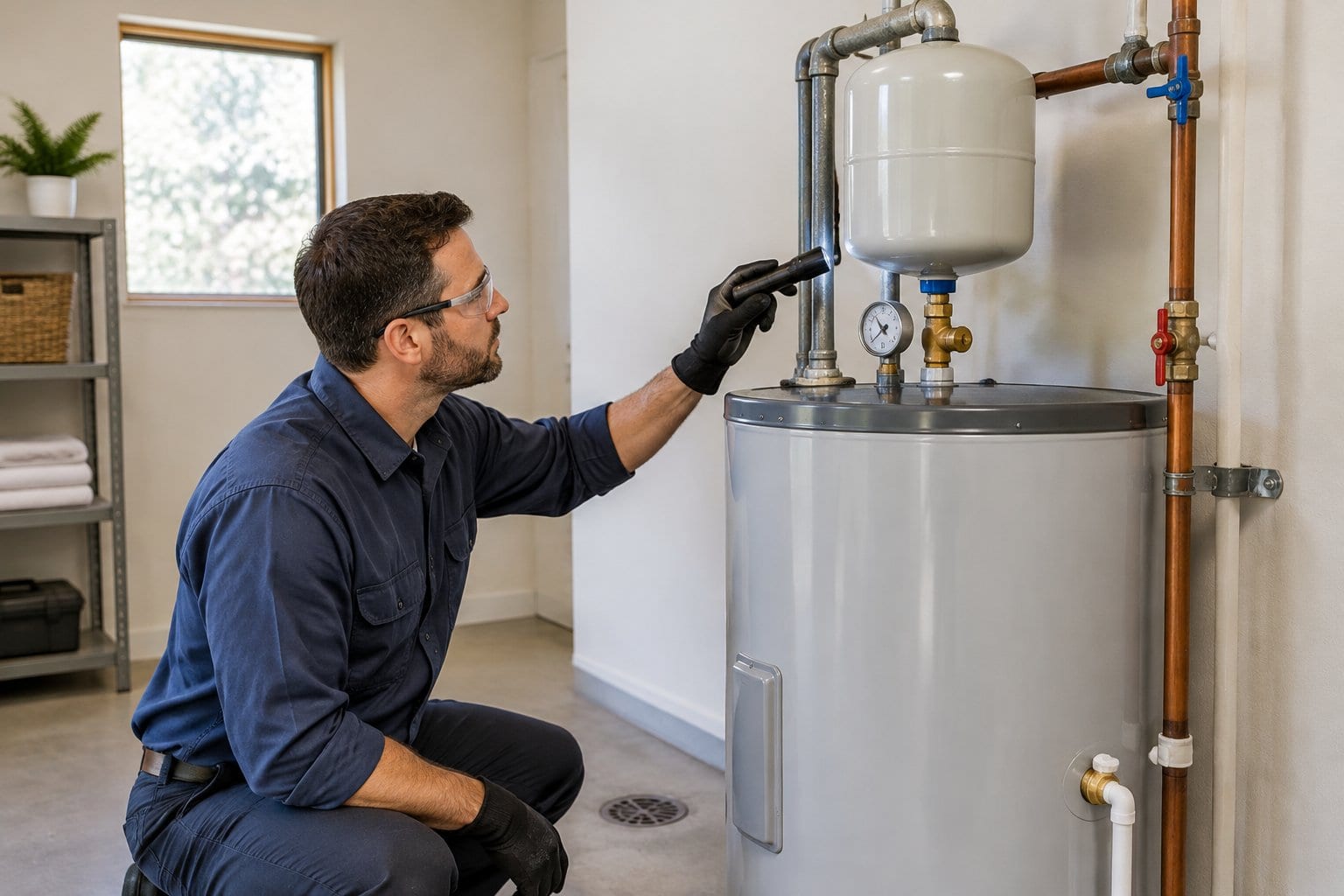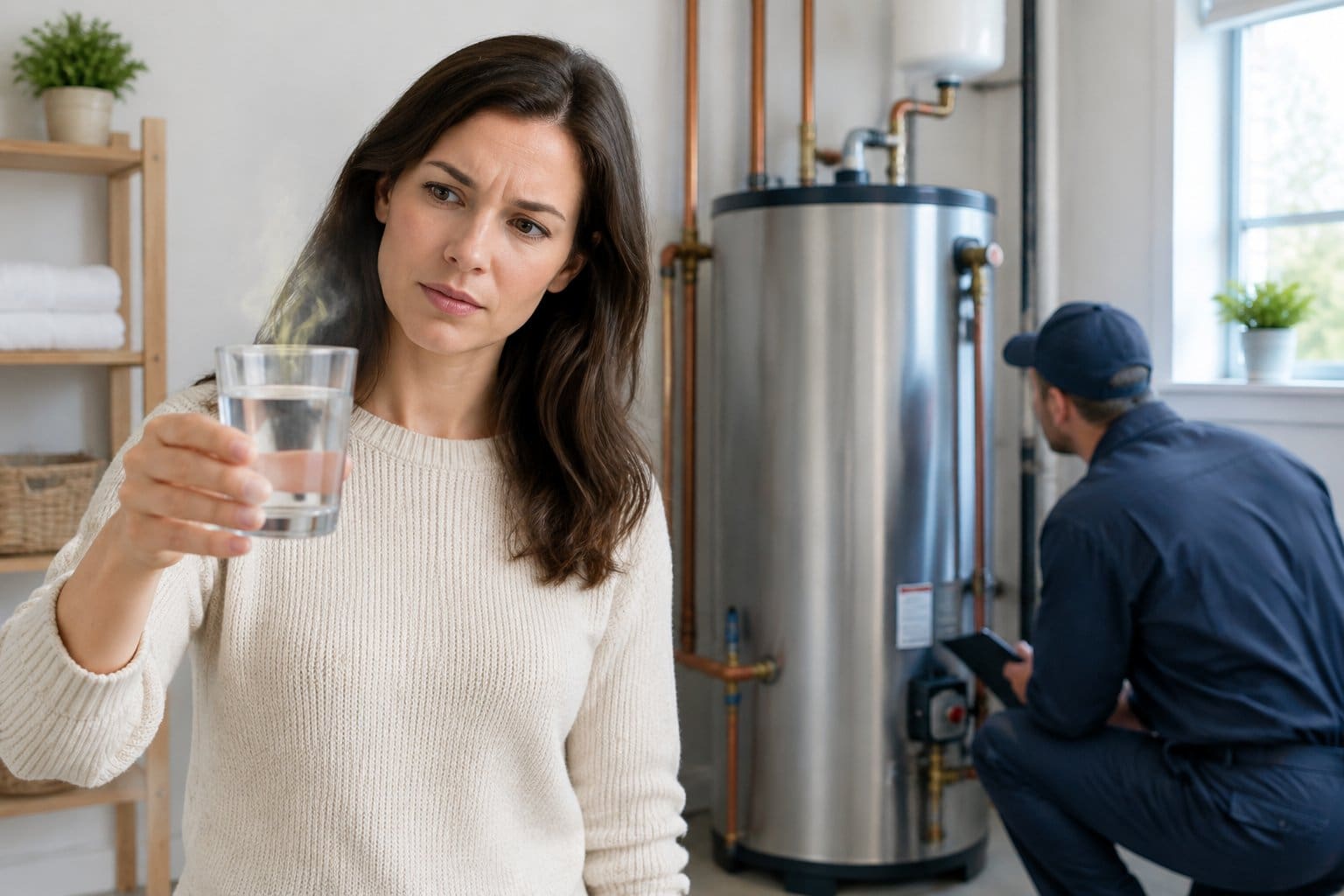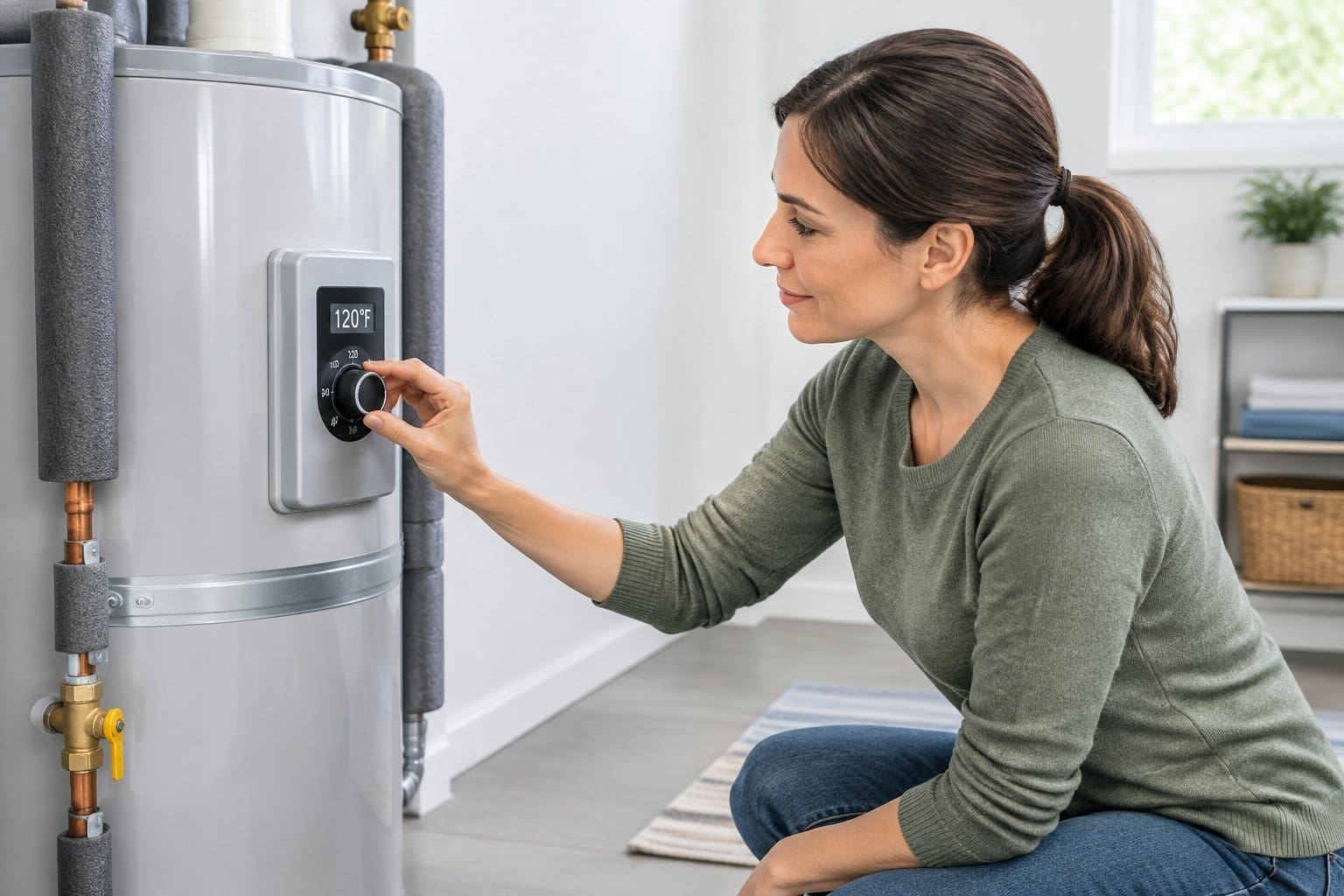

For most homes, the right water heater temperature setting is 120°F. It's hot enough for showers, laundry and a dishwasher, it sharply cuts the risk of scalding, and it wastes less energy keeping a full tank hot. The catch is that the number on the dial and the water at your tap often disagree, so the only way to know what you're getting is to measure it.
Why 120°F Is the Usual Answer
Scald risk climbs fast above it
The Consumer Product Safety Commission urges households to lower water heaters to 120°F, and its figures show why. Most adults suffer third-degree burns after two seconds in 150°F water and six seconds at 140°F. At 120°F, the same injury takes about five minutes of exposure. That gap matters most for young children and older adults, who react more slowly and have thinner skin, but it matters for anyone who has turned the wrong tap in a hurry.
It also trims the energy bill
A tank keeps its whole volume hot around the clock, and heat leaks out through the walls all day whether anyone uses it or not. Hotter water loses heat faster. The Building America Solution Center, run for the Department of Energy, notes that every 10-degree reduction saves about 5% in energy consumption. A lower setting also eases the strain on the tank and its parts.
When a hotter tank makes sense
There's a real tradeoff on the other side. Lukewarm stored water is a better environment for bacteria such as Legionella, so some households choose to store water hotter. If anyone at home has a weakened immune system, it's worth asking their doctor what they'd recommend.
The way to have both is a thermostatic mixing valve. A plumber fits it at the heater's outlet, where it blends hot and cold so the taps get a safe, steady temperature while the tank stays hotter. Anti-scald shower valves add protection at the point of use. If you store water above 120°F, plan on one or both.
Measure Before You Touch the Dial
Pick the faucet nearest the water heater and run the hot side only for about three minutes so you're drawing water straight from the tank. Fill a mug and put a meat or candy thermometer in immediately (not a fever thermometer). Wait for the reading to settle and note it. Repeat at the farthest faucet if you're curious how much heat the pipes lose on the way.
If the reading is well above 120°F, there's room to turn it down. If the tap reads far from what the dial claims, something else may be going on: a thermostat that has drifted, a failed element on an electric tank, or heavy sediment.
Reading the Dial on Your Model
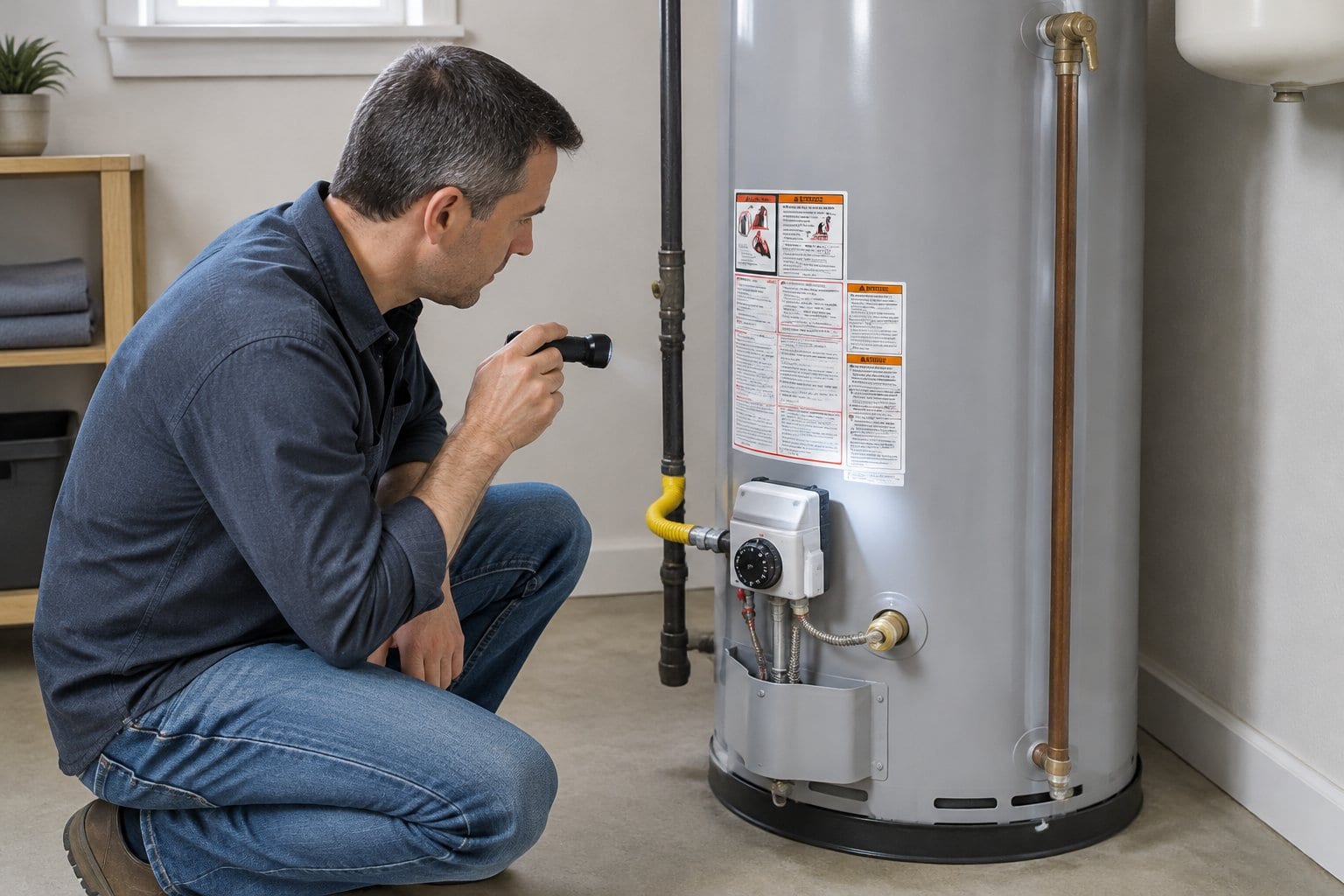
Many gas control valves don't show degrees at all. You'll see letters (A, B, C), words (Warm, Hot, Very Hot) or a scale of dots, and each manufacturer defines its own marks. Electric thermostats usually show degrees, but there are two of them, hidden behind access panels. Which mark equals 120°F on your particular heater is in its manual, not on the tank.
That's where Manse is useful: from a photo of the heater's rating plate it identifies the exact model and answers from that model's manual, so you know which notch on your valve is 120°F rather than guessing between "Hot" and "B".
Adjusting the Temperature by Heater Type
The pattern is the same for every type: make a small change, wait for the water to settle, and test again.
Gas tank
The temperature knob is on the gas control valve near the bottom of the tank. Turn it a small amount toward the mark your manual gives for 120°F. On many valves clockwise lowers the temperature, but follow the arrows on yours. Don't touch the gas supply valve on the pipe, and don't force a knob that won't move. If you smell gas at any point, leave the house and call the gas company from outside.
Electric tank
Electric heaters run on 240 volts, and the thermostats sit right next to live terminals.
- Switch off the water heater's breaker at the panel.
- Remove the upper and lower access panels, usually held by one or two screws each.
- Fold the insulation aside. If a plastic cover sits over the thermostat, leave it in place and reach the dial through its opening.
- Set both thermostats to the same temperature with a flat screwdriver.
- Replace the insulation and panels, then switch the breaker back on.
Heat pump and tankless
These use a digital control panel. Use the arrows or menu to set 120°F and confirm. Heat pump models often have operating modes (efficiency, hybrid, electric only) that change recovery speed, so check the manual before changing modes. Some tankless units have a factory maximum that only an installer can change.
Test again
A tank needs a few hours to settle after a change, so wait before rechecking at the tap. Tankless units respond within a minute or two. Adjust in small steps until the tap reads where you want it.
When the Setting Isn't the Problem
Call a plumber or gas technician if:
- The water stays scalding after you've turned the dial down. A stuck thermostat or failing gas control valve can overheat the tank, and that's a safety issue.
- Temperature swings from hot to cold, or the thermostat doesn't respond at all.
- The breaker for an electric heater trips again after a reset. Leave it off; that points to a shorted element or a wiring fault.
- You see water under the tank, scorch marks near the burner, or the relief valve discharging.
Thermostats, elements and gas valves are often covered parts, so check the heater's warranty before approving a repair quote. That's quicker when the model, serial number and install date already sit in a home profile rather than on a label behind the heater.
Frequently Asked Questions
Is 130°F too hot?
It's hotter than most households need and burns faster than 120°F. Healthy adults can live with it, but in a home with small children or older relatives, either drop to 120°F or add anti-scald protection at the taps.
Why should both electric thermostats match?
The upper element heats the top of the tank first, then hands over to the lower element, which does most of the work. Setting them differently can leave you with a hot top layer and lukewarm water underneath, or make one element work harder than it should.
Should I turn the temperature up if hot water keeps running out?
Not as a first fix. Running out usually comes from a failed lower element, sediment taking up space in the tank, or a heater too small for the household. Our guide to a water heater not getting hot enough works through those causes in order. If you do raise it, add a mixing valve so the taps stay safe.
Should I check the setting when I move into a new home?
Yes. You have no idea what the previous owner chose, and a quick tap test is one of the easiest safety checks in the first week. It belongs on your new home checklist for the first 30 days alongside finding the main water shutoff.
Set It Once, Correctly
Dial markings, thermostat layout and factory limits all depend on the heater you actually own. Manse reads the rating plate, identifies the model and answers from its own manual and warranty, so the setting you choose is the one you meant. See how Manse answers questions about your home.