
When a water heater pilot light won't stay lit, the usual reason is that the safety device watching the flame can't confirm it's there. On a standing pilot heater that device is the thermocouple (or a thermopile), and a dirty, bent or worn one lets the gas valve snap shut the moment you let go of the knob. The other common causes are a clogged pilot tube, drafts or a flue problem, a weak gas supply, and a tripped flammable vapor sensor.
You can safely check a few things yourself and make a single relight attempt following the instructions on the tank. Beyond that, nearly every real fix sits on the gas control valve, which makes it gas work for a professional.
First, Make Sure It's Safe to Be There
If you smell gas near the heater, don't relight anything, don't touch light switches and don't use a lighter. Get everyone out of the house, then phone the gas company or 911 from the street. A sounding carbon monoxide alarm gets the same response: out first, then call.
Look for signs of a venting or combustion problem before going further. Soot or black streaks around the burner door or the top of the tank, scorched or melted plastic near the draft hood, and headaches or nausea after time spent near the heater all mean the issue is bigger than the pilot. Leave it off and call for service.
One Careful Relight by the Label
Know which ignition you have
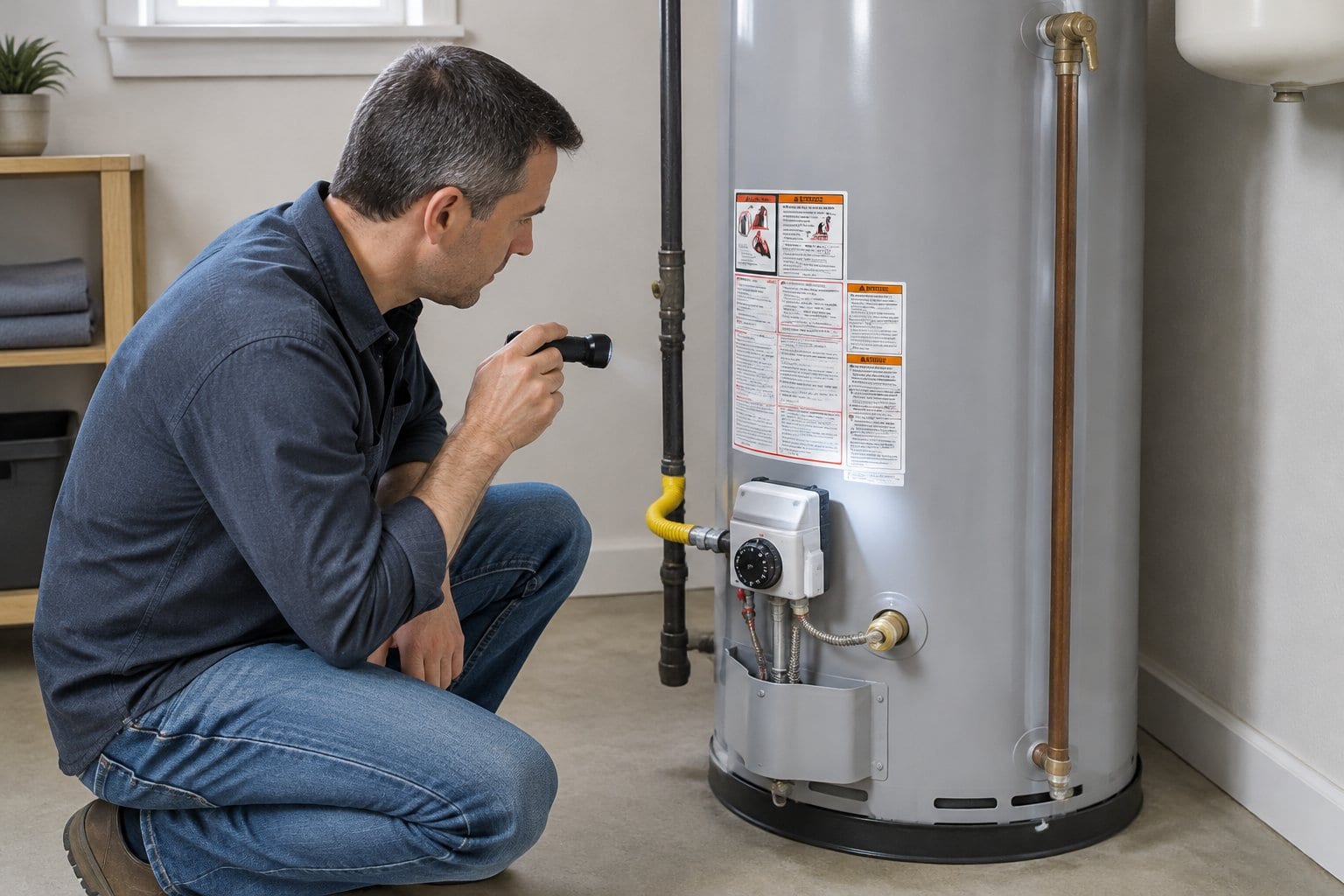
The lighting instructions are printed on a label on the tank, usually beside the gas control valve, and they override any general guide, this one included. Older heaters use a standing pilot you light with a long lighter. Many newer ones have a push-button spark igniter. Some power-vent models have no standing pilot at all and use an electronic igniter and a control board, so their troubleshooting is different.
The steps, the parts and even the hold time vary between model series. If the label has faded or you're not sure which version you have, Manse can work out the exact model from a snapshot of the rating plate and answer from that model's lighting instructions and manual.
The usual sequence
A.O. Smith's relighting guide follows the pattern most standing pilot heaters share:
- Turn the gas control knob to Off and wait at least 10 minutes so any gas in the area can clear.
- Turn the knob to Pilot and press it in fully.
- Keep holding it while you press the igniter (on electronic models, about once a second) or light the pilot with a long lighter.
- Once the pilot catches, keep holding for the time your label specifies, so the thermocouple has a chance to heat.
- Release slowly and check the pilot stays lit, then turn the knob to On and your usual temperature.
If the pilot won't catch, or dies again as soon as you let go, stop. Repeated attempts add risk without teaching you anything new. If what you really need is a full restart after the heater shut down, our step-by-step guide on how to reset a water heater covers the different reset types.
What the Way It Fails Tells You
It dies the moment you release the knob
This is the most common pattern. The thermocouple is a small metal probe sitting in the pilot flame. Heated, it produces a tiny electrical signal that holds the gas valve open. If the probe is coated in soot, bent so its tip sits outside the flame, or simply worn out, the signal is too weak and the valve closes as soon as you stop holding it. A.O. Smith notes that if the thermocouple itself is broken, the pilot safety valve in the gas control won't receive power.
Electronic ignition models use a flame sensor instead, and a coating of oxidation on it causes the same shutdown. After several failed attempts, these controls often go into lockout to stop gas building up.
The flame is small, yellow or flickering
A healthy pilot burns steady and blue and wraps around the thermocouple tip. A weak, lazy or yellow flame points to a partly clogged pilot tube or orifice. Dust, lint and carbon choke the gas flow until the flame can't heat the sensor properly. Heaters in laundry rooms and dusty garages can be more prone to it, since lint and dust travel in with the combustion air.
It lights fine, then goes out hours later
Timing is a clue. A pilot that dies on windy days, or when a nearby door slams or a return vent kicks on, is being blown out. Downdrafts through the flue cause the same symptom and are also a carbon monoxide concern. A gas supply problem can look similar: a shutoff valve that isn't fully open, a kinked flexible connector, or low pressure from the utility. If the stove or furnace is misbehaving too, the problem is upstream of the water heater.
The control won't light at all, or blinks a code
Many modern gas tank heaters are built with flammable vapor ignition resistance, which shuts the heater down if it senses fumes from gasoline, paint or solvents nearby. Some controls also have a thermal cutoff that trips if the burner area overheats. Either can leave the heater refusing to light or blinking an error. Move any stored chemicals well away, then book service; on some models resetting one of these devices means replacing parts.
What to Leave to a Professional
Cleaning the pilot tube means opening the sealed burner area, and a damaged tube can leak. Testing a thermocouple or thermopile needs a meter that reads millivolts with the pilot lit. Replacing one means disconnecting it at the gas control valve, and every joint has to be leak tested afterward. If a new thermocouple doesn't hold the pilot, the gas valve or gas pressure is next, and a failed control valve is never a do-it-yourself repair.
Call sooner rather than later if you see soot, rust or moisture on the vent pipe, or a flue that looks loose or blocked. These are combustion and venting faults that can push carbon monoxide into the house.
Age matters too. Repeated pilot problems on an older tank are often a sign it's near the end of its life, and that changes whether a repair is worth paying for. Our appliance lifespan chart helps put a repair quote in context.
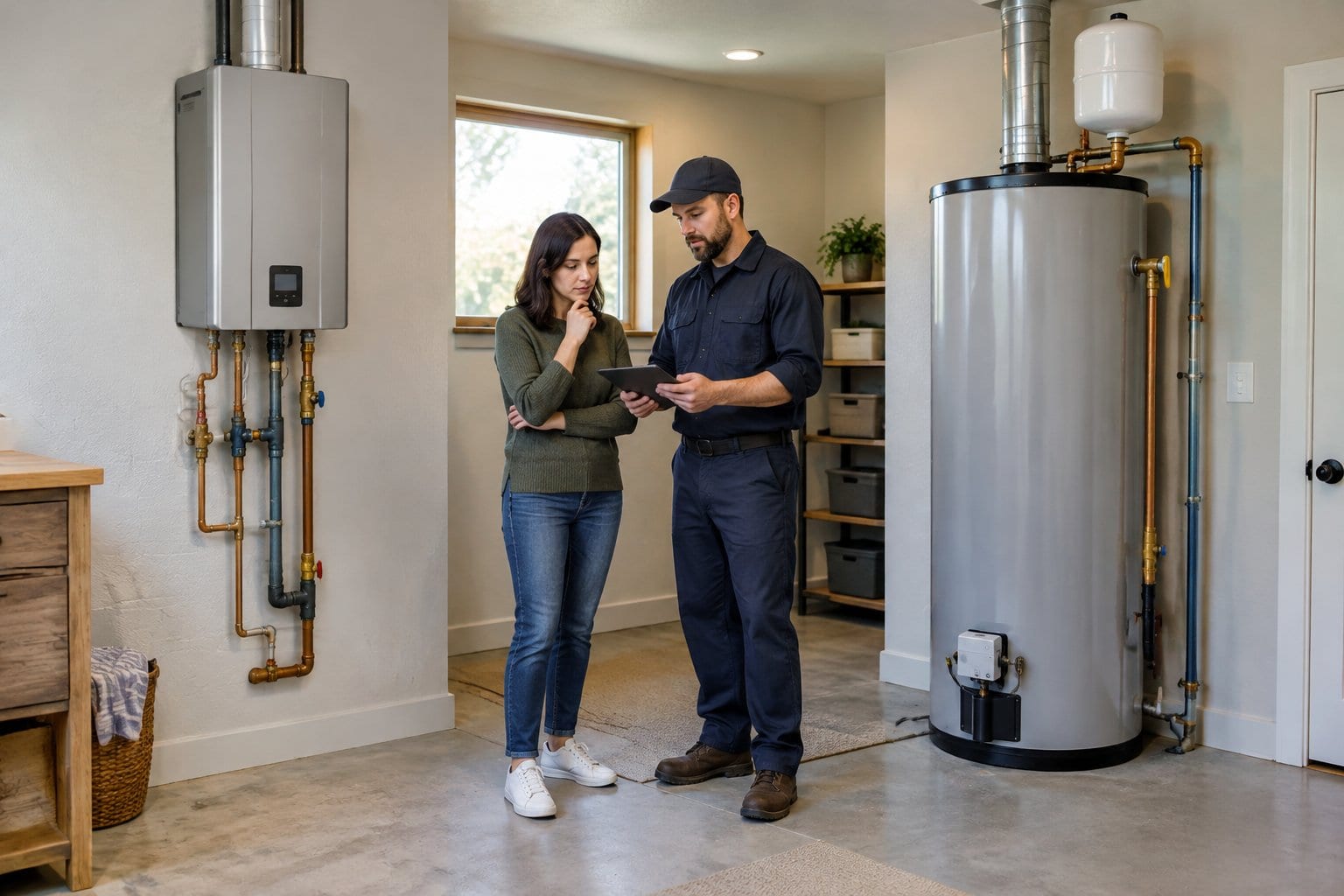
Before the visit, check whether the heater is still under warranty, since gas valves and thermocouples are often covered parts. Give the technician the brand, model and serial number, exactly how the pilot fails (on release, hours later or with a lockout code) and when the heater was last serviced, so they arrive with the right part.
Frequently Asked Questions
Why does the pilot keep going out after a new thermocouple?
Then the thermocouple wasn't the whole story. The likely suspects are the gas control valve, low gas pressure, a clogged pilot orifice, or a draft or venting problem. That's a job for professional diagnosis.
Do tankless water heaters have a pilot light?
Most modern gas tankless heaters use electronic ignition and have no standing pilot. The burner lights only when hot water is called for, and ignition faults involve the igniter, flame sensor or control board instead.
Should the pilot be checked before winter?
It's a good habit. A quick look at the flame color and the vent connection belongs on a fall home maintenance checklist, since a pilot that struggles in mild weather often gives up when the first cold drafts arrive.
Get the Right Part the First Time
Thermocouple length, gas valve model and the lighting sequence all depend on the heater on your wall, and the label is often faded by the time you need it. Manse identifies your exact water heater from its rating plate, then answers from that model's manual, warranty and recall history, so the technician arrives knowing what they're fixing. Explore the Manse house manager app.