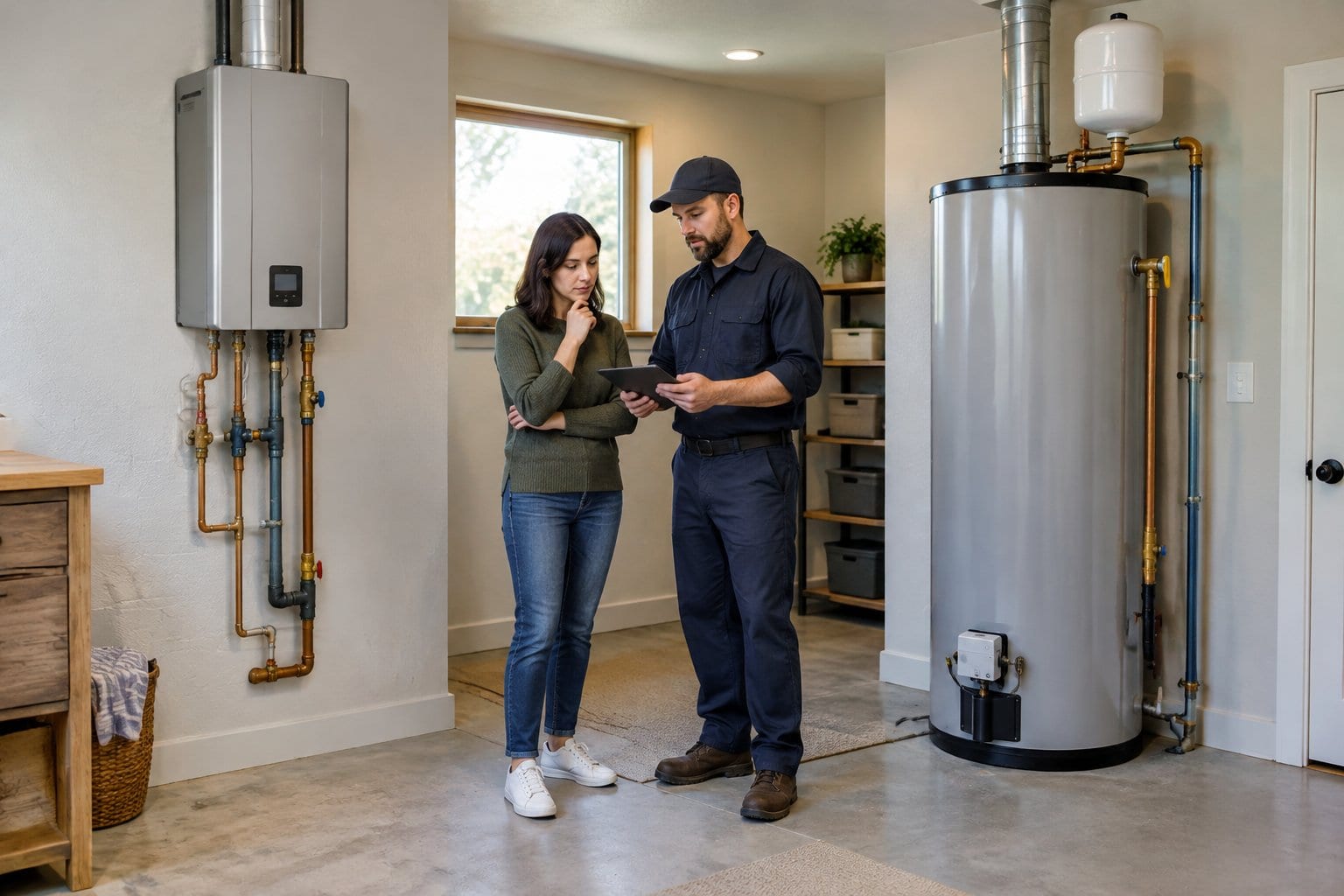

For most existing homes, a tank water heater is the cheaper and simpler replacement, and it handles several showers and appliances running at once without fuss. A tankless water heater makes sense when you plan to stay for many years and the house already has, or can reasonably get, the gas line, venting or electrical capacity to run one. Tankless units waste less energy and last longer; tanks cost less up front and rarely need the house modified around them.
The real decision is about fit. A tankless unit sized too small runs lukewarm in January. A tank sized too small runs out on a busy morning. And your gas meter, electrical panel and venting decide what your home can support before price comes into it.
How Each Type Delivers Hot Water
Stored versus on demand
A tank keeps 40, 50 or more gallons hot around the clock. Open a tap and stored hot water comes straight out, so a shower, the dishwasher and the washing machine can all run at once until the stored supply runs low. Then you wait while it recovers.
A tankless unit fires a burner or heating element only when it senses water flowing. It never runs out, but it can only heat so many gallons per minute. The Department of Energy puts typical output at about 2 to 5 gallons per minute, and notes that homes with high simultaneous demand may need more than one unit. Open too many fixtures at once and the water gets cooler instead of running out.
Sizing a tank: the first-hour rating
The number that matters for a tank is its first-hour rating, the amount of hot water it can deliver in an hour starting full, and it's printed on the EnergyGuide label. It tells you more than the tank's volume. To size one, add up your household's busiest hour: back-to-back showers, the dishwasher, a load of laundry on warm. Pick a tank whose first-hour rating meets or beats that.
Sizing tankless: flow and winter water temperature
Tankless units are rated in gallons per minute at a given temperature rise, meaning how many degrees the unit has to add between the incoming cold water and the temperature you want at the tap. In northern states, incoming water can be very cold in winter, so the unit has to work harder and its flow drops. A heater that runs two showers comfortably in July may manage one in February. Ask the installer to size for your coldest month, not the best-case number on the box.
What Each Costs, Up Front and Over Time
Compare installed quotes, not boxes
Get fully installed quotes for both options. A tank swap usually reuses the existing gas line, flue and water connections. A tankless conversion can add a larger gas line, new venting, a condensate drain, electrical work and permit fees. Ask each installer to break out the unit, labor, materials, permits and removal of the old tank so you can compare line by line.
Running costs
A tank loses heat through its walls all day and night, whether anyone uses hot water or not. Tankless units avoid that standby loss. The Department of Energy estimates tankless units are 8% to 34% more efficient than storage heaters, and notes that an ENERGY STAR qualified tankless model could save $100 or more a year. Your local gas and electric rates decide how much of that shows up on your bills, and our guide to reading an appliance energy label shows how to compare the estimated yearly operating cost on each unit.
A 10-year comparison
Putting both on the same footing takes a few minutes:
- Write down the installed quote for each option.
- Take the estimated yearly operating cost from each EnergyGuide label and adjust it for your local fuel rate.
- Multiply by 10.
- Add routine upkeep: yearly descaling for tankless, flushing and periodic anode checks for a tank.
- If a tank would reach the end of its life inside those 10 years, add a replacement.
The lower total wins for your home. Our article on how much to budget for home maintenance helps fit the result into the rest of the year's plans.
Price a heat pump water heater too
In an all-electric home, a heat pump water heater is a third option worth quoting. It moves heat from the surrounding air into the tank and uses far less electricity than a standard electric tank. It needs floor space, a room that stays reasonably warm, and somewhere for the cool air it gives off to go. Federal, state and utility incentives for efficient water heaters change often, so check what applies in your area and year before you count on one.
Can Your Home Support Tankless?
Most homes can, but many need work first, and these are the places a switch gets expensive.
- Gas supply. A whole-house gas tankless unit draws far more gas at full fire than a typical tank, and the existing line is often sized for the old heater. The upgrade may run back to the meter, and the utility may need to confirm the meter can carry the load.
- Venting. ENERGY STAR notes that condensing gas tankless units vent through PVC pipe and need a condensate drain. They can't share the old metal flue, and the condensate is acidic enough that a neutralizer is often fitted.
- Electrical capacity. Whole-house electric tankless units draw very high current, often across multiple dedicated 240-volt circuits. Many older panels can't carry that without an upgrade. Gas units only need a standard outlet for their controls.
- Location and permits. Tankless units hang on a wall and save floor space; outdoor models need freeze protection. Most jurisdictions require a permit for a water heater replacement, and the inspector checks gas, venting and the relief valve.
New gas lines, venting and panel work are jobs for a licensed plumber, gas fitter or electrician. If your current heater is leaking or you smell gas while you're weighing options, deal with that first: shut off the water and the heater, and if there's a gas smell, leave and call the utility from outside.
Lifespan, Maintenance and Resale
The Department of Energy gives storage heaters a typical life of 10 to 15 years and tankless units about 20. Those numbers assume regular maintenance. A tank needs periodic flushing to clear sediment and an anode rod check every few years. A tankless unit needs its heat exchanger descaled, usually yearly, with shorter gaps where the water is hard, plus a clean of its inlet screen.
Moving plans matter. If you'll be in the house ten years or more, a tankless unit's longer life starts to pay off. If you expect to sell within five, a new tank gives buyers a fresh unit at a lower cost. Either way, buyers and inspectors like to see the install date, the model and proof of service. Before deciding, compare your current heater's age with our average appliance lifespan chart; a heater with years left may be worth repairing rather than replacing now.
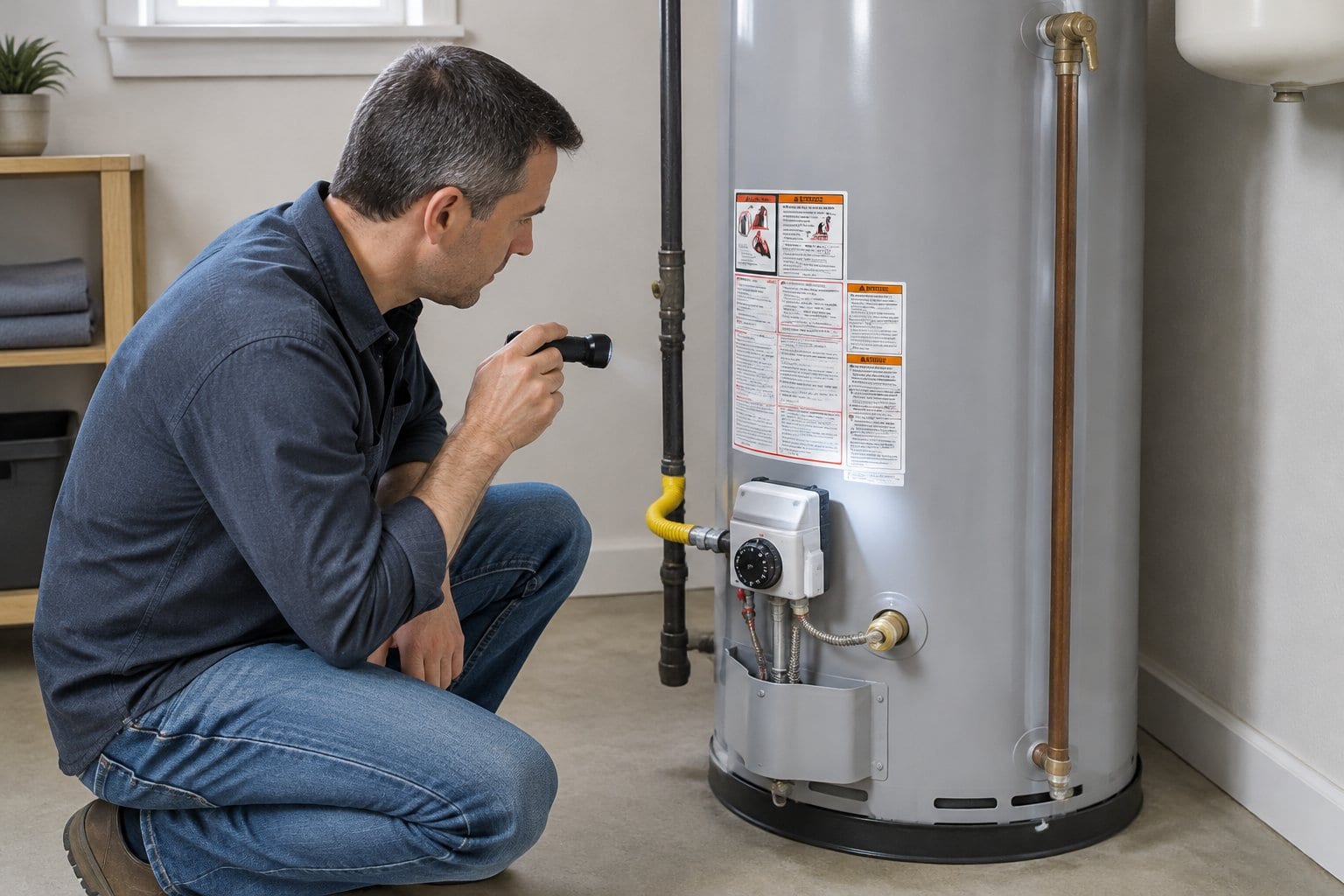
Your current unit's age and warranty status shape the timing. Warranty terms on tanks and heat exchangers vary by brand and model line, and serial number date codes are notoriously hard to read. Snap the rating plate on the existing heater and Manse tells you its model, age, warranty coverage and recall history, which tells you whether you're replacing on your schedule or the heater's.
Frequently Asked Questions
Does tankless deliver hot water to the tap faster?
No. Hot water still has to travel through the same pipes, so the wait at the tap is about the same, and sometimes a little longer while the burner fires. Tankless keeps the supply going longer. A recirculation system is what shortens the wait.
Can a 40-gallon tank be replaced with a tankless unit?
Usually, if the unit's flow rating covers your peak use at your coldest incoming water temperature. Expect a larger gas line and new venting for a gas model, or added circuits for an electric one.
Why would a plumber recommend sticking with a tank?
When going tankless would need expensive gas, venting or panel work, when a large household regularly runs many fixtures at once, or when you plan to sell soon. None of those make tankless a bad product; they make it a poor fit for that house.
Decide With the Facts About Your Current Heater
The comparison starts with what you already have: its age, its warranty, and whether a recall or a covered part changes the math. Manse reads your water heater's rating plate, works out the precise model and checks it against the manufacturer's warranty terms and documentation, so the replace-or-repair call is based on your heater rather than an average. See how Manse helps with decisions like this.