
You turn on the tap, wait for steam, and get cold water instead. Or the shower runs warm for two minutes, then goes cool while you are still standing in it. It is a small thing that ruins a morning fast, and the first thought is usually the most expensive one: the tank is done.
Most of the time, it is not. A water heater not getting hot usually comes down to a thermostat that got bumped, a breaker that tripped, a pilot light that went out, or years of sediment sitting on the bottom of the tank. Before you price out a replacement, work through the cheap and easy causes in order, because that order is what keeps you from paying for a repair you did not need.
It also helps to know your unit's age, model number, and warranty status before anyone quotes you a price. In this guide, you will find the safest checks to start with, how the diagnosis differs for gas and electric models, what warning signs mean the tank is failing, and when to hand the job to a pro. The answer is usually simpler than it feels right now.
Start With the Safest Checks First
The fastest fixes are also the safest ones. Five minutes of looking can tell you whether you have a setting problem or a real failure.
Confirm the Problem Is Affecting Your Whole Home
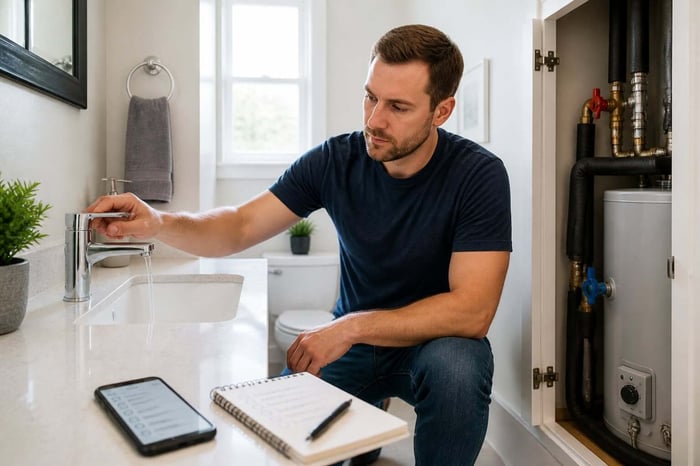
Run the hot tap in the kitchen, then a bathroom sink, then the tub. Give each one a full minute. If every fixture runs cold, the problem is at the water heater or its power source.
If only one faucet or shower is cold, your hot water supply is fine. That points to a bad mixing cartridge, a closed shutoff, or a clogged line at that one fixture.
Check Thermostat Settings and Hot Water Temperature
Set your water heater thermostat to 120 degrees Fahrenheit. That is hot enough for showers and dishes and low enough to avoid scalding. On a gas unit, the dial sits on the gas control valve near the floor.
On an electric unit, the thermostats hide behind screw-on access panels. Someone may have turned the dial down, or the unit may be in vacation mode. After any change, wait 30 to 60 minutes before you judge the result.
Look for Urgent Leak or Gas Safety Signs
Before you touch anything else, walk around the unit and look for these:
A rotten egg or sulfur smell, which can mean a gas leak
Hissing near the gas line or gas valve
Water pooling at the base of the tank
Steady drips from the pressure relief valve or the cold water inlet
Soot, scorch marks, or a sharp burning smell
If you smell gas, do not flip switches. Leave the house and call your gas company from outside.
With the tank clear of safety red flags, the next step is making sure it has power or a working flame.
Restore Power or Ignition Before Inspecting Parts
A water heater with no power or no flame will never heat, no matter how healthy its parts are. This is where most no-hot-water calls actually end.
Reset a Tripped Breaker on an Electric Water Heater
Open your breaker box and find the double breaker labeled for the water heater. A tripped breaker often sits slightly out of line with its neighbors. Push it fully off, then back on.
A power surge or an overloaded circuit can trip it once with no lasting harm. Electric water heaters also have a red reset button on the upper thermostat, behind the access panel. Cut power at the breaker first, then press the button once.
Check the Pilot Light and Gas Supply on a Gas Water Heater
Pull the lower access panel or look through the small viewing window. No flame means the pilot light went out. The gas valve handle should sit parallel to the pipe, which means open.
Relight it using the instructions printed right on the tank, since steps vary by model. If the pilot lights but dies within a minute, suspect a dirty thermocouple or a burner assembly clogged with dust and lint.
Know When a Repeated Shutdown Needs a Professional
One reset is troubleshooting. A second or third is a symptom. If the breaker keeps tripping, you may have a shorted heating element or loose electrical connections, and that belongs to an electrician.
The same rule applies to gas. A pilot that will not stay lit usually means a failing thermocouple or gas control valve. Note the date and what you tried, because a plumber will ask.
If the unit is running fine but the water still never gets truly hot, the cause is inside the tank.
Find the Cause When Water Is Warm but Not Hot
Warm but never hot is a different problem than no heat at all. It almost always means the tank is heating, just poorly or only halfway.
Remove Sediment That Slows Tank Heating
Hard water leaves mineral deposits on the bottom of a tank-style water heater. That layer acts like a blanket between the burner and the water, so heating takes longer and never fully catches up.
Flushing helps. Shut off power or gas, close the cold water inlet, attach a hose to the drain valve, open a hot tap upstairs, and drain the tank. Doing this once a year keeps buildup from stacking up.
Identify a Failed Heating Element in Electric Models
Electric units have two heating elements. The upper one heats the top of the tank, and the lower heating element does most of the work.
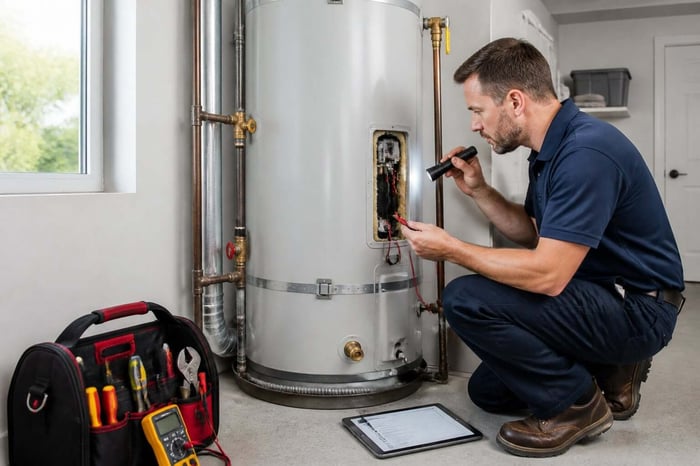
A failed lower element is the classic cause of warm water that runs out fast. Cut power at the breaker, remove the panels, disconnect the wires, and test each element for continuity with a multimeter. No continuity means a faulty heating element that needs replacing.
Check for a Faulty Thermostat or Mixing Valve
A faulty thermostat can read the water as hotter than it is and shut the element off early. If the dial says 120 and your tap runs at 100, the thermostat is a likely suspect.
Also check the mixing valve near the tank. If it fails, it blends too much cold water into the hot line. A cracked dip tube does something similar by dumping cold water at the top of the tank.
Rule Out Demand and Flow Problems
Sometimes nothing is broken. A 40-gallon tank cannot cover back-to-back showers plus a dishwasher cycle.
Tankless models have a flow rate limit too, measured in gallons per minute. Run fewer fixtures at once and see if the temperature holds. If it does, your unit is simply undersized for your household.
Even when heat comes back, the tank itself may be telling you something.
Read Warning Signs From Your Tank and Water
Water heater problems rarely arrive without warning. Sounds, smells, and stains usually show up months before the tank quits.
Respond to Rumbling, Popping, and Condensation
Rumbling or popping is sediment being heated and shifted at the bottom of the tank. It is not dangerous today, but it wastes energy and wears out the tank floor faster.
Water heater condensation on the outside of the tank is normal in humid basements and after heavy use. If the moisture never dries or the puddle grows, treat it as a leak instead.
Address Smelly or Discolored Water
Rusty or brown hot water usually means the anode rod is used up and the tank lining has started to corrode. Replacing the anode rod is routine water heater maintenance and much cheaper than a new unit.
A sulfur or rotten egg smell in the hot water only, with no gas smell near the unit, often points to bacteria reacting with the anode rod. Flushing and an anode rod swap normally clear it.
Locate the Source of a Water Heater Leak
Trace the water up, not down. Dry everything, then check again in an hour.
Wet fittings on top: tighten or replace the supply connections
Drip from the pressure relief valve: pressure or temperature is too high, or the valve has failed
Water at the drain valve: the valve needs tightening or replacing
Water seeping from the tank seam or base: the tank itself is done
A leaking tank shifts the decision from repair to replacement, which is the call you make next.
Choose Repair, Replacement, or Professional Help
Most tank water heaters last 8 to 12 years. Past that, spending several hundred dollars on parts rarely pays off.
Call a Professional for Electrical, Gas, or Tank Failures
Bring in a licensed pro for anything involving the gas supply, a suspected gas leak, or electrical connections that spark, smell hot, or keep tripping. A local plumber handles gas control valves, thermocouples, and tank replacement.
Ask for the diagnosis in writing, including the failed part. That single sheet of paper is worth a lot the next time something goes wrong.
Consider Whether a Tankless Water Heater Fits Your Home
A tankless water heater heats on demand, so it will not run out during long showers, and it takes up far less space. It also costs more up front and may need a larger gas line or new venting.
If your household showers back to back and your tank keeps falling behind, tankless is worth a quote. If your current tank is only five years old and the fix is one element, repair still wins.
Keep Your Water Heater Records Ready for Next Time
Before the plumber leaves, snap a photo of the data plate on the side of the tank. You want the brand, model number, serial number, capacity, and install date in one place.
Then log the warranty end date, the repair you just paid for, and the date of your next flush. Manse gives you one private place to keep that, so the next cold shower starts with answers instead of guesswork.
Frequently Asked Questions
Why Is There No Hot Water in Your Home but the Cold Water Still Works?
Cold water flows straight from the main, so it works even when the heater is off. No hot water at every fixture points to lost power, a dead pilot light, or a failed heating element. Start at the breaker or the pilot before assuming the tank is bad.
What Should You Check First When Your Water Heater Suddenly Stops Heating?
Check the thermostat setting and the power source first, since both are free to fix. On electric units, look for a tripped breaker and the red reset button. On gas units, look for a flame through the viewing window.
How Do You Safely Reset an Electric Water Heater?
Turn the breaker off, remove the upper access panel, and press the red reset button once until it clicks. Replace the panel, then restore the breaker and wait about 30 minutes. If it trips again, stop and call an electrician.
Why Does Your Water Heater Run Out of Hot Water Too Fast?
A failing lower heating element is the most common cause, since it heats most of the tank. Sediment buildup and a broken dip tube do the same thing by shrinking your usable hot water. Household demand matters too, especially with a 40-gallon tank.
What Causes a New Water Heater to Produce Only Lukewarm Water?
New units are often shipped set low, so check that the thermostat reads 120 degrees. Reversed hot and cold connections or a mixing valve left partly open during install also cause lukewarm water. Call the installer, since this is usually a setup issue under warranty.
When Should You Call a Plumber or Electrician for a Water Heater Problem?
Call right away for any gas smell, water pooling at the base of the tank, or a breaker that keeps tripping. Gas valves, thermocouples, and tank replacements are not DIY jobs. Have your model number and warranty status handy so the visit goes faster.
Cold Water Today, Answers Ready Tomorrow
Work the order, and you will usually find the cause without spending a dollar. Confirm the whole house is cold, check the thermostat, restore power or ignition, then look for sediment, a bad element, or a leaking tank.
The part most homeowners skip is writing it all down. Six months from now, you will not remember the model number, whether the element was under warranty, or when you last flushed the tank.
Building a home profile in Manse takes a few minutes, and it is free to start, with no credit card required. Add your home, log your water heater, and let the reminders handle the rest.