
When a furnace won't turn on, first work out whether it's completely dead or trying to start and failing. A dead furnace, with no sound and no light on the control board, usually isn't getting power or a call for heat: the service switch is off, a breaker has tripped, the blower door isn't latched, or the thermostat has gone blank. A furnace that hums, clicks or lights for a moment and then gives up has power, and it's stopping at one specific step of its startup sequence. The blinking light on its control board usually tells you which step.
One rule before any of that. If you smell gas (the rotten egg odor added to natural gas and propane) or a carbon monoxide alarm is sounding, don't touch the thermostat or any switch. Get everyone outside and call the gas utility or 911 from there. Everything below assumes neither is happening.
Completely Silent: Check Power First
The service switch and the breaker
Every furnace has a service switch on or beside the cabinet. It usually looks like an ordinary light switch on a wall box, sometimes with a red cover plate, and it sits exactly where someone reaches when they're shifting boxes or vacuuming the utility room. Check it first.
Next, go to the electrical panel. A tripped breaker rests in the middle position, so push it fully off and then back on. Do this once. A breaker that trips a second time is pointing at a short or a failing motor, and resetting it again only repeats the fault. If the panel labels are vague or missing, our guide to keeping electrical panel records is worth ten minutes before the next outage.
Electric furnaces draw far more current than gas ones, and many are wired to two or more large double-width breakers, one feeding the blower and controls and others feeding banks of heating elements. Check every breaker labeled for the furnace or air handler, not just the first one you find.
The blower door safety switch
Behind the lower front panel is a small push-button switch that cuts power whenever the door is off, so nobody can reach into a running blower. If the panel went back on slightly crooked after a filter change, that button never gets pressed and the furnace behaves as though it's unplugged. Lift the panel off, line up the tabs at the bottom, and press it flat until it seats, then refit any screws. This one catches a surprising number of people on the first cold morning of the year.
Is the thermostat calling for heat?
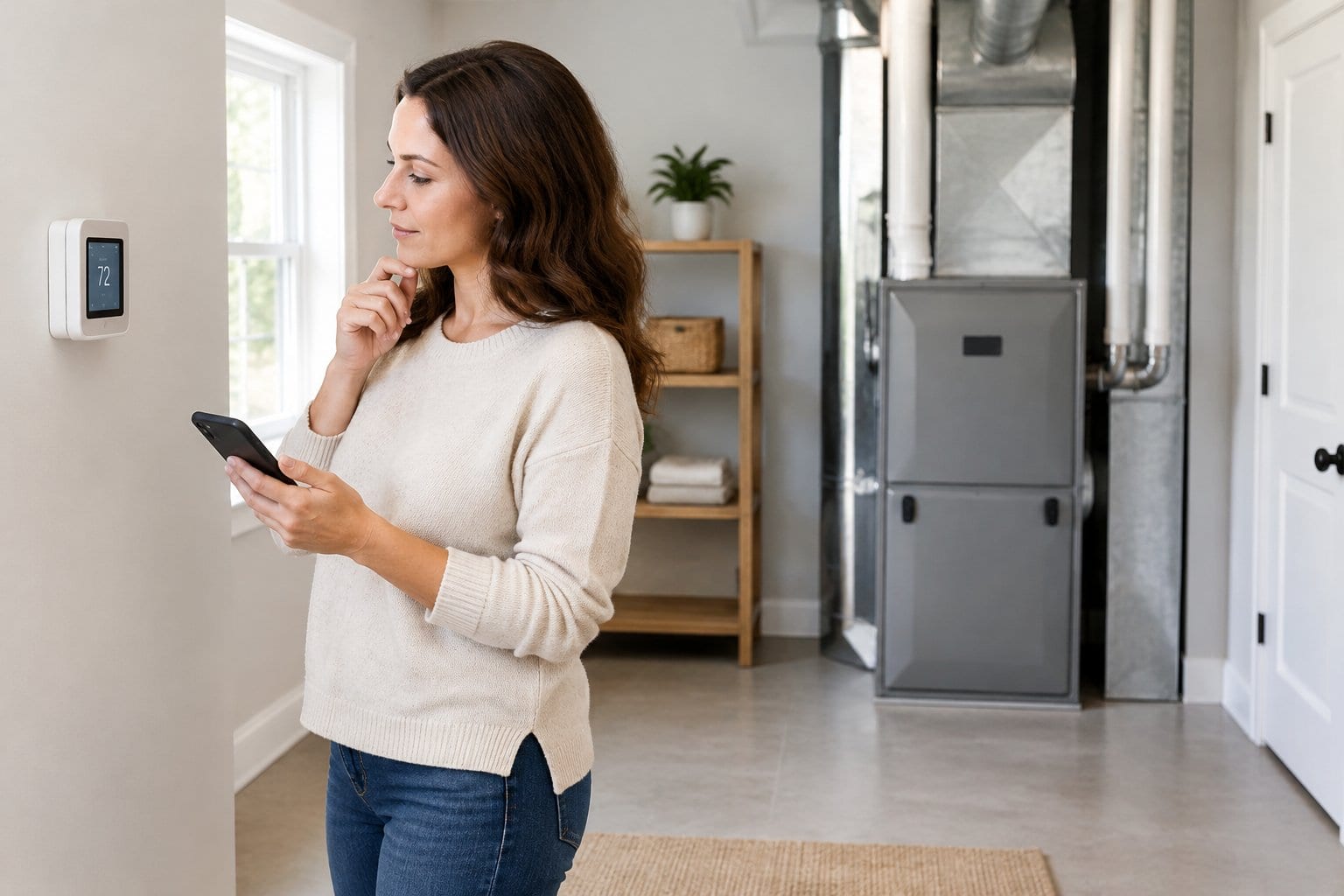
Set the thermostat to Heat and raise it three to five degrees above the room temperature. If the screen is blank, replace the batteries. On a smart thermostat that takes its power through the C wire, though, a blank screen is often a symptom of the furnace losing power rather than the cause, so go back to the switch and the breaker. If the thermostat clicks and the furnace still does nothing, the call for heat is being sent and the problem is at the furnace end.
It Tries, Then Stops: Reading the Startup Sequence
A modern gas furnace starts in a fixed order, and each step has to succeed before the next one is allowed to happen:
- The thermostat calls for heat.
- The inducer motor, a small fan near the vent pipe, starts to clear the heat exchanger.
- The pressure switch proves the vent is drawing, often with an audible click.
- The igniter glows orange (or sparks, or a standing pilot is already lit).
- The gas valve opens and the burners light.
- The flame sensor confirms flame within a few seconds.
- After a short delay, the main blower starts pushing warm air.
Stand by the furnace and listen through one attempt. Where it stops is most of the diagnosis.
The inducer runs but nothing lights
The pressure switch isn't closing, which means the furnace can't prove a clear vent. On a high-efficiency furnace with two white plastic pipes leaving the house, check those openings for drifted snow, ice, leaves or a nest, and clear what you can reach from the ground. Then look at the condensate drain. These furnaces produce water, and a clogged trap, kinked hose or full condensate pump can back water up and hold the pressure switch open. Many condensate pumps also have a float switch that shuts the furnace down when the reservoir fills. If the reservoir is full and the outlet tube is clogged, clearing the tube often brings the heat straight back. Standing water on the floor around the furnace is a service call.
The igniter glows but the burners never light
The furnace isn't getting gas. Check that the handle on the gas shutoff valve near the furnace runs in line with the pipe, which means open. Try the stove or another gas appliance. If nothing gas-fired works, call the utility, and on propane, check the tank gauge. If the igniter doesn't glow at all, the hot surface igniter has probably cracked. They're brittle ceramic parts and a common failure, but replacing one means working beside the gas valve, so leave it to the technician.
Flame for a few seconds, then nothing
The flame sensor, a thin metal rod sitting in the burner flame, can't confirm the flame. A light film of residue on the rod is enough. After a set number of failed tries, often three, many control boards lock out for about an hour before trying again, so a furnace that "came back on its own" in the afternoon has usually just finished a lockout. Cleaning the sensor is routine for a technician and is part of a good annual furnace tune-up.
A hum but no air
If the burners light and the house fills with a hum but no air moves, the blower motor or its run capacitor has likely failed. Switch the furnace off. Capacitors hold a charge after the power is cut, so this repair belongs to a pro.
The Blink Code Is the Shortcut
Most furnaces built in the last few decades have an LED on the control board, visible through a small window in the lower panel. It flashes a pattern, for example two quick blinks and a pause. Count it before you touch the power, because on many boards switching off clears the stored code. A ten-second phone video of the light is easier than counting in a dark utility room, and it's exactly what a technician will want to see.
The code chart is usually printed on a label inside the door panel. The codes aren't universal, so three flashes on one brand can mean something entirely different on another, and charts change between model series from the same maker. When the label has faded or gone missing, Manse identifies the furnace from a photo of its rating plate, opens the installation manual with the flash code table for that model, and shows whether the igniter or control board is still within the parts warranty.
Resetting Without Making It Worse
A basic reset is the service switch: off, wait a minute, back on. Carrier suggests turning the system off and waiting 60 seconds before powering it back up after an electrical hiccup. Do it once or twice at most. A lockout is the furnace protecting itself, and cycling the power over and over on a unit that clicks without lighting can let unburned gas build up.
Some furnaces also have a rollout switch, a small disc with a red or black button mounted near the burners. If that button has popped, flames have rolled out of the burner area, which can point to a blocked flue or a cracked heat exchanger. Don't press it and carry on. That one needs a technician to find out why it tripped.
Before the Technician Arrives
Write down the blink code, the step where the startup failed, and anything you smelled or heard. Then check whether the furnace is still covered before you approve a quote. Igniters, control boards and inducer motors are often under a manufacturer parts warranty for years if the unit was registered, and our guide to checking warranty status before paying for a repair shows where that information lives.
If it's below freezing and the wait is long, protect the plumbing. Open the cabinet doors under sinks on outside walls and let a faucet drip. The winter home maintenance checklist covers the rest of what to do during a cold snap.
Frequently Asked Questions
Does a gas furnace need electricity to run?
Yes. The inducer motor, igniter, control board and blower all run on household power, so a gas furnace stops during a power cut. If you plan to run it from a generator, have an electrician fit a proper transfer switch or inlet rather than improvising with an extension cord.
Why does my furnace only fail on the coldest nights?
Extreme cold brings out a few specific faults. On high-efficiency furnaces, frost can build up on the intake pipe opening, and a condensate line running through an unheated garage or attic can freeze and back water into the furnace. Both trip the pressure switch. If failures line up with the weather, mention that pattern to the technician.
Can a power outage leave the furnace off afterward?
It can. A surge can trip the furnace breaker, a thermostat can lose its schedule and fall back to default settings, and some control boards need a full power cycle to recover. Check the breaker and the thermostat settings first. If the board shows a fault code after an outage, note it, since surge damage to a control board is a known failure.
Is it safe to relight a standing pilot myself?
Only if your furnace has a standing pilot and you follow the lighting instructions printed on its label, step by step. If the pilot won't stay lit after one or two attempts, stop. A worn thermocouple or a dirty pilot assembly is usually the cause, and both are jobs for a technician.
Know Your Furnace Before It Lets You Down
A no-heat call goes faster when you already know the model, its age and what the warranty still covers. Manse reads that from your furnace's rating plate and checks it against your home's own paperwork, so when you ask what a code means or whether a part is covered, the answer is about the unit in your basement rather than furnaces in general. See how Manse works.