
Most surprise repairs are not surprises at all. They are skipped tasks that quietly compounded until something failed at the worst possible moment. The difference between a $200 fix and a $2,000 emergency is usually just timing.
If you have been meaning to get a maintenance routine together but never quite managed to build one that sticks, you are not alone. At Manse, we have found the problem is not motivation; it is structure. A clear quarter-by-quarter plan gives you a short list of the right tasks at the right time, not an overwhelming wall of chores.
Keep reading to find a complete seasonal home maintenance checklist broken into four quarters, with concrete tasks and the real consequences of skipping them. The guide is built to be scanned, not studied, so you can pick it up mid-season and still know exactly where to start.
How To Use This Quarterly Plan
A quarterly plan works because it spreads the workload across the year and ties each task to the conditions that make it most urgent. Instead of a single overwhelming annual list, you get four short sprints.
What To Check Every Season
Some tasks belong to a specific season. Others need attention every three months regardless of weather.
Every quarter, no matter the season, you should check these items:
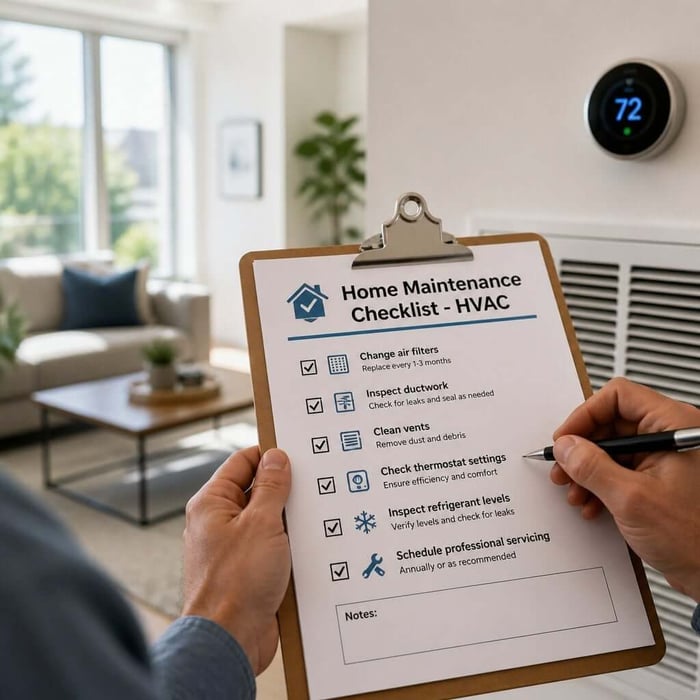
Replace or inspect HVAC filters (every 1 to 3 months depending on filter type)
Test smoke detectors and carbon monoxide alarms
Check under sinks for slow leaks or moisture
Run water in infrequently used drains to prevent trap evaporation
Walk the perimeter of your home and look for new cracks, pest entry points, or drainage issues
These five tasks take less than an hour combined. Skipping them is where problems silently start.
How To Track Dates, Filters, And Service Records
The main reason quarterly maintenance fails is not a lack of effort; it is memory. You replace a filter, forget the date, and then spend ten minutes digging through a drawer six months later trying to figure out when you last did it.
Write dates directly on filters with a permanent marker when you install them. Keep a simple log of HVAC service visits, including who came, what they found, and when the next visit is due. If your furnace or AC unit has a warranty, the service interval specified in the manual often affects whether that warranty stays valid.
This is where many homeowners lose money without realizing it. A skipped service visit can void coverage on a unit with years remaining on its warranty. Storing your appliance records, service dates, and warranty documents in one place gives you a paper trail when you need it most. Add your home to Manse for free and keep all appliances, manuals, and maintenance tasks in one private place.
The quarterly plan only works if you actually close the loop after each task. With a tracking system in place, the Q1 section below becomes your starting point.
Q1 Winter Reset
January through March is when your heating system works hardest and when deferred fall maintenance starts showing up as real damage. This quarter is about catching problems before they become structural.
Inspect Heating Performance And Airflow
Start with your furnace or heat pump. Walk through each room and hold your hand near the vents when the system is running. Uneven airflow, rooms that stay cold, or a unit that cycles on and off frequently are all signs that something needs attention.
Check the air filter first. A clogged filter is the most common reason heating systems run inefficiently and the easiest fix. While you are at the furnace, look at the condition of the flue pipe if you have a gas system. Corrosion or disconnected sections are a safety issue, not just an efficiency one.
If your furnace has not had a professional tune-up in the past year, schedule one. Technicians catch heat exchanger cracks and ignition issues that are not visible to the homeowner. Those problems can cause carbon monoxide leaks if left alone.
Watch For Ice, Drafts, And Indoor Moisture Problems
In winter, your home is sealed tight, which makes it easier to spot problems you might miss in warmer months. Run your hand along the bottom of exterior doors and the frames of older windows. If you feel cold air, the weather stripping needs replacing.
Ice dams on the roof form when warm air escapes through the attic and melts snow, which refreezes at the eave. Check your attic insulation levels if you are seeing recurring ice dams. The fix is usually more insulation or better ventilation, not just removing the ice.
Indoor humidity is easy to overlook. If you regularly see condensation on your windows, your home's moisture level may be too high. That excess moisture migrates into wall cavities and framing, leading to mold and wood rot, which are expensive to repair. A basic hygrometer costs under $15 and tells you exactly where your indoor humidity sits.
Spring is when the real structural damage from winter becomes visible. The next quarter is when you get outside and check what the cold season left behind.
Q2 Spring Exterior Recovery
Spring is the most important season for your home's exterior. Freeze-thaw cycles crack caulk, shift foundations, and stress roofing materials in ways that are easy to miss until water gets in.
Clear Drainage Paths Before Heavy Rain
Before spring rain starts in earnest, walk every drainage path on your property. Gutters clogged with fall debris overflow during heavy rain and dump water directly against your foundation. That water finds its way into basements and crawl spaces, sometimes within a single storm.
Clear gutters and downspouts completely. Make sure downspout extensions direct water at least four feet from the foundation. Check the grading around your home. The ground should slope away from the foundation on all sides. If it has settled flat or toward the house, add soil and regrade before the rainy season peaks.
Inspect window wells if you have a basement. Debris in window wells traps water and puts pressure on basement windows. This is a common source of basement flooding that homeowners overlook entirely.
Check Roofing, Siding, And Foundation After Storms
After the first significant spring storm, do a close inspection of your roof from the ground using binoculars if needed. Look for lifted or missing shingles, damaged flashing around chimneys and vents, and granule loss that shows up as dark patches.
Check your siding for new cracks, gaps at seams, or sections that have pulled away from the structure. Caulk around windows and doors deteriorates every year. If it is cracked or pulling away, scrape it out and replace it before moisture gets behind the siding.
At the foundation, look for new cracks wider than a hairline. Horizontal cracks in a concrete block foundation are a structural concern. Vertical cracks that are stable are usually normal settling. When in doubt, have a structural engineer look at it. A $300 consultation is far cheaper than discovering the problem later during a home sale.
The exterior is solid. Now it is time to shift focus to what is running inside your home all summer long.
Q3 Summer Efficiency And Safety
Summer puts your cooling system, dryer, and outdoor electrical circuits under more stress than any other season. Q3 is about making sure those systems are clean, safe, and not quietly creating risk.
Tune Cooling Systems And Replace Dirty Filters
Your air conditioner works hardest between June and September. A dirty filter makes the unit work even harder, which drives up your energy bill and shortens the unit's lifespan. Check the filter every month during peak cooling season and replace it when it looks gray or clogged.
Outside, clear at least two feet of space around your condenser unit. Grass, weeds, and shrubs that grow against the unit restrict airflow and can cause the system to overheat. While you are outside, gently rinse the condenser coils with a garden hose to remove dust and pollen buildup.
Schedule a professional AC tune-up in May or early June before the hottest weeks arrive. Technicians check refrigerant levels, inspect electrical connections, and test the capacitor, all of which can cause a breakdown during a heat wave if they are already marginal.
Reduce Fire Risk Around Dryers, Grills, And Outdoor Circuits
Dryer fires are one of the most preventable home hazards, and lint buildup in the exhaust duct is the main cause. Pull the dryer away from the wall, disconnect the duct, and clean it from both ends at least once a year. If your duct run is long or has multiple bends, consider a professional cleaning.
Before grilling season, inspect your gas grill's hose and connections. Apply soapy water to the connections and look for bubbles, which indicate a gas leak. Keep the grill at least ten feet from the house, decking, or overhanging branches.
Check your outdoor GFCI outlets by pressing the test button and confirming the outlet loses power. Outdoor outlets take weather abuse all year and fail more often than indoor ones. A failed GFCI is a shock hazard, especially around water.
Eliminating summer safety risks sets you up well for fall, which is when your home needs its most time-sensitive preparation of the year.
Q4 Fall Prep For Cold Weather
Fall is the quarter where timing actually matters. Tasks you skip in October often cannot be corrected once temperatures drop below freezing. This is the most consequential quarter on the list.
Seal Openings And Protect Plumbing Before Freezes
Walk the exterior of your home and look for any gap larger than a quarter inch. Mice can fit through a hole the size of a dime. Use steel wool and caulk or expanding foam to close gaps around pipes, utility penetrations, and foundation cracks before the first freeze.
Disconnect and drain all outdoor hoses before the first hard frost. A hose left connected traps water in the pipe inside the wall, which can freeze and burst even if you have a frost-free sillcock. Drain the hose bib completely and store hoses in a garage or basement.
If you have pipes in unconditioned spaces like a garage, crawl space, or exterior wall, wrap them with pipe insulation before temperatures fall. A burst pipe in winter can dump hundreds of gallons of water into your home before you find the shutoff.
Service Gutters, Chimneys, And Weather Barriers
Clean gutters again in late November after the leaves have fully fallen. This is the second cleaning of the year and the more important one. Wet leaves compress into a thick mat that holds water against the roof edge and fascia board, accelerating rot.
Have your chimney inspected and swept before you use it for the season. Creosote buildup inside the flue is a fire hazard. A chimney sweep will also check the damper, flashing, and firebox for cracks. If you use a wood stove, the same inspection applies.
Check weatherstripping on all exterior doors and replace any that is compressed or torn. Lift your garage door's rubber seal and look for gaps at the corners, which are common and easy to fix with a replacement seal from a hardware store.
With all four quarters addressed, the question becomes how you keep this plan running without starting from scratch every year.
Keep The Routine Going Year After Year
The hardest part of home maintenance is not any single task. It is rebuilding the habit every time a quarter rolls around. A repeatable system removes that friction entirely.
Build a Repeatable Annual Review
Set four calendar reminders right now: January 1, April 1, July 1, and October 1. Label each one with the quarter it starts. When the reminder fires, open this checklist and spend ten minutes reviewing what is due. That ten-minute review prevents the feeling of having to start over each season.
Add a fifth annual reminder in October for bigger-picture tasks like scheduling a plumber to flush your water heater, testing your sump pump before the spring thaw, or booking an HVAC inspection before heating season. These annual tasks do not fit neatly into one quarter, but they do need a date attached, or they slip indefinitely.
Tell a second person in your household where the checklist lives. When maintenance depends on one person's memory, it disappears when that person gets busy. Shared ownership makes the routine stick.
Frequently Asked Questions
What Home Maintenance Tasks Should You Do Each Season so Small Issues Do Not Turn Into Big Repairs?
Each season has a short list of high-leverage tasks. In winter, focus on heating performance and draft sealing. Spring is for exterior inspection and drainage. Summer covers cooling systems and fire hazards. Fall is for sealing, gutter cleaning, and plumbing protection.
What Should You Check in Spring After Winter Wear and Water Damage?
Walk every drainage path, inspect gutters and downspouts, and check the roof and siding for storm damage. Pay close attention to caulking around windows and foundation grading, both of which affect whether spring rain stays outside or finds its way in.
What Should You Focus on in Summer to Keep Your HVAC, Plumbing, and Yard From Causing Problems Later?
Replace HVAC filters monthly during peak cooling, clean dryer exhaust ducts, and inspect outdoor GFCI outlets. These three tasks address the three most common summer-season failures: system breakdowns, dryer fires, and electrical hazards.
What Fall Tasks Help Prevent Ice Dams, Frozen Pipes, and Heating Breakdowns Before the First Cold Snap?
Disconnect and store outdoor hoses, insulate exposed pipes, clean gutters after leaves fall, and have your furnace and chimney inspected. Fall tasks have a hard deadline that summer and spring tasks do not. Once it freezes, several of these tasks become much harder or impossible.
What Winter Checks Help You Catch Leaks, Drafts, and Safety Issues While Your Home Is Closed Up?
Test airflow at every vent, feel for cold drafts around door frames and window sills, and watch for condensation on windows, which signals high indoor humidity. Also check your carbon monoxide detector monthly in winter, since gas heating systems are running continuously.
How Can You Set Up a Monthly Schedule You Will Actually Follow, and Keep Your Records on Your Side Instead of in Someone Else's System?
Set quarterly calendar reminders and attach a short task list to each one. After each task, log the date and what you found. Store that log somewhere you control, whether that is a notebook, a spreadsheet, or a home record tool you own. The goal is a record you can pull up in thirty seconds when a contractor or buyer asks a question.
Store Maintenance History Where You Can Find It
The moment you call a contractor and cannot remember when the HVAC was last serviced, or you need a warranty and have no idea where the paperwork went, you feel the cost of not having a record. That moment is avoidable.
Keep a maintenance log that includes the date, what was done, who did it, and what it cost. This does not have to be elaborate. A shared note, a spreadsheet, or a dedicated home record system all work. The format matters less than the habit of updating it after each task.
Manse is free to start. Add your home in minutes and build the record you wish you had from day one. Your records remain private and belong only to you.