
The toaster stopped working this morning, or maybe the coffee maker sputtered and died mid-brew. Either way, you're standing in the kitchen with a warm mug of disappointment, trying to decide whether it is worth fixing or time to buy a new one. The honest answer is that small appliance repair usually comes down to a quick math problem and a records problem, and most homeowners are only prepared to solve one.
That records problem is the part nobody plans for. You bought the blender two years ago, but where's the receipt? Was there a warranty? What's the model number, even? This is exactly the gap Manse was built to close: it gives you one place to store that information the moment you buy something, so it's already there when the appliance breaks.
In this guide, you will find a clear way to decide between repair and replacement, what records to check before you spend a dime, which fixes are safe to try yourself, and how to find a technician you can trust. Read through it once, and you'll never have to make this decision blind again.
Make the Repair-or-Replace Decision
Every small appliance repair decision starts with one question: does fixing it cost less than replacing it, and by how much? Getting that answer right takes more than a gut feeling.
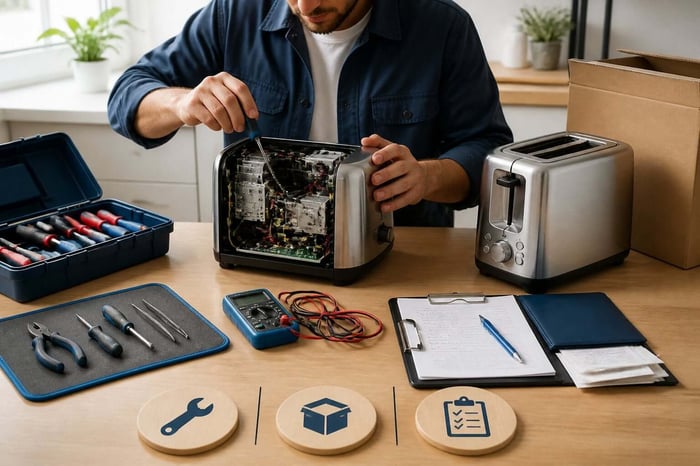
Small appliances break for predictable reasons: worn motors, frayed cords, failed heating elements, or a switch that finally gives out. The cost of small appliance repair depends heavily on which part failed and whether the appliance is still worth the labor charge. A $15 part and a $60 labor fee makes sense for a $200 stand mixer. It makes far less sense for a $35 toaster.
Use the 50/50 Rule as a Starting Point
The 50/50 rule says if a repair costs more than half of what a new appliance costs, replace it instead. This isn't a strict law, but it's a fast filter that saves you from overthinking small decisions.
For appliances under $100, this rule usually points straight to replacement once a technician is involved. For higher-value items like espresso machines or heavy-duty blenders, it's worth getting an actual quote before deciding anything.
Compare the Estimate With Replacement Cost
Once you have a repair estimate, put it side by side with the price of a comparable new model, not just any model. A budget replacement might undercut the repair cost, but a comparable-quality replacement often does not.
Get the exact repair quote in writing before comparing
Look at replacement models with similar features and build quality
Factor in shipping, setup, or installation costs for the new unit
Consider Age, Reliability, and Part Availability
An appliance past its expected lifespan is a riskier repair investment, even if the quote looks reasonable. Brands with a strong reliability record are often worth repairing longer than off-brand units, since parts stay available.
If the manufacturer no longer makes parts for that model, repair may not even be an option. This is where knowing your appliance's age and model number in advance turns a guessing game into a fast decision, which is exactly why the next step matters so much.
Check Your Records Before You Authorize a Repair
Before you agree to any repair cost, find out if you're already covered. A five-minute records check can save you the entire bill.
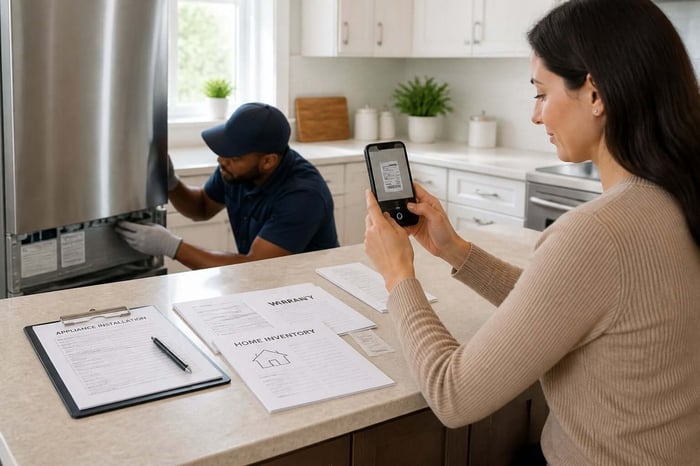
Homeowners skip this step all the time, not because it's hard, but because the paperwork is scattered. The manual is in a drawer somewhere, the receipt was emailed a year ago, and the warranty card never got mailed in. None of that helps you when a technician is standing in your kitchen asking questions.
Find the Manual, Model Number, and Serial Number
The model and serial number are usually printed on a small plate or sticker on the back, bottom, or inside the appliance. This information tells a technician exactly which parts fit and how old the unit is. If the label is worn or hard to read, this guide to decoding appliance model numbers can help you make sense of it:
Check the bottom or back panel for a printed label
Look inside the door or lid for smaller appliances
Photograph the label the moment you find it, before it fades or gets covered in grease
Once you have that information, store it somewhere permanent instead of scribbling it on a sticky note. A home profile like the one Manse builds keeps the model number, manual, and photos together, so you're not hunting for them mid-repair call.
Confirm Manufacturer or Home Warranty Coverage
Many small appliances carry a one- or two-year manufacturer warranty that owners often forget about. If your appliance is within that window, the repair might cost nothing.
Some home warranty plans also cover small appliances tied to the home, though this varies by provider and plan. Check the warranty terms for exclusions, since accidental damage or normal wear often isn't covered. The purchase date matters as much as the model number, and it's worth trying a few safe checks yourself before calling.
Try Safe Checks and Know When to Stop
Some small appliance problems have simple causes you can rule out in minutes without any tools. Others require a professional as soon as you notice them.
Start with the basics: Is it plugged in properly? Is the outlet working? Is a reset button or breaker tripped? A surprising number of "broken" appliances are actually power problems, not mechanical ones.
Simple Issues You Can Check Without Opening the Appliance
These checks are safe for almost anyone and don't require removing panels or touching internal wiring:
Test the outlet with another device to rule out a dead outlet
Check the cord for visible fraying, cuts, or loose connections at the plug
Look for a tripped reset button, common on coffee makers and toasters
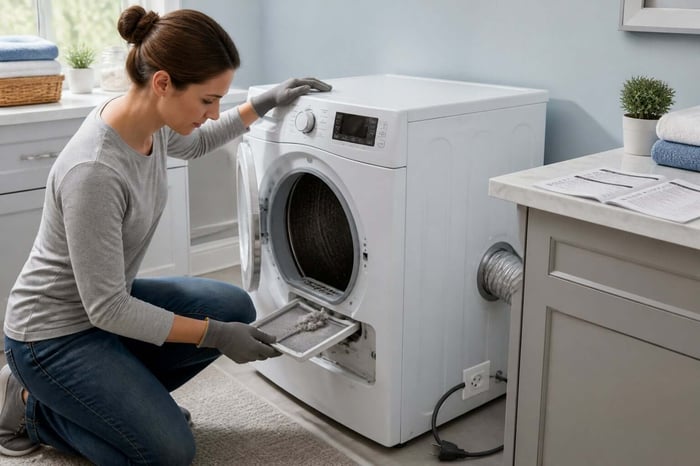
Clean out crumbs, food debris, or buildup that may be blocking a switch
If none of these fix the problem, the issue is likely internal, and that's where caution matters.
Why Microwaves Need Extra Caution
Microwaves store high-voltage electricity in a capacitor even after they're unplugged, which can cause serious injury if you open the case. OSHA's electrical work practices standard requires discharging this stored electrical energy and treating capacitors as energized until they're discharged, which is why this isn't a small appliance repair to attempt yourself under any circumstances.
If your microwave isn't heating, the turntable won't turn, or the display is dead, those symptoms point to problems that need a trained technician. If you see sparking or arcing inside the microwave, stop using it immediately and unplug it. Recognizing which problems are safe to poke at yourself, and which ones absolutely aren't, is what makes the next step, choosing the right professional, so much easier.
Choose a Qualified Local Professional
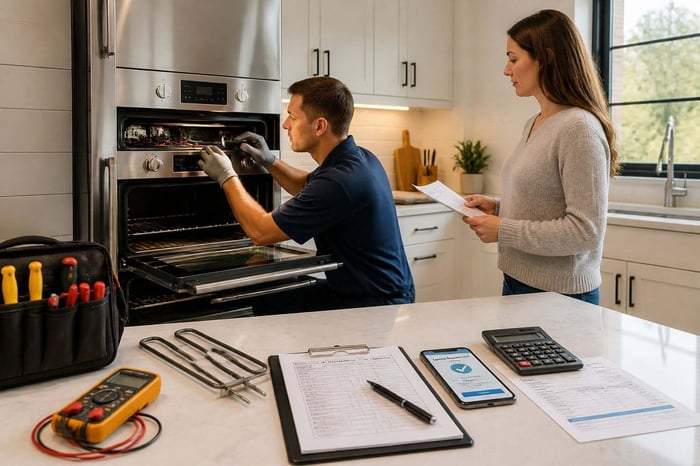
Finding a trustworthy appliance repair technician comes down to asking the right questions before they ever step into your home. A little screening upfront prevents a bad repair experience later.
Not every business listed online is properly licensed or insured, and licensing requirements for small appliance repair vary by state. Ask directly about credentials rather than assuming a nice website means a qualified technician.
Questions to Ask an Appliance Repair Technician
Before booking, a short phone call can tell you a lot:
Are you licensed and insured to do appliance repair in this state?
Do you offer a written estimate before starting work?
What's your experience with this specific brand or appliance type?
Is there a warranty on the repair itself, and for how long?
A technician who answers these clearly and without hesitation is usually one worth hiring.
How to Compare Local Options in NY
Homeowners in NY have no shortage of appliance repair technicians to choose from, which makes comparison shopping worthwhile rather than settling for the first search result. Check reviews on multiple platforms, not just one, since ratings can vary widely between sites.
Look for technicians who specialize in small appliances specifically, not just major appliances like refrigerators and washers. Ask neighbors or local community groups for referrals, since word of mouth often surfaces technicians who do reliable, fairly priced work. Once the repair is done, what you do with that receipt matters just as much as the repair itself.
Keep the Next Breakdown From Costing More Time
The repair you just paid for is only half the job. The other half is making sure you never have to start from zero again the next time something breaks.
Think about the homeowner whose blender was fixed by a local shop last year, but who never checked whether the warranty had already covered it for free. Or the one who needed the dishwasher's model number mid-repair and had no idea where to find it. Both situations cost extra time, and sometimes extra money, that a little record-keeping would have prevented.
Save the Repair Receipt and Warranty Decision
Every repair receipt tells a future story: what broke, what it cost, and whether the fix held up. Keep it alongside the appliance's original warranty information so you know if a second failure might be covered.
If you decided to replace instead of repair, note that too. It helps you remember which appliances are new versus aging the next time something in the kitchen makes a strange noise.
Frequently Asked Questions
Where can you find a reliable repair shop near your home?
Start with review platforms that verify real customer feedback, and check for licensing and insurance before booking. Local community groups and neighbor referrals often point to technicians with consistent, honest work that doesn't show up in paid search results.
How much should you expect to pay to fix a broken microwave, blender, or coffee maker?
Small appliance repairs typically range from $40 to $120, depending on the part and labor involved, though microwaves can cost more due to safety handling requirements. Get a written estimate first, since phone quotes can shift once a technician sees the actual problem.
Is it worth repairing your appliance, or should you replace it?
Use the 50/50 rule as a starting point: if the repair costs more than half of a comparable new appliance, replacement usually makes more sense. Age, part availability, and how many times the appliance has already been repaired should also factor into the decision.
Which appliance brands can local repair technicians service?
Most independent technicians work across major and mid-range brands, though some specialize in specific manufacturers. Always confirm brand experience during your initial call, especially for less common or higher-end appliances.
How quickly can a technician diagnose and fix an appliance that stopped working?
Simple issues like a tripped switch or clogged component can often be diagnosed and fixed in a single visit. More complex problems involving internal parts may require a follow-up visit once the correct part arrives.
What should you check before scheduling a repair visit for your home?
Locate the appliance's model number, purchase date, and any warranty documents before the technician arrives. Having this ready helps the technician give you an accurate estimate and lets you know immediately whether the repair might already be covered.
Build a Useful History for Every Appliance
A single repair record doesn't help much on its own, but a full history does. Over time, a pattern of repairs on the same appliance tells you it's nearing the end of its useful life, even if each individual fix seemed minor. That kind of pattern is easiest to spot as part of a broader home maintenance checklist, not a single appliance's history in isolation.
This is the exact gap Manse fills for homeowners. Add your appliances for free, and every model number, manual, warranty status, and repair receipt lives in one private place. Next time something breaks, your records are already there, and the decision that started this whole process becomes a five-minute task instead of a scavenger hunt.