
Your dryer just made a noise it has never made before, or you pulled out a load of clothes that should be dry, and they are not even close. Before you pick up the phone and brace for a repair bill, run a few safe checks yourself.
Most dryer problems trace back to one of three things: airflow, power, or a worn part that a technician needs to replace. This guide walks through what you can check safely, what symptoms point to what problem, and when to stop troubleshooting and call for dryer repair.
Keep reading to learn which checks take five minutes, which symptoms mean stop immediately, and how to walk into a repair call already prepared.
Start With Airflow and Power Checks
Most dryer complaints, from long dry times to a dryer that will not start at all, trace back to airflow or power rather than a broken part. These are the safest checks to run first, and they take only a few minutes.
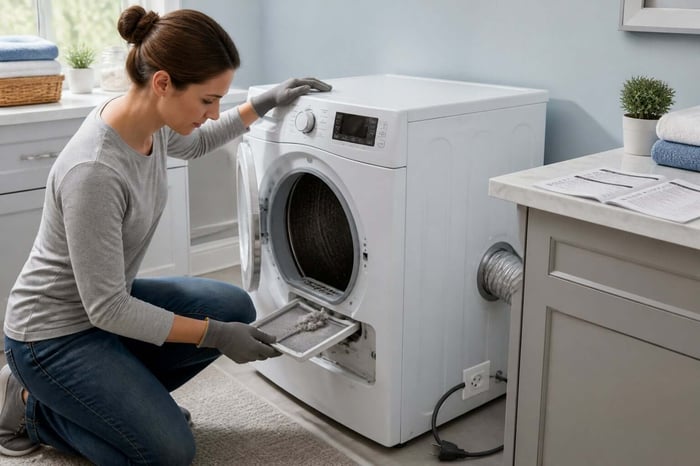
Clean the Lint Filter and Check the Dryer Vent
A clogged lint filter is the single most common reason a clothes dryer runs long or stops heating well. Pull the filter out, peel off the lint by hand, and rinse it under warm water if it feels waxy or coated from dryer sheets.
The vent behind the dryer collects lint too, even when the filter looks clean. Disconnect the vent hose from the back of the machine and check for lint buildup just inside the collar. A vent brush works well here, and a badly clogged line may need a garden hose or an auger pushed through from the outside opening.
Look for Restricted Airflow Outside Your Home
Walk outside and find where the dryer vent exits your house. If the exterior flap will not open freely, or barely any air comes out when the dryer runs, something further down the line is blocked.
Bird nests, crushed ductwork, and long unvented runs are common culprits. A dryer that never fully clears its air path runs hotter than it should and wears out parts faster. It's also worth knowing that lint and vent buildup is the leading contributing factor in home dryer fires, according to the NFPA's research on clothes dryer fires, which is one more reason a clear vent is worth keeping in mind as part of your home's maintenance record going forward.
Confirm the Circuit Breaker and Power Connection
If the dryer will not start at all, check your breaker panel before assuming the worst. A tripped breaker, or one that is only halfway tripped, can cause a dryer to run without heat or not power on at all.
For an electric dryer, confirm the outlet is fully seated, and the cord shows no scorch marks or looseness. Gas dryers still need electric power to run the drum and controls, so this check applies to both types.
Reset the breaker fully off, then back on
Check that the plug is firmly seated in the outlet
Look for a burning smell or discoloration near the plug
Once airflow and power check out clean, the next step is matching what the dryer is actually doing to the part that is likely behind it.
Match the Symptom to the Next Safe Step
The exact symptom your dryer shows points to a specific cause, and knowing which one you are dealing with helps you decide what is safe to check yourself.
When the Dryer Runs but Clothes Stay Wet
This usually means heat is not reaching the drum, even though the motor and drum are working. After confirming the vent and lint filter are clear, the next likely suspects are the thermostat or heating element, both of which sit deeper inside the cabinet.
A quick test with a piece of tissue near the door seal while the dryer runs can reveal a leaking door gasket, which lets heat escape instead of drying clothes. If the gasket flutters the tissue noticeably, it likely needs replacing.
When the Dryer Will Not Start
A dryer that does nothing when you press start often has a simple cause: the door isn't fully latched, or the door switch has failed. Open and close the door firmly and listen for a click before trying again.
If the door seems to close fine and the dryer still will not start, the door switch may be worn out. This is a common point of failure and one that is usually simple for a technician to test and replace quickly.
When the Dryer Makes a New Noise
A squeal, thump, or grinding sound usually points to a mechanical part like the drum belt, rollers, or tensioner. If you open the dryer and spin the drum by hand and it turns freely with little resistance, a broken belt is likely.
Squealing: often a worn belt or dry bearing
Thumping: usually an item caught in the drum or an unbalanced load
Grinding: often worn rollers or a bad bearing
When You Smell Burning or See Smoke
Stop the dryer immediately and unplug it or shut off the breaker. A burning smell combined with heat problems can point to lint buildup, a failing thermal fuse, or an electrical issue that should not wait for a scheduled appointment.
This is the one symptom where guessing is not worth it. Any sign of smoke, scorching, or a persistent burning odor means the dryer should stay off until a professional inspects it.
Know When to Stop and Call a Professional
Some dryer problems are safe to check yourself, and some are not worth the risk. Anything involving the internal electrical system, heating components, or gas lines belongs to a trained technician.
Internal Electrical and Heating Problems
Testing a thermostat, door switch, or heating element properly requires a multimeter and a continuity test, along with knowing how to safely disconnect power first. These tools aren't complicated, but using them incorrectly on a live circuit is a real safety risk.
If your dryer runs but will not heat, and you have already ruled out the lint filter, vent, and breaker, the issue is likely internal. This is where a dryer repair service becomes the safer, faster option, rather than opening the cabinet yourself.
Gas Dryer Concerns and Fire Risks
Gas dryers add another layer of risk that electric models do not have. A yellow, uneven flame or a strong gas smell near the dryer means you should close the gas supply valve and call for service right away.
Never attempt to adjust a gas burner or igniter yourself. This is an area where appliance repair professionals have the training and tools to do the job safely, and it is not an area for trial and error.
What a Technician May Test During a Visit
Knowing what a technician checks helps you understand the visit and ask better questions. Most dryer repair service calls follow the same diagnostic pattern before replacing any part.
Continuity tests on the thermal fuse, thermostat, and door switch using a multimeter
A visual and manual check of the belt, drum, and rollers
Airflow measurement at the vent exit to rule out restriction
A check of the power supply and, for gas units, the gas connection and flame
Once you know a professional visit is the right call, the next thing that saves time and money is being ready before they arrive.
Prepare for the Service Call and Repair Decision
A little preparation before the technician shows up can shorten the visit and help you make a smarter repair-or-replace decision. This starts well before you dial.
Find the Model Number, Manual, and Warranty
Every dryer has a model and serial number plate, usually inside the door frame or on the back panel. Technicians ask for this before scheduling, since it tells them what parts to bring and whether the model has known issues. If the plate is hard to read, this guide to decoding appliance model numbers can help you figure out what's left of it.
If you search "dryer repair near me" and start calling around, having this number ready on the first call saves back-and-forth. It is also worth checking whether the dryer is still under warranty before you agree to pay for a diagnostic fee. If you've misplaced the manual, this resource for finding and storing appliance manuals covers where to look next.
This is exactly the kind of detail that gets lost in a drawer or a forgotten email. Keeping your appliance's model number, manual, and warranty dates stored somewhere searchable, like a home profile in Manse, means you won't dig through paperwork the day something breaks.
Describe the Problem Clearly to the Technician
Be specific about what you noticed and when. "It runs but does not heat" or "it makes a grinding noise on the spin cycle" gives a technician far more to work with than "it is broken."
Mention any troubleshooting you already tried, including the lint filter and vent checks. This can help you avoid a wasted visit charge for something you already fixed.
Compare the Repair Estimate With Replacement
Once you have an estimate, compare it with the dryer's age and value. As a general guideline, a repair costing more than half the price of a new comparable model is worth a second thought.
Appliance service costs vary by region and part, but a technician should explain what is failing and why before charging you. This same comparison applies to washer repair, washing machine repair, and dishwasher repair calls, so getting comfortable with the math now pays off across your whole home.
Frequently Asked Questions
Why Is Your Dryer Running but Not Heating?
This usually points to a clogged vent, a tripped breaker, or a failed heating element or thermostat. Start with the lint filter and vent, since those are the easiest and safest things to rule out yourself before assuming a part failed.
What Does It Usually Cost to Fix a Dryer in Your Home?
Costs vary by part and region, but simple fixes like a door switch or belt tend to cost less than heating element or motor repairs. Getting a written estimate before work begins helps you avoid surprise charges.
Is It Worth Repairing Your Dryer or Replacing It?
Compare the repair cost against the dryer's age and the price of a similar new model. If the repair costs more than half of a replacement, or the dryer is already past ten years old, replacement is often the more practical choice.
What Are the Most Common Dryer Problems Homeowners Can Fix?
Cleaning the lint filter, clearing the vent, and checking the breaker are all safe fixes most homeowners can handle. Anything involving the heating element, motor, or gas line should go to a professional.
Can You Safely Troubleshoot Your Dryer Before Calling a Technician?
Yes, airflow and power checks are safe for most homeowners to run themselves. Once you rule those out and the dryer still will not heat or start, it is time to call for dryer repair rather than opening internal components.
How Do You Find a Reliable Dryer Technician Near You?
Look for licensed appliance repair services with clear reviews and upfront pricing before booking. Confirming your warranty status ahead of time can also help you avoid paying out of pocket for a covered repair.
Keep the Next Breakdown From Becoming a Paperwork Search
The real lesson from a dryer breakdown is not just what broke; it is how much time you spent hunting for information you needed right away. That search for a model number or a warranty date is often more frustrating than the repair itself.
Every appliance in your home, not just the clothes dryer, comes with the same risk. A washing machine, a dishwasher, an HVAC system… they all have manuals, warranty windows, and service histories that matter the moment something goes wrong.
Building a simple habit now solves this permanently, and it fits naturally into a broader home maintenance checklist rather than a one-appliance fix. Photograph the model number the day you buy an appliance, save the manual, and note the warranty end date.
A free home profile in Manse keeps all of that in one private place, so the next appliance repair call starts with answers, not guesswork. See how it works.