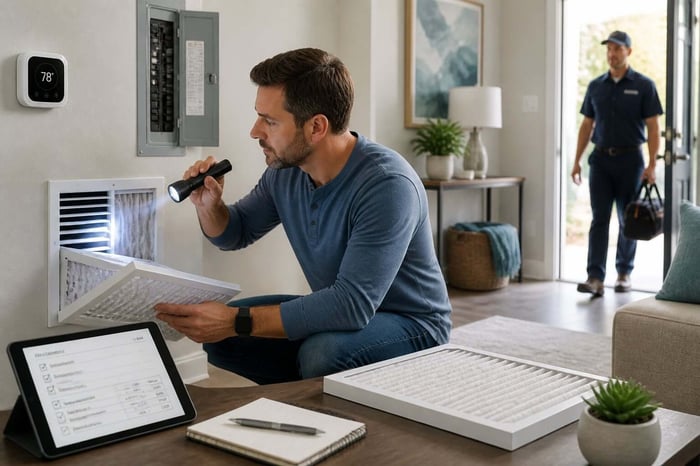

The house feels warmer than it should, the vents are barely pushing air, and the thermostat says the AC is running anyway. That moment usually hits at the worst time, on the hottest day of the week, right before you have people over or right after a long day at work. Before you call anyone, a few minutes of checking can tell you whether this is a quick fix or something that needs a technician.
Part of what makes that moment worse is not knowing basic facts about your own system. If you cannot remember your AC's model number, age, or whether it is still under warranty, you are stuck guessing while a technician's clock runs.
In this guide, you will find the safe checks to run before you dial for help, what your symptoms usually point to, when a problem counts as an emergency, and how to read a repair estimate without feeling like you are being upsold. Keep reading to learn how to walk into an AC repair call informed, not anxious.
Safe Checks to Make Before You Call
A short check of your system can rule out the easy problems in under fifteen minutes. Many AC repair calls end up being something simple, and catching that yourself avoids paying a diagnostic fee for a fix you could have done on your own.
Confirm the Thermostat Settings
Start with the thermostat, since it is the most common reason for a "broken" AC that is not broken at all. Make sure it is set to Cool, not Fan or Heat, and check that the target temperature is a few degrees below the current room temperature.
If you have a smart thermostat, check that a schedule or hold setting has not overridden your intended temperature. Battery-powered thermostats can also lose settings if the batteries are low, so swap them if the display looks dim or blank.
Replace or Inspect the Air Filter
A clogged filter chokes airflow and can make your whole system seem like it has failed. Pull the filter out and hold it up to a light; if you cannot see light through it clearly, replace it.
Check air filters every one to three months, more often if you have pets or someone in the home with allergies. A dirty filter strains the blower motor and can even cause the evaporator coil to freeze over, turning a five-dollar fix into a repair bill. For a fuller breakdown of what to check and when across the whole system, an HVAC maintenance schedule covers the seasonal tasks beyond just the filter.
Check the Circuit Breaker and Outdoor Unit
If the indoor unit is silent, walk to your electrical panel and look for a tripped breaker connected to the AC. Reset it once; if it trips again right away, stop and call a professional, since a repeat trip usually points to an electrical fault.
While you are outside, look at the condenser unit for anything blocking airflow.
Clear leaves, grass clippings, or mulch piled against the unit
Check that the fan on top is not visibly bent or jammed
Confirm the outdoor disconnect switch near the unit is in the "on" position
Know When to Stop Troubleshooting
Some signs mean it is time to stop checking things yourself and pick up the phone. Burning smells, repeated breaker trips, water pooling near the indoor unit, or grinding sounds are not projects for a homeowner to handle alone.
This is also a good moment to jot down what you found: the breaker tripped twice, the filter was clogged, the outdoor fan looked fine. Homeowners who keep even a simple record of these details in Manse walk into the next HVAC repair conversation with a clear timeline instead of a foggy memory. Once you have ruled out the easy fixes, the next step is figuring out what your remaining symptoms actually mean.
What Your AC Symptoms May Point To
Different symptoms point toward different failure points inside your system, and knowing the pattern helps you describe the problem accurately. A technician can often narrow down the cause faster when you can describe exactly what you are seeing and hearing.
Warm Air, Weak Airflow, or Uneven Rooms
Warm air blowing from the vents despite the AC running usually points to low refrigerant, a failing compressor, or a frozen evaporator coil that has since thawed. Weak airflow across the whole house often traces back to a clogged filter, blocked ductwork, or a failing blower motor.
Uneven cooling, where one room stays hot while others feel fine, can point to duct leaks, closed vents, or an undersized system. None of these are things you can safely fix on your own, but naming the exact symptom saves the technician guesswork.
Noises, Odors, Leaks, and Frozen Parts
Grinding usually means worn motor bearings, while squealing often points to a slipping or worn belt. Rattling can be as simple as a loose panel screw or as serious as a loose fan blade inside the outdoor unit.
A musty smell often means mold or mildew buildup near the evaporator coils, and a burning smell means stop the system immediately and call for air conditioning repair. Water pooling near the indoor unit points to a clogged condensate drain line, and ice on the coils or refrigerant lines usually means restricted airflow or low refrigerant.
Short Cycling and Higher Energy Bills
Short cycling, when the AC turns on and off in quick bursts, adds extra wear to the compressor and often points to a dirty filter, low refrigerant, or a thermostat placed somewhere that reads the temperature incorrectly. Left alone, it shortens the life of expensive parts.
A rising energy bill with no change in habits is often the earliest sign that your system is losing efficiency, sometimes weeks before you notice reduced comfort. Dirty condenser coils, duct leaks, and aging components show up in your bill before they cause a full breakdown. Recognizing these patterns early helps, but some symptoms mean you can't wait for a scheduled HVAC repair service appointment.
When a Cooling Problem Needs Fast Help
Some AC problems cannot wait for the next available appointment, and knowing the difference protects your home and your family. An inefficient system is different from one that poses a real safety risk.
Signs That Call for Emergency Service
Certain signals mean you should call for emergency AC repair the same day, not next week.
A burning smell, smoke, or sparks near the indoor or outdoor unit
A breaker that trips repeatedly after being reset once
Water actively leaking near electrical components or flooring
No cooling at all during extreme heat, especially with elderly residents, infants, or pets in the home
Any of these situations puts either your safety or your home at risk if ignored, and they justify paying for after-hours AC repair.
Safety Issues You Should Not Handle Yourself
Homeowners should never open or test electrical components, refrigerant lines, or the compressor. Refrigerant handling is federally regulated for a reason, and mishandling it can cause frostbite or worse, while electrical panels carry real shock risk.
If you smell gas near a furnace connected to your HVAC system, leave the house and call your gas provider before calling for HVAC repair. Trying to save money by opening sealed components almost always costs more once a technician has to undo the damage.
How to Protect Your Home While You Wait
While you wait for the technician, close blinds and curtains to reduce heat coming through windows. Run ceiling fans if you have them, since moving air feels cooler even at the same temperature.
Keep pets and children away from the outdoor unit and any water pooling indoors. Once you handle the immediate safety concerns, your attention naturally shifts to the number at the end of the visit: the repair estimate.
How to Understand the Repair Estimate
A repair estimate should clearly break down parts, labor, and any diagnostic fee, and understanding that structure helps you avoid feeling blindsided. Most reputable companies offer upfront pricing before work begins, not a surprise total at the end.
What Drives the Final Repair Cost
The type of part needed drives most of the price difference in AC repair cost. A capacitor is a small, inexpensive part that takes about twenty minutes to replace, while a compressor is a major component that takes hours of labor and costs significantly more.
Access also matters. A unit tucked in a tight attic space or behind landscaping takes longer to reach than one in an open utility closet, and labor time adds up quickly. Emergency or after-hours calls typically carry a higher rate than a scheduled daytime visit, similar to how heating repair costs shift depending on timing and part availability.
Questions to Ask Before Approving Work
Before you say yes to any repair, ask a few direct questions.
What exactly failed, and can you show me the part?
Is this covered under my manufacturer or extended warranty?
Is the diagnostic fee applied to the repair cost if I approve the work?
What is the labor rate, and is it flat or hourly?
These questions are not confrontational; they are standard, and any honest technician will answer them without hesitation.
When Repair or Replacement Makes More Sense
A repair that costs more than a third of a new unit's price on a system already ten to fifteen years old is usually not worth it. Frequent repairs on the same system in a short window are another sign it may be time to replace rather than patch again.
Knowing your unit's age matters here, and that is exactly the kind of detail that gets lost over the years. This is where having your AC's model number and install date stored somewhere reliable turns a guessing game into a clear decision. Once you understand the cost side, the next thing that speeds up the process is showing up prepared.
Bring the Right Records to the Service Visit
A technician can move faster and quote more accurately when you hand them real information instead of vague memory. A few minutes of preparation before they arrive changes the entire tone of the visit.
Find Your Model Number, Age, and Warranty Details
The model number is usually on a metal plate on the outdoor unit or inside the indoor unit's access panel. Also note the approximate install date, since warranty coverage is often tied to age rather than just the purchase date.
Homeowners who store this information as soon as a system is installed avoid the scramble of climbing outside in the heat to photograph a sticker while the technician waits. Keeping that record in Manse means you can pull it up on your phone before the technician even parks in the driveway.
Share a Clear History of the Problem
Walk the technician through what you noticed and when, using the specifics from your earlier checks. Mention the tripped breaker, the sound you heard, or the temperature reading that would not budge.
When the problem started and whether it was sudden or gradual
Any noises, smells, or leaks you noticed
What you already checked, such as the filter or breaker
Whether the issue happens at certain times of day
These details narrow down the likely cause before the technician even opens the panel, saving diagnostic time you would otherwise pay for.
Keep the Repair Receipt and Maintenance Notes
Once the repair is done, keep the receipt and any notes about what was replaced. This record becomes valuable the next time something goes wrong, especially if a part carries its own separate warranty.
A simple habit of logging each AC service visit, what was done and when, builds a maintenance history that helps with resale value and future repair decisions. That habit is easy to build once, and it pays off every single time your AC acts up again.
Be Ready Before the Next Hot Day
The best time to prepare for an AC problem is before it happens, not during a heat wave when every technician in town is booked. A little seasonal upkeep prevents most of the breakdowns covered earlier in this guide.
Start with the basics: replace air filters on schedule, clear debris from around the outdoor unit, and test the system on a mild day before the real heat arrives. Running the AC for a short cycle in spring lets you catch a weak component while it is still inconvenient, not urgent. An air conditioner maintenance checklist covers this full seasonal routine in more detail:
Replace or clean air filters every one to three months
Clear leaves, mulch, and debris from the outdoor condenser unit
Test the system on a mild day before the first heat wave
Book a tune-up appointment before peak summer scheduling fills up
Beyond the physical upkeep, keeping your records current matters just as much. Update your maintenance notes and warranty status in Manse each time you service it, so next summer's version of this same stressful moment starts with answers instead of questions.
Frequently Asked Questions
Why is your air conditioner running but not cooling your home?
This usually points to a dirty air filter, low refrigerant, a frozen evaporator coil, or an incorrectly set thermostat. Start with the filter and thermostat, since those are the easiest to check yourself, then call a technician if the air still isn't cold.
How much does it cost to repair an air conditioner?
Most homeowners pay between $150 and $1,200 depending on the part involved, with an average closer to $350 to $550. A capacitor is on the lower end, while a compressor replacement sits at the higher end of that range.
When should you repair your AC instead of replacing it?
Repair generally makes sense if the system is under ten years old and the repair costs less than a third of a new unit's price. If your system is older and needs frequent repairs, replacement often saves money over time.
What are the most common signs your AC needs professional repair?
Warm air from the vents, weak airflow, strange noises, water leaks, and rising energy bills are the most common signs. Frozen coils and short cycling also point to problems that need a trained technician, not a DIY fix.
How quickly can an HVAC technician repair your air conditioner?
Simple repairs like a capacitor or a clogged drain line often take under an hour once the technician arrives. More involved repairs, like a compressor replacement, can take several hours and may require ordering a part first.
Do you need emergency AC repair if your system stops working in hot weather?
If vulnerable people are in the home, such as infants or elderly residents, or if temperatures are dangerously high, emergency service is worth the extra cost. For milder situations, a next-day appointment is usually safe as long as you take steps to stay cool while you wait.
Stay Ahead of Repairs with Manse
Don't wait for a breakdown to hunt for model numbers and warranty dates. Start organizing your home's vital systems today, so you're always prepared for the unexpected.
Join Manse for free to store your maintenance history, track repairs, and keep your home running smoothly year-round.