
You reach for the milk, and it is warm. The light comes on, the fridge hums, but the shelves feel like room temperature and the lettuce has gone limp. Now you are doing math in your head about groceries you just bought.
Most cooling problems trace back to something simple: a bumped setting, a blocked vent, a dusty coil, or a door that never fully closed. A fridge not cooling is usually a warm-air problem, not a dead appliance, and you can rule out the easy causes in about ten minutes. The other thing that helps is knowing your model number and whether the fridge is still under warranty before you spend a dollar.
In this guide, you will find a food-safety check, the quick fixes you can do right now without tools, the airflow checks that solve most cases, and the symptoms that mean it is time to call a technician. Start with the thermometer and work down the list.
Protect Food and Identify the Cooling Pattern
Two things matter in the first five minutes: how warm the food actually is, and which compartment lost its cold. That second answer cuts the list of causes in half.
Check the Temperature Before You Toss Food
Put a cheap appliance thermometer on a middle shelf and give it 15 minutes. Your refrigerator temperature should sit between 35 and 40°F, and the freezer should be at 0°F.
Do not trust the display panel alone. A panel can read 37°F while the actual shelf sits at 50°F, which is exactly how spoiled food sneaks up on you.
Use this quick call on what stays and what goes:
Under 40°F: everything is fine; keep the door closed.
Above 40°F for less than 2 hours: move meat, dairy, and leftovers to a cooler with ice.
Above 40°F for more than 2 hours: throw out raw meat, poultry, fish, milk, eggs, soft cheese, and cooked leftovers.
Usually still safe: butter, hard cheese, condiments, jam, whole uncut produce.
Freezer food: still firm with ice crystals means you can refreeze it. Soft and warm means toss it.
When Both the Fridge and Freezer Feel Warm
If nothing in the appliance is cold, the whole cooling system has stopped working. That points to a power issue, a fan or coil problem, or the compressor.
Listen at the back. A fridge that is silent and warm is a different problem than one that hums loudly and still will not cool.
When the Freezer Is Cold but the Fridge Is Warm
A cold freezer means the sealed system is working. The cold air just is not reaching the fresh food section.
That is almost always airflow: a blocked vent, ice packed around the evaporator coil, or an evaporator fan that stopped spinning. Keep that answer in mind as you run the basic checks below.
Start With the Simple Checks You Can Do Now
These five checks need no tools and no expertise, and they solve a surprising share of cooling complaints. Work through them in order.
Confirm Power After a Power Outage
Push the plug firmly into the outlet, since a bumped power cord can sit loose for weeks. If your fridge shares a GFCI outlet, press reset.
After a power outage, check the breaker panel too. Some fridges also need 20 to 30 minutes before the compressor restarts, so give it time before you panic.
Set the Refrigerator Thermostat Correctly
A refrigerator thermostat dial is easy to knock while loading groceries. Set it between 35 and 38°F, or midrange on a numbered dial, then wait 24 hours for the temperature to settle.
If someone recently set the fridge warmer to stop items from freezing, that alone can push shelves above 40°F.
Make Space Around Blocked Air Vents
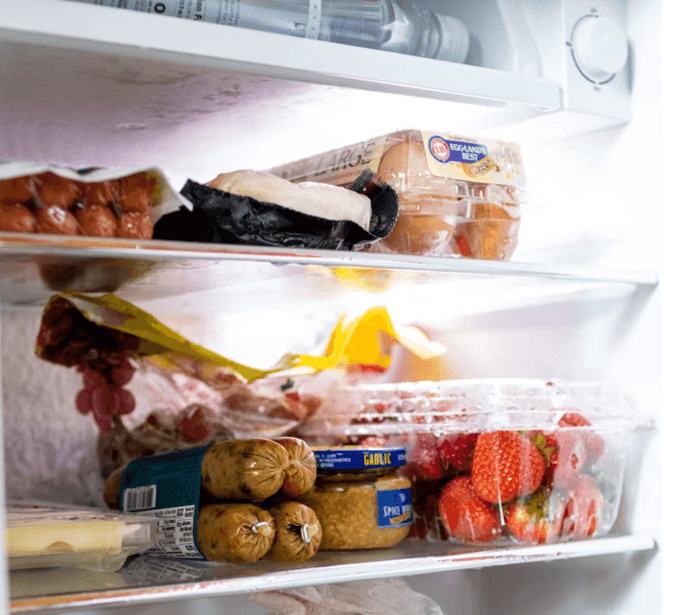
Cold air enters the fresh food section through vents, usually along the back wall or between the compartments. A cereal box, a pizza box, or a bag of frozen peas pressed against a vent stops the flow.
Pull food back at least an inch. Keep the fridge about three-quarters full so air can move, and never stack items against the rear wall.
Clean and Test the Door Gaskets
Wipe the door gaskets with warm, soapy water and a soft cloth. Dried syrup or crumbs keep the seal from closing, and warm room air leaks in all day.
Then run the dollar bill test: close the door on a bill and pull. If it slides out with almost no resistance, the gasket needs replacing.
Check for Demo Mode on LG Models
Showroom or demo mode makes the lights and display work while the cooling stays off. It is a real cause of an LG refrigerator not cooling after delivery or a power event.
Look for "OFF," "OF F," or a "d" on the display. On many LG models, you hold the two buttons on the control panel for about five seconds to exit. Your manual lists the exact combination.
If the basics all check out, the next place to look is heat and airflow.
Read more: Appliance Manual Help: Find, Store, and Use It Fast
Restore Airflow and Help the Fridge Release Heat
A fridge cools by moving heat out of the cabinet and dumping it into your kitchen. When that heat has nowhere to go, the inside never gets cold.
Clean Dirty Condenser Coils Safely
Dirty condenser coils are one of the most common causes of weak cooling, especially in homes with pets. Dust acts like a blanket over the coils.
Unplug the fridge.
Find the coils behind the bottom grille or on the back panel.
Vacuum loose dust, then work a coil brush gently between the fins.
Vacuum again, replace the grille, and plug the fridge back in.
Leave at least an inch of space behind the unit and a small gap on each side so air can escape.
Listen for the Condenser Fan
The condenser fan sits near the coils and compressor at the bottom or back. With the fridge running, you should hear a steady low whir and feel warm air moving.
If the fan is jammed with dust or lint, cleaning it can restore cooling. If it is clean and still not turning, the motor is likely done and needs a technician.
Check Whether the Evaporator Fan Is Moving Cold Air
The evaporator fan lives inside the freezer behind the rear panel. Open the freezer and press the door switch, or hold the light button in. You should hear the fan speed up.
Silence there, plus a cold freezer and warm fridge, usually means a failed evaporator fan motor or ice packed around the evaporator coil. That is the point where the problem stops being a cleaning job.
Recognize Problems That Need a Technician
Some causes are sealed inside the appliance or carry real shock and refrigerant risk. Knowing them saves you from taking a fridge apart for nothing.
Ice Buildup and a Failed Defrost System
Thick ice buildup on the freezer's back wall means the defrost system stopped clearing frost from the evaporator coils. Air can no longer pass through, so the fridge warms up.
A failed defrost timer, defrost heater, or defrost thermostat is the usual culprit. Unplugging the fridge for 24 hours with the doors open melts the ice and restores cooling for a while, which confirms the diagnosis but does not fix it.
Clicking, Humming, or a Compressor That Will Not Start
A refrigerator compressor that clicks every few minutes and then goes quiet is trying to start and failing. Often the start relay, also called the compressor relay, has burned out.
A loud hum with no cooling can mean the same thing. Both belong to a technician, since capacitors and sealed components hold real risk.
Signs of a Refrigerant Leak or Sealed-System Failure
A refrigerant leak shows up as a fridge that runs constantly, cools a little, and never reaches temperature. You may see frost in only one small patch of the evaporator coil.
Refrigerant is not a DIY repair. An appliance repair technician must recover, repair, and recharge the system under EPA rules.
Check Brand-Specific Warranty Details Before You Call
Before you book service, find the model and serial number on the sticker inside the fridge, along the door frame, or behind the crisper drawer. Note the purchase date too.
Many brands, including GE refrigerator and LG lines, cover the sealed system, including the compressor, for five to ten years even after the one-year parts warranty ends. That single detail can turn a $900 quote into a covered repair.
Keep the Next Appliance Problem Easier to Handle
The fridge is not the last appliance that will act up, and the information you needed today is the same information you will need next time. Write it down while it is fresh.
Record the Model Number, Warranty, and Service History
Snap a photo of the model and serial number sticker before you push the fridge back into place. Save the manual, the purchase receipt, and any service invoice in the same spot.
Then log what happened: the date, the symptom, what you checked, what fixed it, and what it cost. Six months from now, when the fridge acts up again, you will know whether it is a repeat problem or something new.
Read more: Do Home Warranties Cover Maintenance? What Homeowners Should Expect
Add a Simple Coil-Cleaning Reminder
Set a reminder to clean the condenser coils every six months, or every three months if you have shedding pets. Add a second reminder to check the door gaskets at the same time.
Those two tasks take fifteen minutes and prevent a good share of refrigerator troubleshooting calls. Cooling failures rarely arrive out of nowhere.
Frequently Asked Questions
Why Is My Refrigerator Light on but the Inside Is Not Cold?
The light runs on a separate circuit from the cooling system, so power is reaching the fridge. Look at ice buildup in the freezer, a stopped evaporator fan, or a failed start relay on the compressor.
What Should You Check First When Your Refrigerator Stops Cooling?
Check the plug, the breaker, and the temperature setting first, because those take one minute and fix a fair number of cases. Then look at blocked vents inside and dust on the condenser coils underneath.
Why Is Your Freezer Cold but the Refrigerator Section Is Warm?
Cold air reaches the fresh food section from the freezer, so the problem is airflow, not cooling. Suspect food blocking a vent, ice around the evaporator coil, or an evaporator fan motor that stopped turning.
Can Unplugging Your Refrigerator Reset the Compressor?
Yes, unplugging for 5 to 10 minutes clears the control board and lets the compressor try a fresh start. If cooling only returns for a day or two, the underlying part is still failing.
Why Is Your Refrigerator Making Noise and Not Getting Cold?
Repeated clicking every few minutes points to a compressor that cannot start, usually a bad relay. A loud rattle or buzz near the floor often means the condenser fan blade is hitting debris.
How Much Does It Cost to Repair a Refrigerator That Is Not Cooling?
Cleaning coils, clearing vents, and fixing settings cost nothing. A new gasket runs about $35 to $100, and most professional repairs land between $100 and $600, with sealed-system work at the high end.
Cold Air Back, and a Record You Can Find Next Time
Start with the thermometer, then power, settings, vents, gaskets, and coils. That order handles most warm-fridge calls before anyone opens a toolbox, and it tells you fast when the problem is bigger than a cleaning.
The part homeowners regret skipping is the paperwork. When you already have the model number, the warranty end date, and the last repair on file, the next cooling problem is a phone call instead of a scavenger hunt.
Building a home profile in Manse takes a few minutes, and it is free to start with no credit card required. Add your fridge, upload the manual, and keep today's fix documented where you can actually find it.