
Personal Property Coverage: Limits and What It Covers
Personal property coverage pays to repair or replace your belongings when a covered event, such as a fire, a theft or a burst pipe, damages or takes them. On a standard homeowners policy it is Coverage C, and its limit is usually set as a share of your dwelling coverage. The Insurance Information Institute says most companies set it at 50 to 70 percent of the dwelling amount. Inside that limit, smaller caps apply to jewelry, cash and a handful of other categories.
The limit is the most your insurer will pay for everything you own after a single loss. It's worth checking now, because what decides the payout is set long before anything happens: the size of the limit, which items fall under a lower cap, and how well you can prove what was in the house.
What Counts as Personal Property
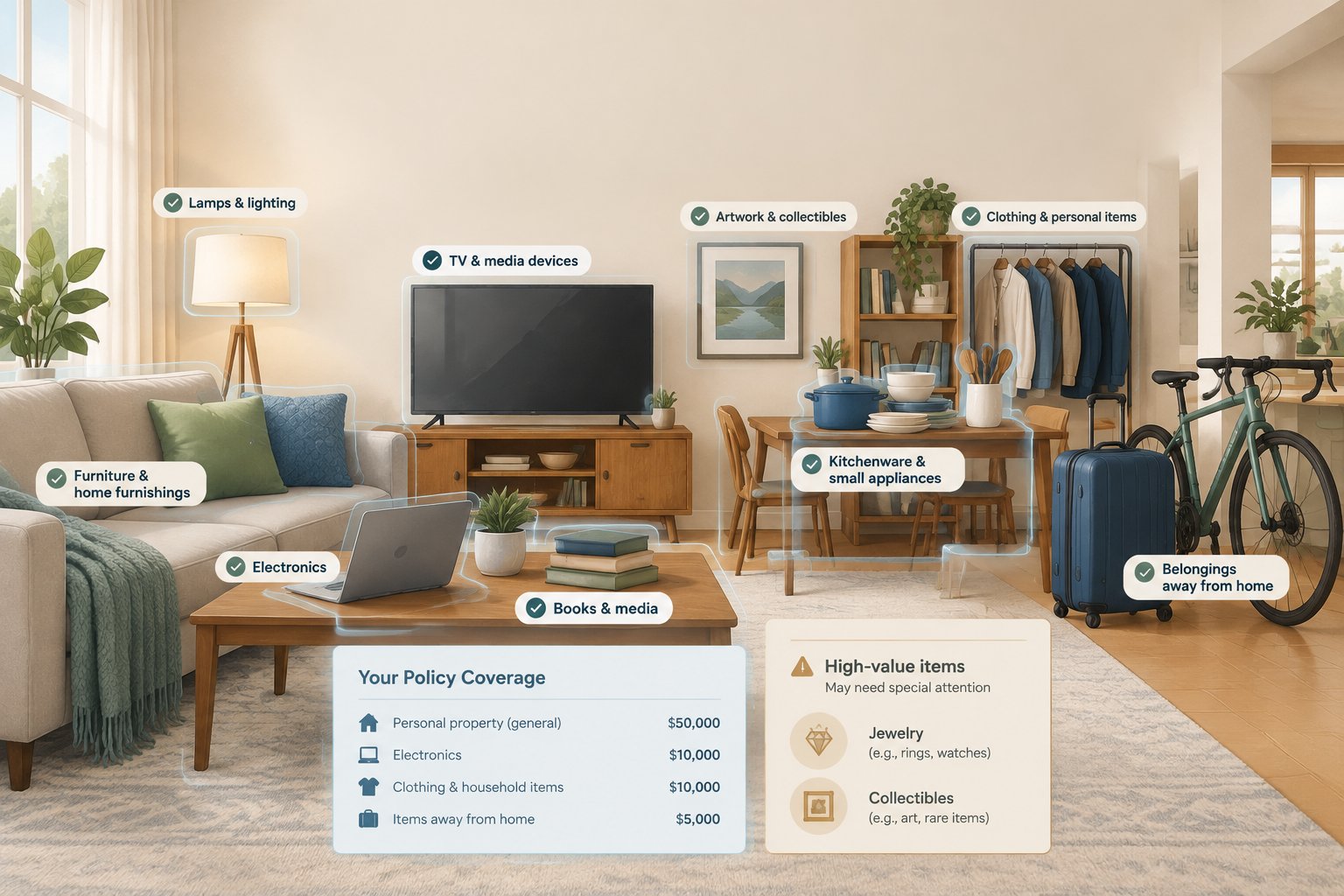
A simple test works most of the time: if it would go on the moving truck, it's personal property. Furniture, rugs, clothing, electronics, cookware, tools, bikes and freestanding appliances all sit under Coverage C. Some insurers call it contents coverage.
The house itself, and anything permanently attached to it, falls under dwelling coverage (Coverage A). Your furnace, central air condenser, water heater and built-in cabinetry are part of the structure. A freestanding washer, a countertop espresso machine or a wine fridge that plugs into the wall are contents.
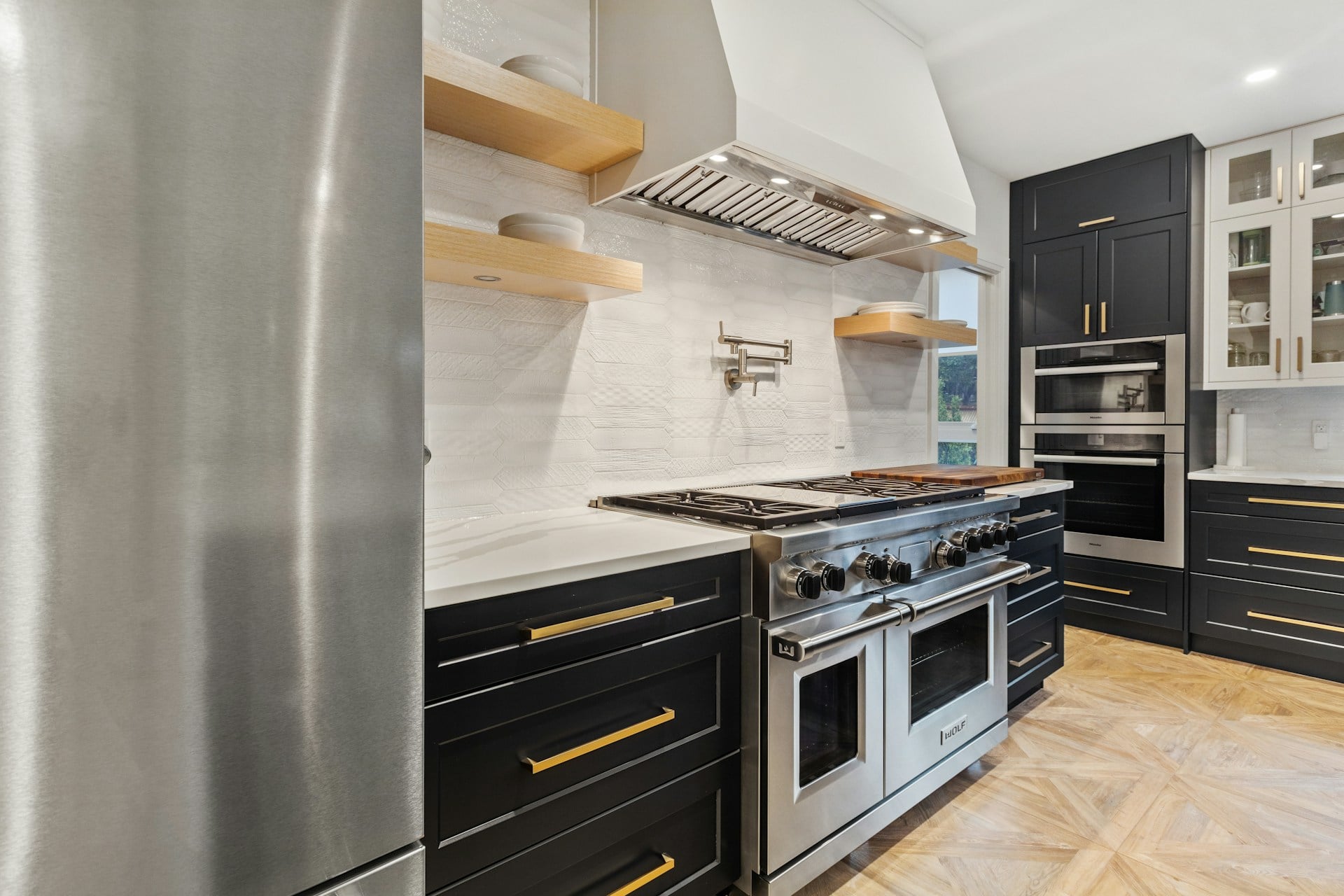
Kitchens blur the line. A panel-ready refrigerator built into the cabinetry may be treated as part of the dwelling, while a freestanding fridge of similar value is contents. The policy wording decides, so if you have high-end kitchen equipment, it's worth asking your agent which side each piece falls on.
Which events are covered
Most homeowners carry an HO-3 form, which typically covers belongings for a named list of perils. That list includes fire, lightning, windstorm, hail, explosion, smoke, vandalism and theft, along with the weight of ice and snow, freezing of household systems, and sudden discharge of water from plumbing or an appliance. A supply line that bursts and soaks a rug qualifies. A slow drip that rots a cabinet base over months usually does not.
An HO-5 form covers belongings on an open-perils basis instead, meaning anything not specifically excluded is covered. That closes gaps the named list leaves open, such as some accidental damage.
Away from home
Coverage C follows your things. The Insurance Information Institute notes that a standard HO-3 covers personal property anywhere in the world, so a laptop stolen from a hotel or luggage taken from an airport carousel can be claimed. Some categories carry a lower limit when the item is away from your residence, and a child's belongings in a college dorm are typically capped at around 10 percent of the contents limit. Check the off-premises wording in your own policy.
What standard coverage leaves out
Flood and earthquake are the big ones. Belongings damaged by rising water need a separate flood policy, and earthquake cover is sold as an add-on. Wear, deterioration, pests and neglect aren't covered on any form. Cars, aircraft and most motorized vehicles fall outside Coverage C, as do a tenant's belongings if you rent out part of the house. Losing a ring at the beach or leaving a phone in a taxi is usually not a named peril either.
Setting a Limit That Matches Your Home
The default limit is a formula, not a count of what you own. A home insured for $1.2 million to rebuild might carry $600,000 to $840,000 in personal property coverage under that 50 to 70 percent range, and that may be too much or too little.
To test it, picture a total loss. Every sofa, mattress, rug, lamp, pan, shirt, book and pair of shoes would need replacing at current prices. Larger homes tend to run over the default because the unglamorous categories add up: bedding for five bedrooms, a garage full of tools, a home office, outdoor furniture, holiday decorations. People reliably undercount these. If your estimate tops the limit on your declarations page, raising Coverage C is usually a modest change to the premium.
Also check how the policy values contents. Many policies pay actual cash value on belongings unless you've added replacement cost coverage, and on a houseful of older furniture and electronics the difference is large. Your declarations page or endorsements will say which you have.
Sublimits on valuables
Coverage C has caps inside it, listed in a section usually titled Special Limits of Liability. The Insurance Information Institute puts the typical limit for jewelry theft at about $1,500. Cash, securities, firearms, silverware and business property each have their own caps too, and those apply no matter how large your overall limit is.
So a $10,000 watch stolen from a nightstand may pay $1,500 even under a $700,000 contents limit. Home office equipment can also land under the business property cap if you use it for paid work. When a single piece or collection is worth more than its cap, the answer is to schedule it, which gives the item its own insured value and often broader protection.
When a claim is worth filing
Your insurer subtracts the deductible from the payout, so a $1,500 loss against a $1,000 deductible pays $500. Claims also go onto your home's loss history, which insurers look at when they renew or quote. For small losses that only just clear the deductible, paying yourself can make more sense. For large ones, the deductible barely matters next to what you can prove.
Proving What You Owned
After a loss, your insurer will usually ask for an itemized list with a description, brand, model, age and price for each item, and sometimes a signed proof of loss. The quality of that list decides how much of the claim gets paid. "TV, living room" is a guess. A model number, purchase date and price is a line item an adjuster can approve. For the big-ticket machines, this guide on what proof insurers want for appliances covers the details.
Build the inventory before you need it
Rebuilding a room-by-room list from memory after a fire is slow, painful and incomplete. People forget entire closets. A record kept current beforehand is faster and far more believable. Walk each room with your phone, open drawers and closets, and capture serial tags on electronics and appliances. Keep receipts for anything significant, and store a copy off-site so it survives whatever damaged the house. If you're deciding how to keep it, here is a look at whether a spreadsheet inventory holds up once a few years pass.
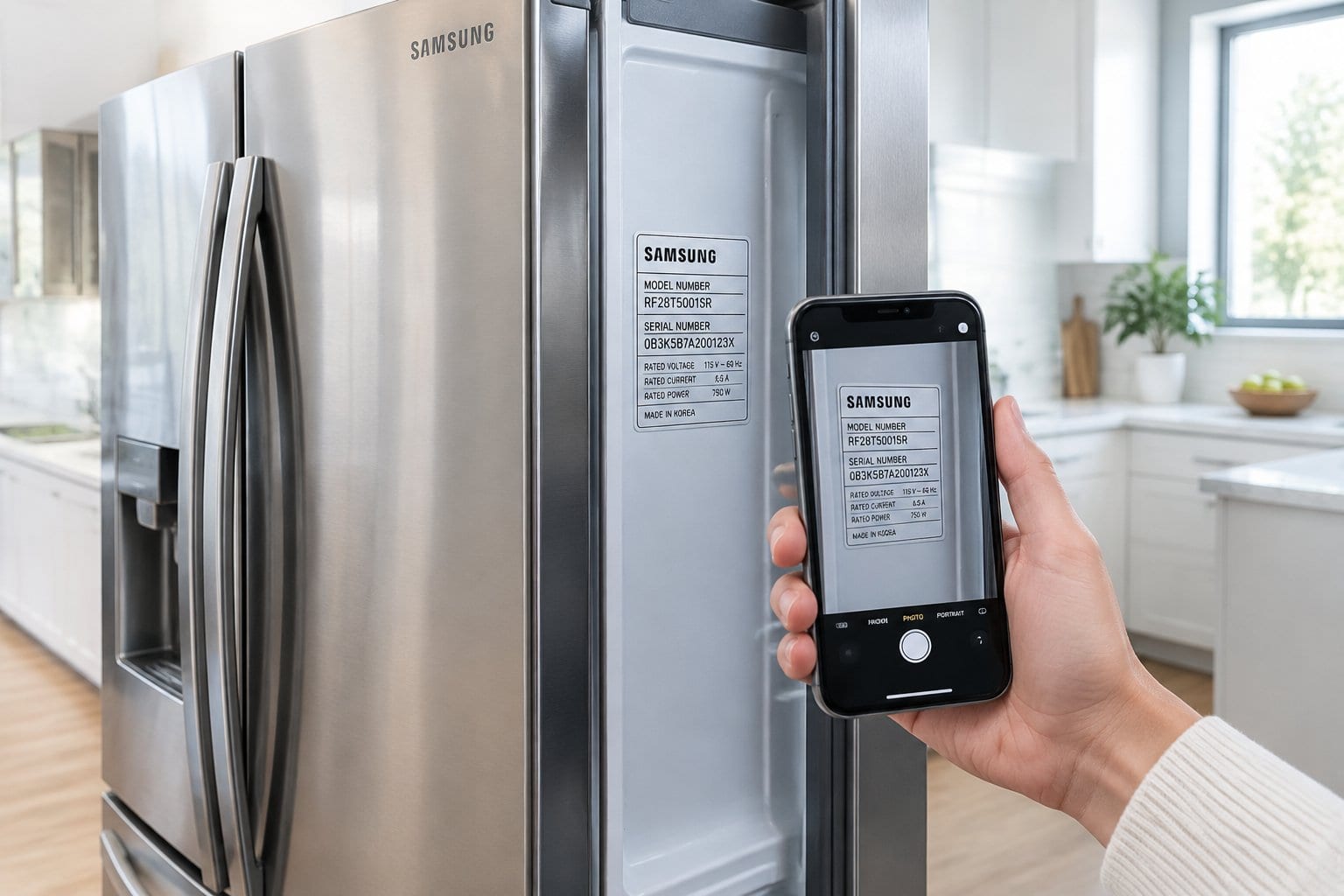
Appliances are where detail pays most. "Stainless refrigerator" could be priced at a fraction of what yours cost. In Manse, a photo of each appliance's rating plate gives you the exact model and its age, which is the same information an adjuster needs to price a like-kind replacement for the freestanding units that sit under Coverage C.
After the loss
For theft, file a police report first and get the report number. Photograph damage before anything is moved or thrown out, and keep receipts for emergency costs such as boarding a window. Let the adjuster inspect when asked, and send documents in the format the insurer requests. If your inventory lives inside a broader home profile, you can pull model details, receipts and photos together quickly instead of hunting through email.
Frequently Asked Questions
Is personal property Coverage B or Coverage C?
Coverage C. Coverage A is the dwelling, and Coverage B is other structures on the property, such as a detached garage, a shed or a fence. Coverage D is loss of use, which pays extra living costs while the home is being repaired.
Are a houseguest's belongings covered?
Many policies extend limited coverage to a guest's property while it's in your home, often at the insurer's option. Coverage for a family member away at college is usually capped at a share of your contents limit. A tenant renting part of your home needs their own renters policy.
Does a condo policy include personal property coverage?
Yes. An HO-6 condo policy covers your belongings inside the unit, and the association's master policy covers the building and common areas. Flood and earthquake still need separate coverage.
How often should I review my Coverage C limit?
Look at it at every renewal, and again after a major purchase, a renovation or a move. Furnishing a new addition or a finished basement can push your contents well past a limit that fit a few years ago.
Keep Your Contents Claim-Ready
A personal property claim is only as strong as the list behind it. Manse reads your folio, the appliance tags, receipts and documents you've added for your home, and answers from it: which model sits in the laundry room, when it was bought, whether it's still under warranty. That turns the itemized list an adjuster asks for into an afternoon's work rather than a week of guessing. Explore the house manager app.