
An ice maker that stops producing is usually missing one of three things: a signal to run, a cold enough freezer or a steady supply of water. Check the on/off control and the shutoff arm first, then the freezer temperature, then the water line, filter and fill tube. Those checks take under an hour, and they either fix the problem or tell you exactly what to say when you book a technician.
The order matters because each step is cheaper and less invasive than the next, and what you see at one stage narrows down the next. Keep a towel and a flashlight nearby before you start.
Is the Ice Maker Actually Being Told to Run?
The control setting and the shutoff arm
On fridges with a dispenser panel, look for an "Ice Off" light or a lock icon. Cleaning the panel with a wet cloth is a classic way to switch ice off without noticing. Turn it back on and give it several hours before you judge the result, because the first harvest only happens once the mold is cold enough.
Older and simpler ice makers use a wire shutoff arm (sometimes called a bail arm) or a plastic paddle on the side of the unit. When the arm is raised, the ice maker reads the bin as full and stops. A box of frozen waffles slid in on top is enough to push it up. Lower the arm and clear space around it.
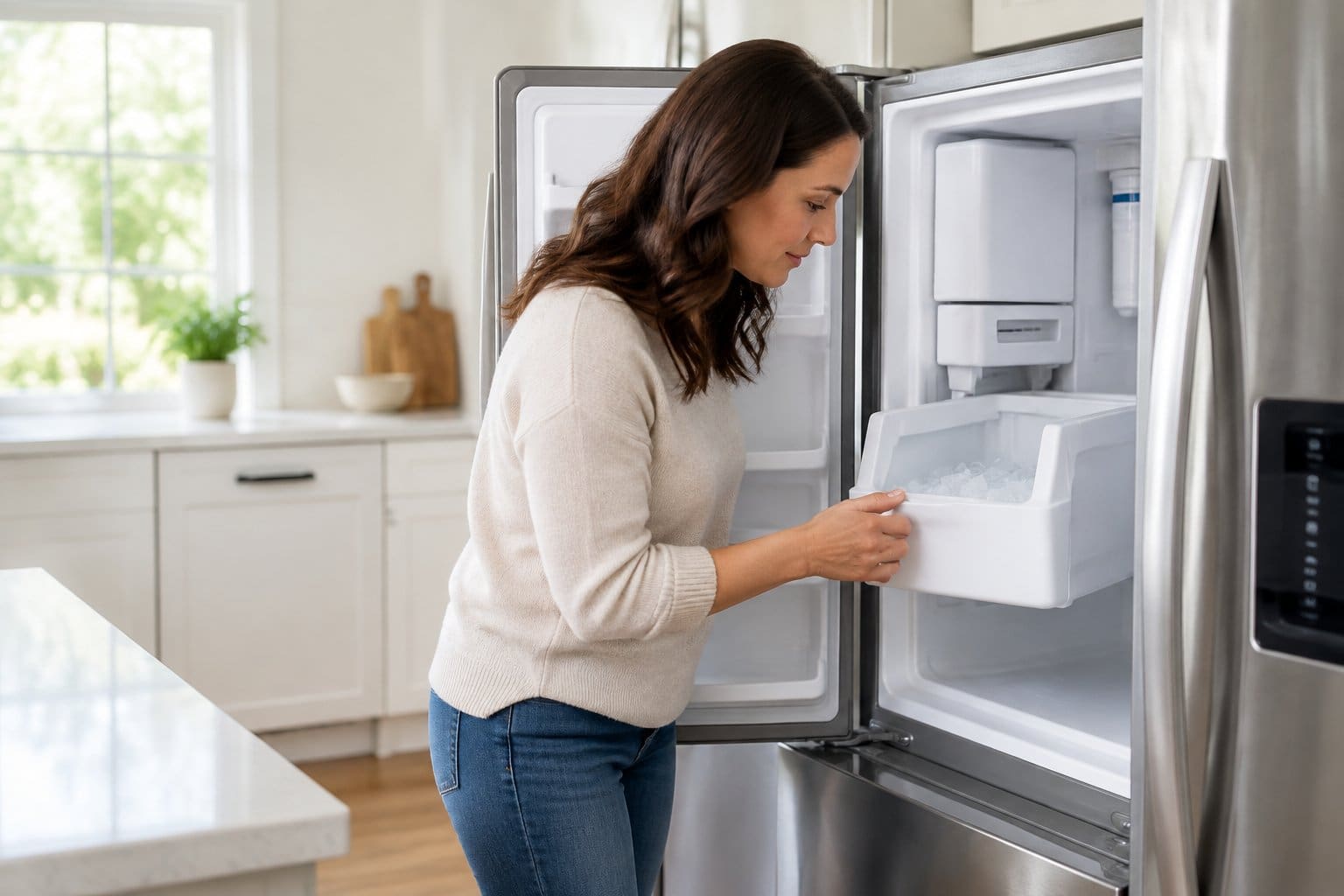
A bin that isn't seated or a jam of fused cubes
Many ice makers sense whether the bin is in place, and a bin sitting a quarter inch out of its track pauses production. Pull it out and push it back until it seats with a firm stop.
While it's out, look for a solid block of cubes. Ice that partly melts and refreezes, usually after a power cut or a door left ajar, welds itself together and can jam the ejector or the auger that feeds the dispenser. Empty the bin into the sink and break up the block with warm water rather than a knife or screwdriver, which crack plastic.
Is the Freezer Cold Enough?
Ice makers wait for the mold to reach a set temperature before they harvest, so a freezer running warm makes ice slowly or not at all. The usual target for a freezer is 0°F. Dial settings are only a rough guide, so leave a freezer thermometer between packages for a few hours and read the actual number.
If the freezer is several degrees warmer than the setting, the ice maker isn't really the problem. Look at the door gasket for gaps, make sure the door isn't held open by an overfilled shelf, and keep food away from the air vents. If it still won't come down, work through our guide to a freezer that isn't cold enough before spending time on the ice maker.
The opposite extreme causes trouble too. A freezer set far below 0°F can freeze the incoming water before it reaches the mold. For a sensible pairing of fridge and freezer settings, see our piece on the right temperature for a refrigerator.
Is Water Reaching the Mold?
If the controls and temperature check out, listen during a fill. You should hear a short buzz from the back of the fridge as the inlet valve opens, then water trickling. A buzz with no trickle points to a blockage. Silence points to the valve or the ice maker's controls.
Small, hollow or crescent-shaped cubes before production stopped are another clue. They mean water was arriving, but slowly.
The shutoff valve and supply line
Find the valve that feeds the fridge, usually under the kitchen sink or on a pipe in the basement below. Make sure it's fully open, since a plumber or a cabinet installer may have closed it and forgotten.
Then ease the fridge out and follow the line from the valve to the back of the cabinet. Thin plastic tubing kinks easily when a fridge is pushed back against the wall. Straighten any flattened sections and leave a gentle loop of slack behind the unit so it doesn't fold again. Replace the line if it's cracked or brittle.
An overdue or half-seated filter
A filter at the end of its life restricts flow enough to underfill the mold while still letting a glass of water dribble from the dispenser. Some models also stop making ice once the filter passes its replace-by date. If yours is overdue, or the cubes have been shrinking for weeks, a new cartridge is the cheapest thing on this list to try. Check too that the existing filter is fully locked, because a cartridge turned only partway can block water entirely.
Low household pressure
Inlet valves need a minimum water pressure to open properly, and your installation guide lists the figure for your model. If faucets around the house also run weak, or you have a reverse osmosis system under the sink feeding the fridge, low pressure is a real possibility and a plumber is the right call.
Thaw a Frozen Fill Tube
A frozen fill tube is one of the most common reasons an ice maker stops suddenly. The fill tube is the short tube that carries water from the inlet valve into the mold, and it usually enters through the back wall of the freezer just above the ice maker. Shine a flashlight at the opening. A plug of clear ice, frost around the inlet, or an ice maker that cycles while no water arrives all point here.
You can thaw the part you can see:
- Unplug the fridge and lay a towel on the freezer floor.
- Remove the ice bin.
- Warm the tube with a hair dryer on low, held several inches away and kept moving, in short bursts.
- If you can reach the opening, finish with warm (not boiling) water from a turkey baster.
- Dry the area, refit the bin and restore power.
Leave any frozen line inside the cabinet walls or the door alone, since reaching it means removing panels. A fill tube that refreezes within a few days usually has a cause behind it, such as an inlet valve that drips between cycles or a freezer set too cold.
Resetting the Ice Maker
Once the ice is gone, restart the ice maker the way your model expects. On many fridges, unplugging for a minute or two is enough. Others have a small reset or test button on the ice maker head, and some reset from the front panel. KitchenAid's guide to resetting a refrigerator ice maker shows the common methods. If you own a Samsung, its test button behaves differently, and its reset sequence is worth reading in your manual before you press anything.
When a Technician Should Take Over
Book a repair if the checks above are done and the mold still stays dry or the ice maker doesn't move. Shut off the water and call sooner if water is leaking inside the freezer or onto the floor, or if you smell burning or the breaker trips.
A technician will usually test the inlet valve's solenoid with a meter and check the ice maker's motor and thermostat. On most modern fridges the ice maker is replaced as one assembly, so the part is predictable once the diagnosis is confirmed.
Before you book, find out whether the fridge is still covered, because a warranty claim on a recent unit can cover parts and labor. Our guide to checking appliance warranty status shows where to look. This is also where knowing the exact model helps. Manse identifies your refrigerator from its serial tag, so you can see which filter and ice maker assembly it takes, whether it's still under warranty and whether any recall covers that unit before a technician arrives.
Frequently Asked Questions
Why does the water dispenser work but the ice maker doesn't?
The dispenser and the ice maker share a supply line but on most models split at the inlet valve, which has a separate outlet for each. A frozen fill tube is the most likely cause, followed by a failed ice maker side of the valve or a fault in the ice maker itself.
Why are my ice cubes small or hollow?
Short fills make small, hollow cubes. A tired filter, a partly closed shutoff valve, a kinked line or low household pressure are the usual causes, and fixing the flow fixes the cube size.
Can a power outage stop the ice maker?
It can. Ice in the bin melts and refreezes into a block that jams the ejector or auger, and some models need a reset after power returns. Empty the bin, break up the clumps and restart the ice maker.
Is it worth replacing an ice maker in an old fridge?
It depends on the fridge's age and condition. An ice maker assembly is a modest part on most models, so it's usually worth fixing in a fridge that's otherwise cooling well. In one that's also running warm or noisy, get a full diagnosis before you spend on either.
The Detail That Decides the Fix
Fill tube routing, reset buttons and filter part numbers all differ from one refrigerator to the next. Manse reads your fridge's serial tag and answers from your home's own records, so the steps and parts you get are the ones that fit your unit.