
You open the fridge, and the milk feels a little warm, or you notice condensation pooling under the crisper drawer. Maybe you just tossed a gallon of spoiled leftovers and wondered if the temperature was ever right in the first place. That small moment of doubt, wondering whether your fridge is actually cold enough, is more common than most homeowners admit.
The average temperature for a refrigerator should sit between 37°F and 40°F, cold enough to slow bacteria without freezing your food. Get outside that range, and you risk foodborne illness on one end or frostbitten produce on the other. A few degrees make a bigger difference than most people expect.
In this guide, you will find the exact numbers to set your fridge and freezer to, how to measure temperature correctly instead of trusting the dial, and how to spot the fridge problems that cause temperature swings.
Set the Right Fridge and Freezer Temperatures
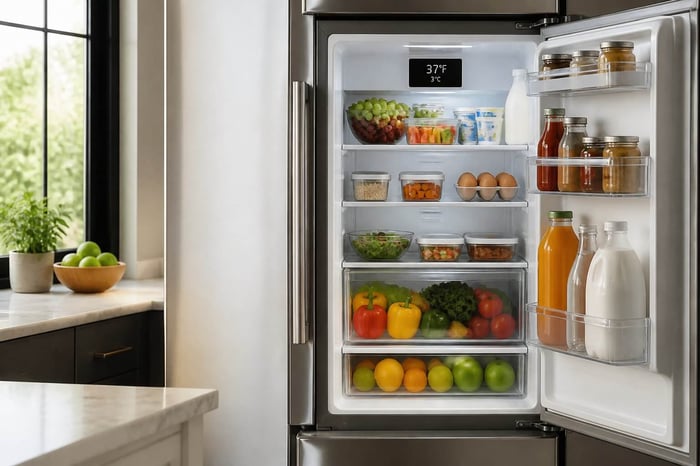
The right settings are simple: your refrigerator should be between 37°F and 40°F, and your freezer should be at 0°F. The rest of this section explains why those numbers work and how to reach them.
Why 37°F Is a Practical Refrigerator Setting
Consumer Reports arrived at 37°F as the sweet spot for a home refrigerator after running units through calibrated temperature sensors in climate-controlled test chambers. It's cold enough to slow bacterial growth dramatically, but warm enough that milk, eggs, and produce won't freeze on the shelf.
That testing also found that a fridge's actual internal temperature doesn't always match what the dial says, which is part of why 37°F works better as a target than the 40°F ceiling itself. Aiming a few degrees below the limit gives you room for that gap.
The FDA Limit of 40°F
The Food and Drug Administration sets 40°F as the upper limit for safe refrigeration. Anything above that number for more than two hours gives bacteria the warmth they need to grow quickly.
This is a ceiling, not a target. Aiming for 37°F gives you a buffer, so brief door openings or a full grocery haul won't push your fridge past the danger point.
Why Freezers Should Stay at 0°F
Freezers need to stay at 0°F to keep food frozen solid and safe for long-term storage. At this temperature, bacterial activity essentially stops, which is why frozen food lasts months instead of days.
A few practical notes on freezer settings:
Check the freezer thermometer separately from the fridge, since they often run on different cooling systems
Avoid packing the freezer so full that air can't circulate around items
Recheck the setting after adding a large batch of frozen groceries
If your freezer already feels warmer than it should, a freezer troubleshooting checklist can help you rule out the common causes before assuming the worst
Once your settings are dialed in, the next question is why those exact numbers matter so much for the food sitting inside.
Why a Few Degrees Matter for Food Safety
A refrigerator running just a few degrees warmer than it should can turn safe food into a health risk within hours. This isn't about taste. It's about how fast bacteria multiply once the temperature climbs.
The Food Temperature Danger Zone
The USDA calls the range between 40°F and 140°F the danger zone. Bacteria multiply most rapidly in this range, doubling in number in as little as 20 minutes.
Your refrigerator's entire job is to keep food below that threshold. Every degree above 40°F shortens the safe window before bacteria reach levels that can make someone sick.
Foods That Need the Coldest Storage
Some foods spoil faster than others and need to sit in the coldest part of your fridge. Raw meat, poultry, seafood, and dairy products top that list because bacteria grow fastest on protein-rich, moist surfaces.
Ground meat and poultry: store on the bottom shelf, coldest zone
Dairy products like milk and soft cheese: keep away from the door
Fruits and vegetables: tolerate slightly higher humidity but still need consistent cold
Signs Food May Have Been Stored Too Warm
Spoiled food doesn't always smell bad right away. Milk that sours early, meat with a dull or slimy surface, or produce that wilts faster than expected can all point to a fridge running warmer than it should.
If you notice a pattern of food spoiling before its expected date, the problem is likely temperature, not the food itself. That's a strong signal to stop guessing and start measuring.
Measure the Temperature Instead of Trusting the Dial
Your fridge's dial shows a setting, not an actual temperature. The only way to know your real refrigerator temperature is to measure it directly with a thermometer.
Where to Place a Refrigerator Thermometer
Set an appliance thermometer on the middle shelf, toward the back, away from the door and walls. This spot reflects the average temperature of the whole fridge rather than a colder or warmer pocket.
For the most accurate reading, place the thermometer in a glass of water rather than in open air. Water holds temperature steady, mirroring how your food actually experiences the cold instead of reacting to every door opening.
How Long to Wait After Changing the Setting
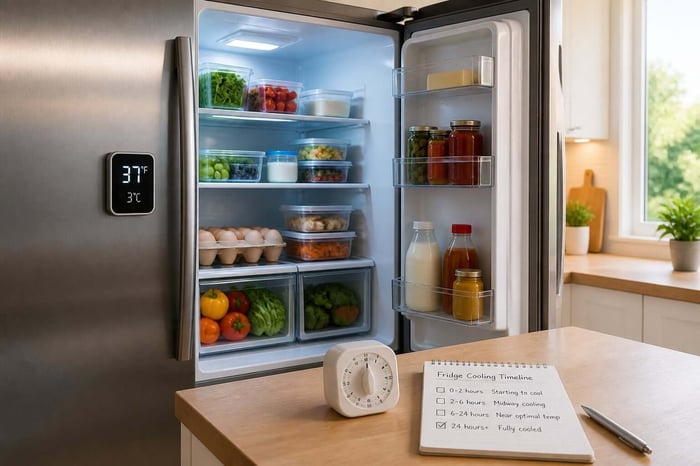
Give your fridge at least 24 hours to stabilize after adjusting the thermostat. Refrigerators cool gradually, and checking too soon after a change will give you a misleading reading.
If you just moved the dial and the thermometer still reads high after a full day, don't assume the setting is wrong. That's often a sign of a deeper issue, which the later section on common causes will help you rule out.
How to Check for Uneven Cooling
Uneven cooling happens when air can't circulate freely inside the fridge. You'll notice it as warm spots near the door and colder spots near the back or bottom shelf.
Test for this by placing a second thermometer in the door shelf and comparing it to the middle shelf reading over a few hours. A gap of more than a few degrees points to blocked vents or overcrowding, both of which affect how your food stores.
Store Food to Keep Cold Air Moving
Where you place food inside the fridge affects how evenly it stays cold. Cold air needs open paths to circulate, and packed shelves block that flow.
What Belongs on the Middle Shelf and at the Back
The middle shelf and the back of the fridge stay the most consistently cold, since they're farthest from the door and closest to the cooling vent. This makes them the right spot for dairy products and anything that spoils quickly.
Avoid pushing items flush against the back wall, since that can block the vent entirely and cause freezing in that one spot while the rest of the fridge runs warmer.
Use Crisper Drawers for Produce
Crisper drawers have separate humidity controls to keep fruits and vegetables fresh longer. High-humidity settings suit leafy greens and herbs, while low-humidity settings suit fruits that release gas as they ripen.
Leafy greens and herbs: high humidity drawer
Apples, pears, and other ripening fruit: low humidity drawer
Keep meat separate from produce to avoid cross-contamination
Keep the Door for Less Perishable Items
The door is the warmest part of the fridge because it's exposed to room air every time you open it. Save this space for condiments, juice, and other items that hold up fine at slightly higher temperatures.
Skip storing milk or eggs in the door, even though many fridges have a shelf built for them. Once you've organized food by how it actually stores best, the next step is making sure the fridge itself is running the way it should.
Fix Common Causes of a Fridge Running Too Warm or Cold
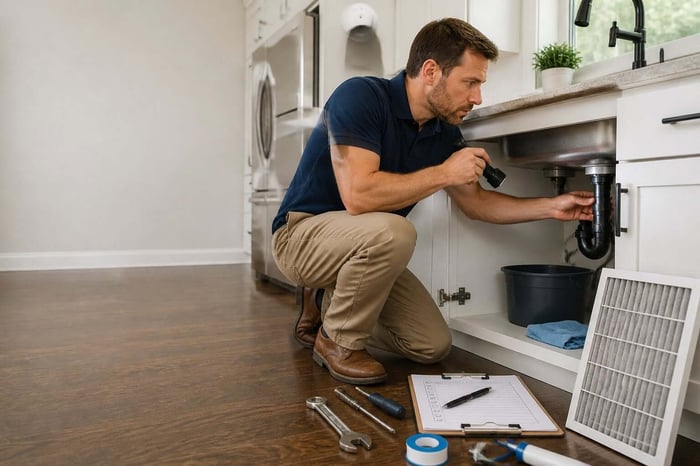
A fridge that won't hold steady usually points to one of three problems: the door seal, the coils, or the compressor. Most of these are easy to check yourself before calling a repair technician, and a fridge-not-cooling checklist can walk you through them in order.
Check the Door Seal and Temperature Controls
Run your hand along the door gasket to feel for gaps, cracks, or looseness. A weak seal lets cold air escape constantly, forcing the compressor to run longer and still leaving the inside warmer than it should be.
Also, double-check the thermostat setting itself. Dials can get bumped accidentally, especially in households with kids or during deep cleaning.
Clean Condenser Coils and Protect Airflow
Dust and pet hair on the condenser coils make your fridge work harder to stay cold. These coils usually sit behind or underneath the unit and should be cleaned about once a year.
Unplug the fridge before cleaning coils
Use a vacuum attachment or coil brush to remove buildup
Keep at least a few inches of space behind the fridge for airflow
Know When the Compressor May Need Service
If the coils are clean, the seal is tight, and the temperature still won't hold, the compressor itself may be failing. A compressor that runs constantly without cooling effectively, or one that's unusually loud, signals it's time to call a technician.
Before that call, it helps to have the model number and any past repair history on hand. Homeowners who keep this information stored, rather than searching through drawers, tend to get faster, more accurate service quotes. Manse is built around exactly this: your appliance's model number, warranty, and service history sit in one place so you're never digging for them when something breaks.
Make Temperature Checks Part of Your Home Records
A single temperature check tells you how your fridge is doing today. A record of past checks and repairs shows how it's doing over time, and that record is what saves you money and stress. Folding this into a broader home maintenance checklist makes it a habit, not a one-off task.
Record the Model Number, Settings, and Maintenance Dates
Write down your fridge's model number, the temperature setting you use, and the date of your last coil cleaning. This small habit turns a guessing game into a quick reference the next time something feels off.
It also matters when a warranty issue comes up. If your fridge stops cooling properly and you're not sure whether it's still covered, having the purchase date and model number ready saves a frustrating call to the manufacturer.
Frequently Asked Questions
Is Your Refrigerator Cold Enough to Keep Food Safe?
Your refrigerator is safe if it consistently reads at or below 40°F, with 37°F being the ideal target. Use an appliance thermometer placed on the middle shelf to confirm, since built-in displays can drift over time.
What Temperature Should Your Refrigerator Be Set to in Fahrenheit?
Set your refrigerator between 37°F and 40°F for the best balance of food safety and freshness. Staying closer to 37°F gives you a safety buffer for door openings and full grocery loads.
What Is the Ideal Refrigerator Temperature in Celsius?
The ideal range in Celsius is about 3°C to 4°C, matching the 37°F to 40°F range used in the US. Anything warmer than 4°C puts food into the danger zone for bacterial growth.
What Should You Set Your Freezer Temperature To?
Your freezer should stay at 0°F, or about-18°C. This keeps frozen food solid and safe for extended storage without unnecessary energy use.
What Do Refrigerator Settings 1 Through 5 Actually Mean?
These numbered dials don't correspond directly to degrees; they represent relative cooling power, with higher numbers meaning colder output. The only way to know the actual temperature at any setting is to test it with a thermometer.
Why Is Your Refrigerator Temperature Changing or Running Too Warm?
Temperature swings usually come from a weak door seal, dirty condenser coils, overcrowded shelves, or a failing compressor. Check these one at a time, starting with the door seal, to find the cause without needing a technician right away.
Keeping Your Fridge at the Right Temperature Long Term
Getting your refrigerator to the right temperature isn't a one-time task. It's a habit of checking, adjusting, and noticing small warning signs before they turn into spoiled groceries or a bigger repair bill.
The homeowners who handle this best aren't the ones with the fanciest fridge. They're the ones who know their settings, keep their manual within reach, and track what's been serviced and when.
Building your home profile in Manse takes minutes and gives you a private place to store your fridge's model number, warranty, and repair history. Next time something feels off inside the fridge, you'll already have what you need to fix it fast. Get started today.