
The stove goes cold mid-recipe, or a burner clicks and clicks but never lights, and suddenly dinner is the least of your problems. You dig through a kitchen drawer for the manual that isn't there, then try to remember whether the warranty is still active. That moment of not knowing what you're dealing with, or what it will cost, is exactly where most stove repair questions start.
Before you call a technician or pull out a screwdriver, a few fast checks can tell you whether this is a five-minute fix or a real repair. Some stove problems are safe for any homeowner to check. Others involve gas or wiring and need a licensed pro. Knowing the difference saves you money and keeps your kitchen safe.
Keep reading to learn how to spot the most common stove and oven problems, which checks are safe to do yourself, and what a repair technician will ask before they even walk in the door. By the end, you will know exactly what to check first and what to have ready if you need to book a service call.
Start With Safety and the Fast Checks
Before touching any tools, rule out the two things that cause more false alarms than actual stove failures: no power and no gas. These checks take less than five minutes and often solve the problem outright.
What to Do If You Smell Gas or See Damage
If you smell gas near your gas range, stop what you're doing immediately. Turn off the burner knobs, do not light a match or flip a light switch, and leave the area if the smell is strong. Call your gas company or 911 from outside the home if you suspect a leak.
Cracked glass, scorch marks near the control panel, or a burning smell that isn't food are also signs to stop and call a professional. These are not do-it-yourself repairs.
Check Power, the Circuit Breaker, and the Gas Supply
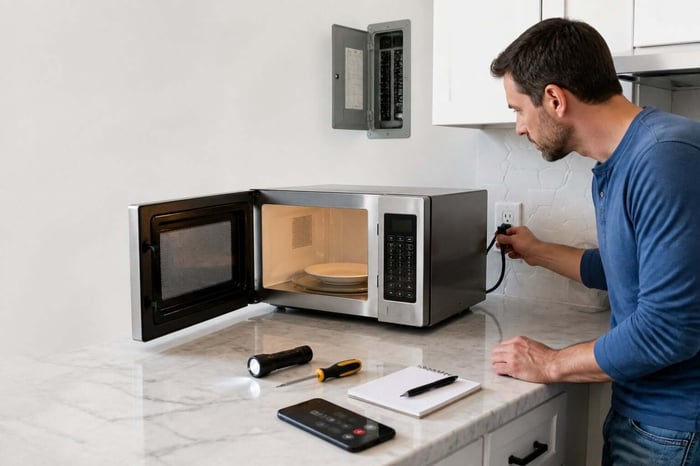
If your stove won't turn on at all, start with the basics. A tripped circuit breaker is one of the most common and easiest fixes there is.
Check the circuit breaker panel for a tripped switch and reset it fully off, then on
Confirm the stove is plugged in if it uses a standard outlet
For gas ranges, check that the gas supply valve behind the stove is fully open
Test another outlet nearby to rule out a home-wide power issue
If the breaker trips again right after resetting, that points to a deeper electrical fault and is a sign to call a technician rather than keep resetting it.
When to Stop Using the Appliance
Some symptoms mean stop using the stove now, not later. A burning smell, sparking, a burner that glows unevenly, or gas burners that won't stay lit are all reasons to shut it down and unplug or shut off the gas supply.
Once you've ruled out a tripped breaker or closed gas valve, the next step is figuring out exactly what part of the stove is failing.
Match the Symptom to the Likely Problem
Every stove symptom points to a fairly specific cause, which means you don't have to guess. Matching what you see to the right part narrows down the fix before anyone touches a tool.
A Gas Burner Clicks but Will Not Light
This is one of the most common gas range complaints. The clicking sound means the igniter is trying to spark, but the burner isn't catching. Usually, the culprit is a clogged burner port, a burner cap that isn't seated correctly, or a faulty igniter.
Start by removing the grate and burner cap, then check for food debris blocking the small holes around the burner. Clean and dry the parts, then reseat everything and try again.
An Electric Burner Stays Cold or Heats Poorly
On coil-top or smooth electric ranges, a burner that won't heat is usually a local problem with that burner, not the whole stove. Likely causes include a loose burner connection, a faulty heating element, or a worn socket.
If every burner is cold, the issue is more likely a power supply problem than a single broken heating element. That distinction alone tells you where to look first.
The Oven Cavity Heats Unevenly or Never Reaches Temperature
Uneven cooking or an oven that never gets hot enough often traces back to a broken heating element, a failing igniter on gas ovens, or a bad temperature sensor. A visibly cracked or discolored element is usually easy to spot with the oven light on.
If nothing looks visibly damaged but the oven still runs cold, the control board or sensor may be misreading temperature, which is harder to diagnose without a multimeter.
Controls Do Not Respond or Show an Error
A non-responsive control panel or a recurring error code on an electric range or induction range usually points to the control board. Try a full power reset first: unplug the stove or switch off the breaker for one full minute, then restore power.
If the error returns right away, note the exact code. Many manufacturers publish error code meanings by model, so the model number is your fastest path to an answer. This is a good moment to snap a photo of the code and the model plate together, a small habit that pays off later if you're tracking the issue in a home profile in Manse.
Know Which Checks You Can Safely Do Yourself
A handful of stove issues are genuinely safe for a homeowner to handle without any electrical or gas experience. Knowing which ones fall into that category keeps you from either overpaying for a simple fix or attempting something risky.
Clean and Reseat Burner Parts After Spills
Boilovers and grease buildup are behind a surprising number of "broken" burner calls. On gas ranges, remove the burner grate and cap and clean out the ports with a soft brush or a pin, never a toothpick that can break off inside.
On a glass cooktop, hardened spills around the burner sensor can trick it into thinking a pot is present when it isn't. Let it cool, then clean gently with a cooktop-safe cleaner.
Inspect Visible Heating Elements and Oven Seals
With the door open and the oven off, inspect the heating element. A break, blister, or bright glowing spot in one area signals it needs replacing, which is a straightforward parts swap in most freestanding and built-in oven models.
Check the door seal too. A worn or torn gasket lets heat escape, which shows up as an oven that runs hot on the outside but never reaches temperature inside.
Use the Manual to Confirm Settings and Error Codes
Before assuming the worst, confirm you're not misreading a setting. Some ranges use a "lock" or "sabbath" mode that mimics a dead control panel.
The manual is the fastest way to confirm this, but only if you can find it. Keeping stove maintenance notes and the manual attached to your home's records means you're never searching a junk drawer mid-troubleshoot. This resource for finding and storing appliance manuals explains where to start if yours is missing.
Once you've ruled out the fixes you can safely handle, the next decision is bigger: is this stove worth repairing at all?
Decide Whether to Repair or Replace
This decision comes down to three numbers: the appliance's age, the repair cost, and how many times it has already broken. Getting this right avoids both wasted repair money and premature replacement.
Compare Appliance Age, Repair Cost, and Failure History
A common guideline: repair a stove under 8 years old if the fix costs less than half the price of a new range and there's no safety concern. Replace it if it's 13 years or older, the repair tops 50 percent of replacement cost, or you've had repeated failures.
Stove under 8 years old with one isolated issue: usually worth repairing
Stove 13+ years old with a costly repair: often smarter to replace
Multiple unrelated repairs within a year or two: a sign the appliance is wearing out overall
A repair history matters more than most homeowners realize. If you've had this stove serviced twice already, that pattern should weigh into the decision, which is easier to see if those past repairs were logged somewhere instead of half-remembered.
Why Internal Electrical and Gas Faults Need a Technician
Control board replacements, gas manifold issues, and internal wiring repairs on an electric range or gas stove repair job are not DIY territory. These parts sit close to high voltage or live gas lines, and a mistake here is a safety risk, not just a wasted afternoon.
A licensed stove technician also has access to genuine replacement parts matched to your exact model, which matters more than it sounds. A mismatched part can cause the same failure again within months.
Ask About Parts, Labor, and Warranty Coverage Before Approving Work
Before you approve any range service or cooktop repair, ask three questions: what part is failing, what it costs installed, and whether the work comes with its own warranty. A reputable stove service will answer all three without hesitation.
Also ask whether your appliance's manufacturer warranty might already cover the part. You can only check that quickly if you know the purchase date and warranty terms off the top of your head, or have them stored somewhere you can pull up in seconds.
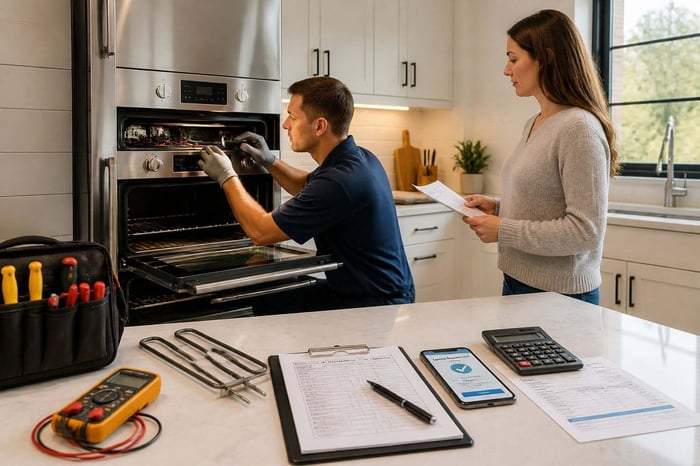
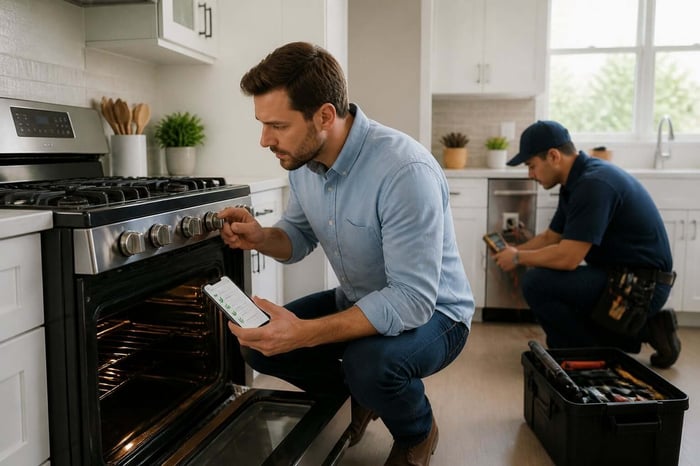
Prepare for a Faster, Better Service Call
A technician's first questions are almost always the same, and having the answers ready shaves real time and cost off the visit. This is the single most overlooked way to make a stove repair cheaper.
Find the Model and Serial Number Before Booking
The model and serial number are usually on a small plate inside the door frame, on the back panel, or under a cooktop-lift model's hood. This one detail lets a technician bring the correct part on the first visit instead of a second trip. If your plate is worn or hard to read, this guide to decoding appliance model numbers can help you make sense of what's left.
Write it down or photograph it now, even if nothing is broken yet. It's the fastest fix for a problem you don't have yet but eventually will.
Gather the Purchase Date, Warranty, and Past Repair Records
Before the appointment, find your purchase receipt, warranty document, and any past repair invoices for this stove. If the appliance is still under manufacturer warranty, the visit and parts could cost nothing.
This is exactly the kind of paperwork that tends to vanish into inboxes or drawers within a year of buying an appliance. Keeping it in one private place, like a home profile in Manse, means you're never digging through old emails while a technician waits on the phone.
Document the Symptom With Photos, Video, and Clear Notes
Take a short video of the clicking burner, the error code, or the uneven flame before you call anyone. A ten-second clip tells a technician more than a verbal description ever will.
Note when the problem started, whether it's constant or occasional, and if anything changed right before it began, like a spill or a recent cleaning. Clear notes mean less guesswork and often a shorter, cheaper visit.
Keep the Next Breakdown From Becoming a Search
The stove will eventually act up again, on another burner, at another inconvenient hour. What determines whether that moment is stressful or simple is whether your records are already in one place.
Build a Lasting Record for Your Range or Cooktop
A complete record for your stove includes the model and serial number, purchase date, warranty terms, and every repair or maintenance visit it's had. Building this once means you never start from zero again, even years later or after a move.
This record outlasts a memory of "I think we fixed the igniter a couple years back." It's a documented answer, not a guess.
Frequently Asked Questions
Why Is My Stove Not Heating Up?
The cause depends on the stove type. Electric burners usually fail because of a loose connection or a worn heating element; gas burners often have clogged ports or a failing igniter; and if the whole stove is cold, a power or gas supply issue is the more likely culprit.
Is It Worth Repairing Your Stove or Replacing It?
Generally, repair is worth it if your stove is under 8 years old and the repair costs less than half of a new range. Replacement makes more sense once the stove is 13 or more years old, has a history of repeated failures, or the repair cost approaches replacement price.
How Much Does It Cost to Repair a Stove in Your Home?
Costs vary widely depending on the part and whether it's gas or electric, ranging from a simple igniter replacement to a full control board swap. Checking whether your stove is still under manufacturer warranty before booking a repair can eliminate the cost entirely.
Why Does Your Gas Stove Keep Clicking but Not Light?
This almost always points to a clogged burner port, a burner cap that isn't seated properly, or a worn igniter. Cleaning the burner ports and reseating the cap solves this in many cases without needing a technician.
What Should You Do When an Electric Stove Burner Stops Working?
Check that the burner is seated correctly in its socket, since a loose connection is a common and easy-to-fix cause. If reseating it doesn't help and only that one burner is affected, the heating element itself is likely faulty and needs replacing.
How Long Should a Stove Last Before You Replace It?
Most stoves last 13 to 15 years with normal use and basic maintenance. Once a stove passes that age and starts needing frequent repairs, replacement usually becomes the more practical and cost-effective choice.
Track Maintenance and Warranty Dates Before They Matter
Warranties expire quietly, often before a homeowner even remembers signing up for one. Tracking that expiration date, along with basic stove maintenance like cleaning burner ports and checking door seals, catches small issues before they become expensive ones, and it fits naturally into a broader home maintenance checklist that covers the rest of the house too.
Add your appliances to Manse for free and know exactly where every warranty stands. Next time something breaks, your records are already there, no digging, no guessing, just answers.