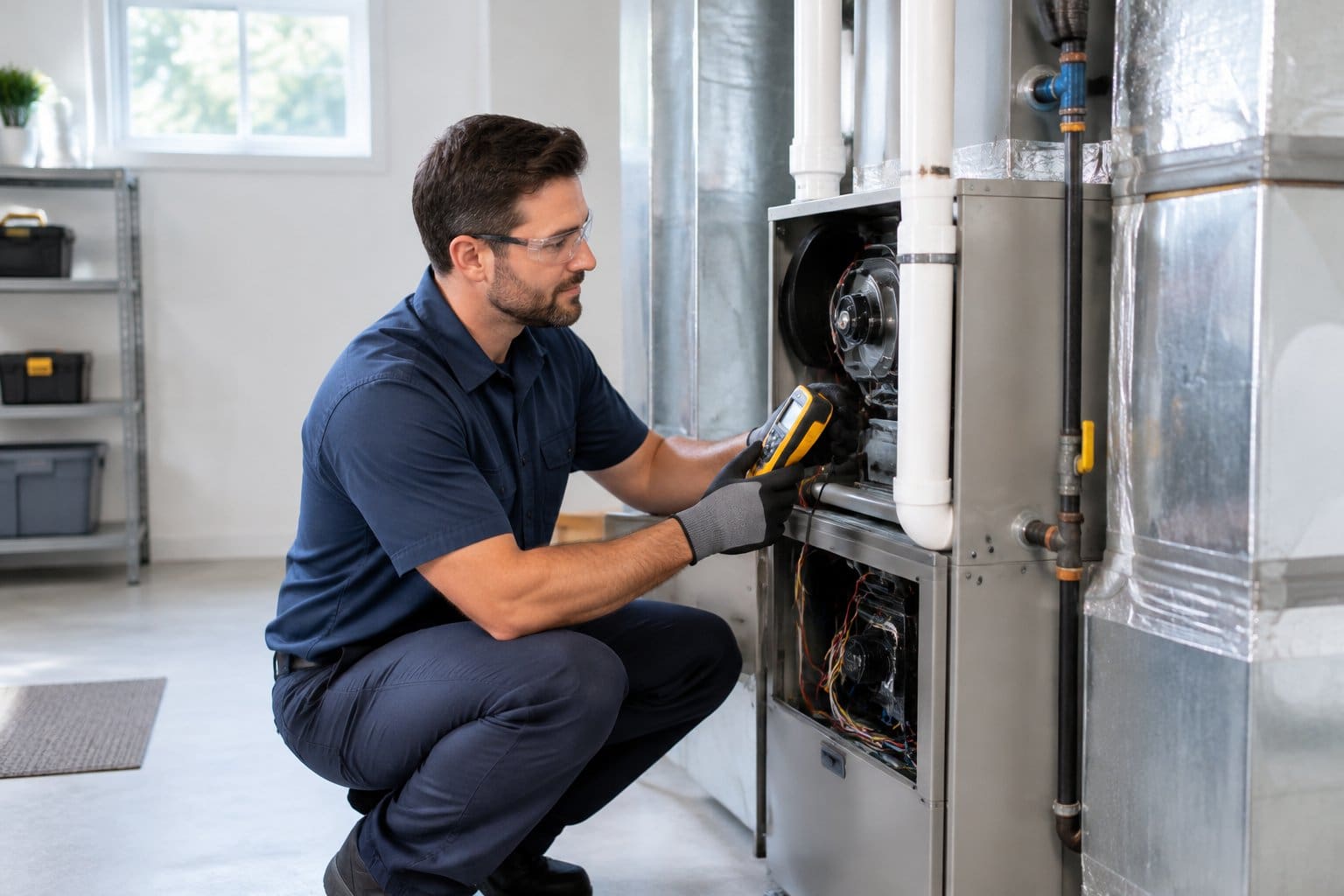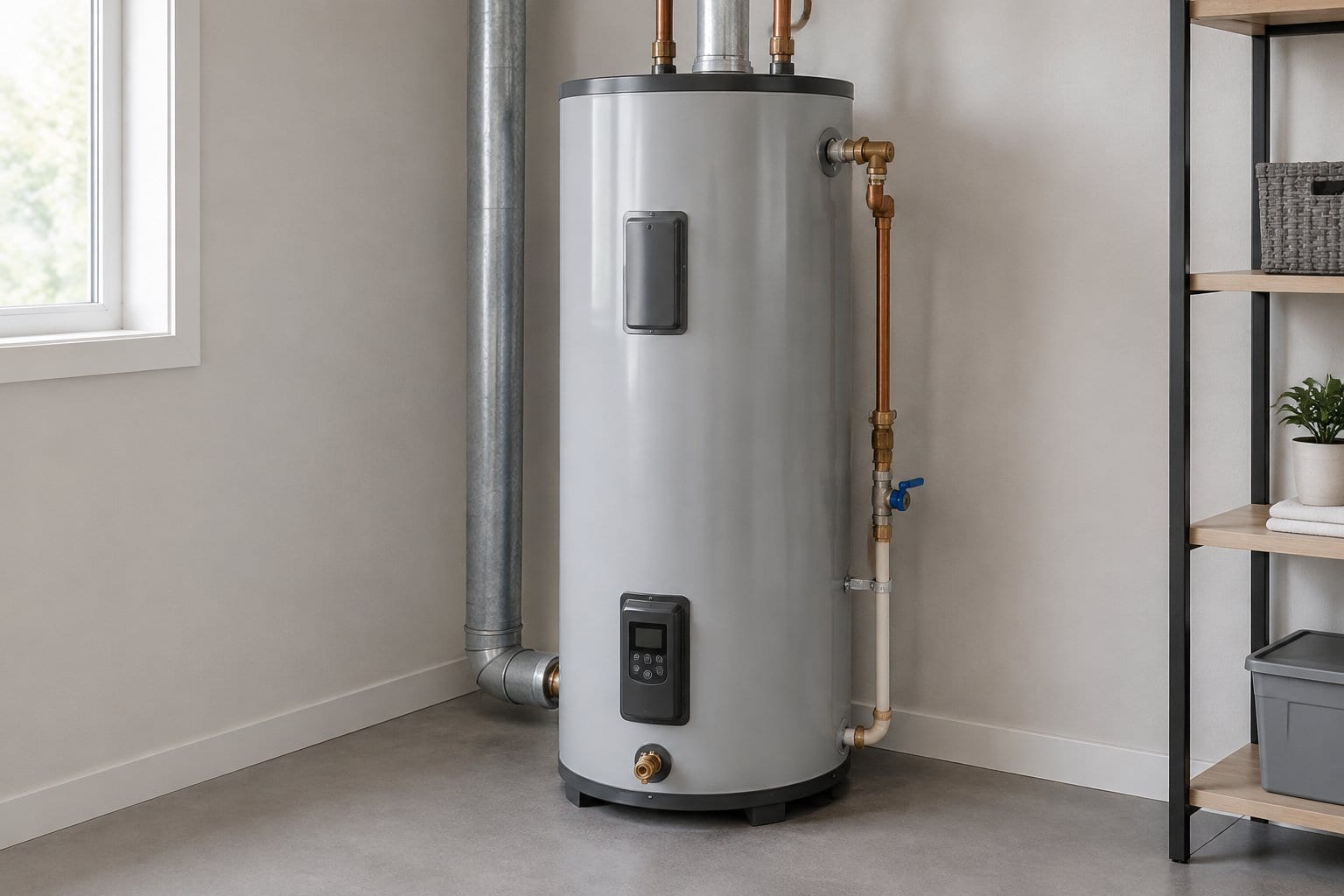

You look at the tank in the garage or basement and realize you couldn't say when it was installed, or whether anyone has ever flushed it. Most people only think about the water heater when the water runs cold or a puddle appears.
A simple service history fixes that. Record the unit's age and specs once, then add every flush, inspection, and repair as it happens. That log tells you when replacement is coming and answers a plumber's first questions before they ask.
What Should You Record About Your Water Heater?
Start with the basics that identify the unit: installation date and age, tank or tankless, fuel type, and capacity. Every service entry you add later builds on this baseline.
With these details written down, you can answer a plumber's questions over the phone instead of sending them to read the rating plate.
Installation Date, Age, and Serial Number
The installation date is the most useful number you can record, since it tells you how close the unit is to the end of its expected life. If you don't have installation paperwork, the serial number on the rating plate usually shows when the unit was made.
Each manufacturer uses its own format. Bradford White says the first two characters of the serial number represent the year and month of manufacture, with a letter for each. Because its year letters repeat on a 20-year cycle, use the unit's condition and any paperwork to confirm which cycle applies.
Rheem's water heater serial numbers have ten characters, and Rheem's serial number guide shows the first two digits as the month and the next two as the year.
Once you decode the age, write it down so you never have to repeat the process.
Tank or Tankless, Fuel Type, and Capacity
Tank and tankless water heaters need different maintenance, so your type shapes the rest of your log. The U.S. Department of Energy's Energy Saver guide notes that conventional storage water heaters run on natural gas, propane, fuel oil, or electricity, while tankless models heat water directly without a storage tank. Your owner's manual lists the maintenance your specific type needs.
Fuel type (gas, electric, or propane) and tank capacity in gallons matter too. A plumber needs both before quoting a repair or suggesting a replacement model.
Manual, Warranty, and Installer Information
Keep the owner's manual, the warranty terms, and the installer's name and contact details with the rest of the record. Warranty terms tell you whether a repair might still be covered before you pay out of pocket, and it helps to check the warranty status before you book a repair.
The installer's contact is useful if a problem traces back to how the unit was set up.
What Belongs in Each Service Entry?
Every entry should include the date, who did the work, what was inspected or serviced, any parts replaced, and the cost. That turns "the plumber came out last year" into a record you can actually use.
Flushes and Anode Rod Inspections
Flushing clears sediment from the bottom of the tank. The same DOE guide suggests draining a quart of water from a storage tank every three months to remove sediment that gets in the way of heating, and following your manufacturer's instructions. Record the date of each drain or flush and anything the technician noted about the sediment.
The anode rod protects the tank from corrosion by wearing away first. Check your owner's manual for how often to inspect it, and record each inspection date and the rod's condition, whether it was replaced or left in place.
Pressure Relief Valve Tests and Thermostat Settings
The temperature and pressure relief valve is a safety device. Your owner's manual explains how and how often to test it. Record each test and whether the valve passed or was replaced.
Note the thermostat setting as well. The U.S. Department of Energy's home energy checklist suggests setting the water heater to warm (120°F) to save energy and avoid scalding. If a technician changes the setting, log the new temperature and the date.
Repairs, Parts, Service Dates, and Costs
Give every repair its own line: the date, what was fixed, the part involved, and what it cost. Log a heating element, a thermostat, or a burner repair separately so each one stays easy to find.
That detail helps you spot patterns. If the same part fails twice in two years, you have real information for deciding between another repair and a replacement.
How Do You Start a Log If You Have No Records?
Gather what you can from the unit itself, then use one simple format for every visit going forward. Most homeowners start with no history, especially after buying a home.
Collect What You Can From Labels and Old Paperwork
Begin with these steps:
- Find the rating plate on the side of the unit and photograph the model and serial numbers.
- Decode the manufacture date using the manufacturer's serial number format.
- Check closing paperwork, home inspection reports, or old invoices for an installation date.
- Look for a warranty registration card or sticker, which sometimes lists the install date.
- Contact the installer or previous owner if you can identify who installed the unit.
Partial information still helps. An approximate age from the serial number gives you a starting point for planning.
Use One Simple Format for Future Visits
For every future visit, record the same four things: date, what was done, who did it, and the cost. A short note after every visit beats a detailed record you only keep sometimes.
Keep the manual, warranty, and service entries together in one place so you aren't digging through paper invoices, texts, and email threads when a technician asks for the unit's history.
How Can Service History Help You Plan for Replacement?
Age plus condition tells you when to start planning. The DOE guide says most storage water heaters last 10 to 15 years, while tankless models can last more than 20.
Compare Age and Service History With Expected Lifespan
If your records show the unit is near or past 10 years old, and recent visits mention heavy sediment, a worn anode rod, or repeated repairs, that combination points toward planning a replacement before it fails. A unit with no recorded flushes is harder to predict, because you can't tell how much sediment has built up.
Comparing age against your log takes the guesswork out of the decision, and it gives you time to budget for the replacement instead of paying for it in an emergency.
Record Warning Signs Without Trying to Diagnose Them
Write down symptoms with the date you first noticed them. Signs worth logging include unusual noises, leaking, discolored or smelly water, less hot water than usual, and energy bills that suddenly increase.
That timeline gives a plumber useful context, and you can leave the diagnosis to them. For what those symptoms can mean, see this guide to common water heater problems, and if water is already on the floor, start with what to do about a leaking water heater.
When Should You Schedule the Next Service?
Schedule service based on the interval in your owner's manual. Between visits, the DOE suggests draining a quart from a storage tank every three months.
Follow Your Manufacturer's Maintenance Guidance
Check your owner's manual for the interval that applies to your model, along with any checks it calls for on the anode rod or pressure relief valve during the same visit. Bradford White also notes that a plumbing or HVAC professional should perform maintenance.
Set a Reminder and Save the Completed Service Record
Set a reminder for the next flush or inspection so you don't have to track the date yourself. After each visit, add the completed entry (date, technician, work done, and any parts replaced) right below the previous ones.
Over a few years, those entries become a running history that shows the next technician, or a future buyer, how the unit has been cared for.
Keep Your Water Heater History Ready for the Next Visit
A service history only helps if you can find it during a repair call, a home sale, or a routine flush. The details that matter most are the installation date, type, fuel, capacity, every service visit with its date and cost, and any warning signs you noticed along the way.
Keep them in one place, and you can answer a plumber's first questions before they even ask.
Frequently Asked Questions
How can I tell when my water heater was made?
Check the serial number on the rating plate, since most manufacturers encode the manufacture date in it. Bradford White uses the first two characters as letters for the year and month, while Rheem's ten-character serial numbers show the month in the first two digits and the year in the next two.
What should I record after an electric water heater service visit?
Record the date, which heating elements were tested or replaced, the thermostat setting, and any sediment noted during the visit. If your model has two elements, ask whether you tested both, since one can fail while the other keeps working.
How often should a water heater be flushed?
The U.S. Department of Energy suggests draining a quart of water from a storage tank every three months to remove sediment. Check your owner's manual for your model's full flush and service interval, and record each one with its date.
Is a 14-year-old water heater still good?
It may still work, but it is near the end of the 10 to 15 years the U.S. Department of Energy says most storage water heaters last, so it's worth planning for replacement now. If your records show heavy sediment, a worn anode rod, or repeated repairs, that's another reason to plan sooner.
What signs should I note when my water heater may be going bad?
Note unusual noises, leaks or moisture around the tank, discolored or smelly water, less hot water than usual, and a sudden increase in your energy bills. Write down the date each one started and share it with your plumber.
Keep Your Water Heater Log in One Place
Install date, flushes, anode rod checks, and repair invoices are easy to lose across drawers and inboxes. Manse keeps your water heater's service log, manual, and warranty together and reminds you when the next flush is due. Start your water heater log for free.