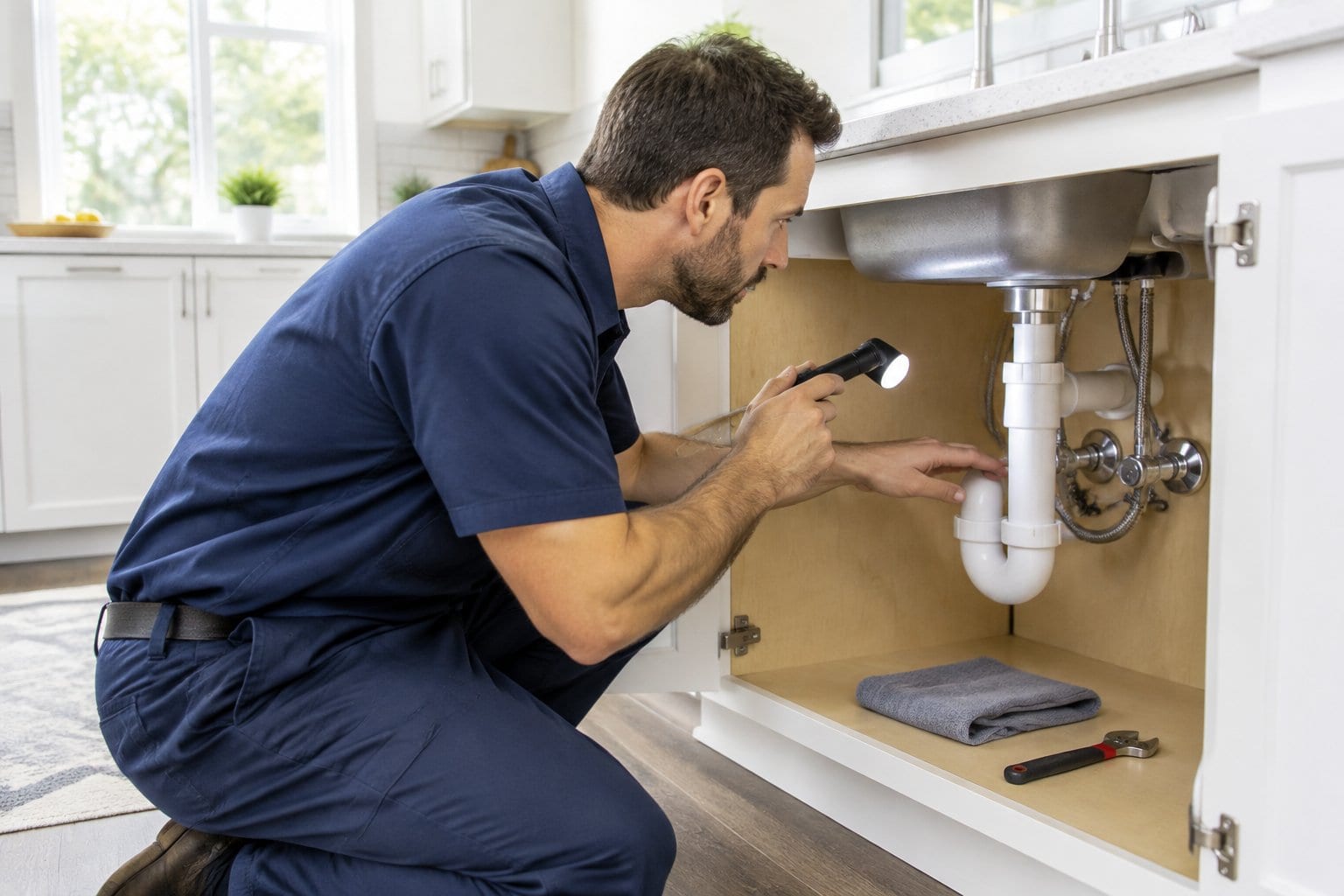

Water is spreading across the floor, and you're opening cabinets, checking the garage, and trying to remember where the main shutoff valve is. That scramble is what plumbing documentation prevents.
A short record of your home's shutoffs, pipe materials, water heater, sewer or septic line, and repair history means anyone in the house can stop a leak fast and give a plumber, buyer, or insurer real answers.
Where Do You Shut Off the Water?
Every home has a main shutoff valve, usually where the water line enters the house: a basement, crawl space, garage, or utility closet. In warmer climates, it may be outside near the foundation or in a ground-level box. Finding it early means you can stop a burst pipe or failed connection in seconds.
Photograph the Main Shutoff and How to Reach It
Take a clear photo of the valve itself, plus a second photo showing how to get to it. If it sits behind storage boxes, under a sink cabinet, or through a crawl space hatch, note that path too.
Write down which direction closes the valve (usually clockwise) and whether it's a gate valve with a round wheel handle or a ball valve with a lever. Gate valves that haven't been turned in years can stick, which is worth knowing before an emergency.
Record Fixture Shutoffs and the Water Meter Location
Most sinks, toilets, and washing machines have their own shutoff valves, usually behind or below the fixture. These let you stop water to one fixture without shutting off the whole house.
Document each one with a short note, such as "kitchen sink, under cabinet, left side" or "washer, behind unit, top left." Also record where the water meter sits, since you or your water utility may need it during an outage or when checking for a hidden leak.
Label each photo clearly so anyone in the household, or a house sitter or visiting relative, can find the right valve fast.
What Pipes and Water Source Does Your Home Have?
Knowing your pipe materials tells a plumber what they're dealing with before they open a wall, and it answers one of the first questions a buyer's inspector or an insurer may ask.
Newer homes typically use copper or PEX (flexible plastic tubing). Older homes may still have galvanized steel, which can corrode from the inside over time, or polybutylene, a flexible plastic pipe that is no longer used in new construction.
Home inspectors following the American Society of Home Inspectors' Standard of Practice describe interior water supply, drain, waste, and vent piping materials; the water-heating equipment and its energy source; and the location of the main water and fuel shutoff valves.
Record Visible Pipe Materials and Where You Found Them
- Check pipes under sinks, near the water heater, and in unfinished basements or crawl spaces.
- Note the material: copper (orange-brown or tarnished, rigid), PEX (flexible plastic, often red, blue, or white), galvanized steel (dull gray metal that a magnet sticks to), or plastic pipe you can't identify.
- Photograph each section and label where you found it.
- If you're unsure of a material, or suspect polybutylene, ask a plumber or home inspector to confirm it during a routine visit.
Note Well Equipment or Other Water Source Details
If your home uses a private well, record the well type, depth (if known), pump type, and where the well cap sits. The EPA's overview of private water wells describes dug or bored wells as roughly 10 to 30 feet deep, driven wells as roughly 30 to 50 feet deep and easily contaminated because they draw from aquifers near the surface, and drilled wells as reaching thousands of feet with a lower risk of contamination.
Keep every water test result with the well record. The EPA advises testing a private well every year for total coliform bacteria, nitrates, total dissolved solids, and pH, and testing again whenever you replace or repair any part of the well system.
What Should You Record About the Water Heater and Waste Lines?
The water heater's age and service history tell you how much life it may have left. The sewer cleanout or septic tank location saves time when a drain backs up.
Save Water Heater Details and Installation Records
Record the brand, model number, serial number, tank size, and fuel type (gas, electric, or hybrid). The serial number usually encodes the manufacture date. Rheem, for example, says its water heater serial numbers have ten characters, with the month in the first two digits and the year in the next two, according to Rheem's serial number guide, which also explains that its warranty check uses the serial number.
Keep the installation date, the installer's name, and the manual together. If the tank ever starts dripping, those details help you work through what to do about a leaking water heater and tell the plumber exactly which unit you have.
Locate the Sewer Cleanout or Septic System
Find your sewer cleanout before you need it. It's usually a capped pipe near the foundation or in the yard, and it gives a plumber access to the sewer line for inspection or clearing a clog. Photograph it and note roughly where the line runs, which also helps when you plan landscaping or digging.
If you have a septic system, record the tank location, size, and pumping dates. The EPA's septic system care guidance says the average household system should be inspected at least every three years by a septic service professional, that household tanks are typically pumped every three to five years, and that you should keep maintenance records on work performed.
How Do You Build a Useful Plumbing Repair History?
A repair history tells you and any future plumber what has already been fixed, replaced, or inspected, saving repeat diagnostics and costs. Without it, every new plumber starts from zero.
Log Leaks, Repairs, and Replaced Pipes with Dates
Each time you deal with a leak or repair, write down four things: the date, location, cause, and fix. If a section of galvanized pipe in the upstairs bathroom was replaced with PEX, record that in plain language alongside the receipt.
That record pays off the next time something goes wrong nearby. A plumber who knows a pipe was replaced two years ago can rule that section out quickly.
Keep Plumber Invoices, Permits, and Sewer Scope Reports
Save every plumbing invoice, along with any permits for larger work like repiping or a water heater replacement. If you've had a sewer scope, whether during a purchase or after a backup, keep the video or written report as a baseline for comparing the line's condition later.
If you're still shopping for a home, this plumbing inspection checklist for older homes covers what to ask for before closing.
These documents matter most when you file an insurance claim after water damage and when a buyer's inspector asks about plumbing history. Keep them with the other records you'll want when selling a house.
How Should You Organize Plumbing Records?
The simplest system is a checklist paired with a labeled sketch of your home, kept where every adult in the household can reach it quickly. Complicated systems fail during emergencies because nobody can find them.
Create a Simple Checklist and Labeled Home Diagram
Your checklist should cover the main shutoff, each fixture shutoff, the water meter, pipe materials, water heater details, and the sewer cleanout or septic tank. Pair it with a rough floor plan showing where each item sits.
You don't need drafting software. A hand-drawn plan with labeled dots and a photo for each location works, as long as it's accurate and easy to read under stress. For the routine checks that keep those systems in good shape, follow these home plumbing maintenance tips and log what you find.
Keep Emergency Photos Easy for Your Household to Find
Photos stored on one person's phone don't help when that person is traveling, or a house sitter is on duty. Keep the shutoff photos, pipe photos, and water heater label somewhere any adult in the household can pull up in seconds, and share access only with the people you choose.
Frequently Asked Questions
What should a home plumbing documentation checklist include?
Include the main shutoff location, fixture shutoffs, the water meter location, pipe materials, water heater details, and the sewer cleanout or septic tank location. Add dates and notes for any past leaks, repairs, or sewer scopes.
Do I need a professional plumbing diagram of my house?
Most homes don't. A hand-drawn floor plan with labeled shutoffs, the water heater, and the sewer cleanout works for everyday use, though a sewer scope or inspection report adds useful detail for older homes or before a sale.
How can I tell what kind of pipes my house has?
Check exposed pipes under sinks, in basements, and near the water heater. Copper is orange-brown and rigid, PEX is flexible plastic that is often red, blue, or white, and galvanized steel is dull gray and attracts a magnet. A home inspector describes the piping materials as part of a standard inspection, and a plumber can confirm anything you can't identify.
What does a whole-home plumbing inspection include?
Under the American Society of Home Inspectors' Standard of Practice, a plumbing inspection covers the interior water supply and distribution, drain, waste, and vent systems, water-heating equipment, and the location of the main water and fuel shutoffs. Inspectors are not required to inspect wells, water conditioning systems, septic systems, or fire sprinkler systems, so ask in advance if you need those checked.
How long should I keep plumbing repair records?
Keep major repair records, such as repiping, water heater replacement, or sewer line work, for as long as you own the home, since they matter for warranty claims, insurance, and resale. Smaller repair records are worth keeping too, in case a related issue comes up in the same area.
Keep Your Plumbing Records Where Everyone Can Find Them
When water is on the floor, nobody should be scrolling through one person's camera roll. Manse keeps your shutoff photos, pipe details, and plumbing history in one record that anyone you share it with can open in an emergency. Save your shutoff photos for free.